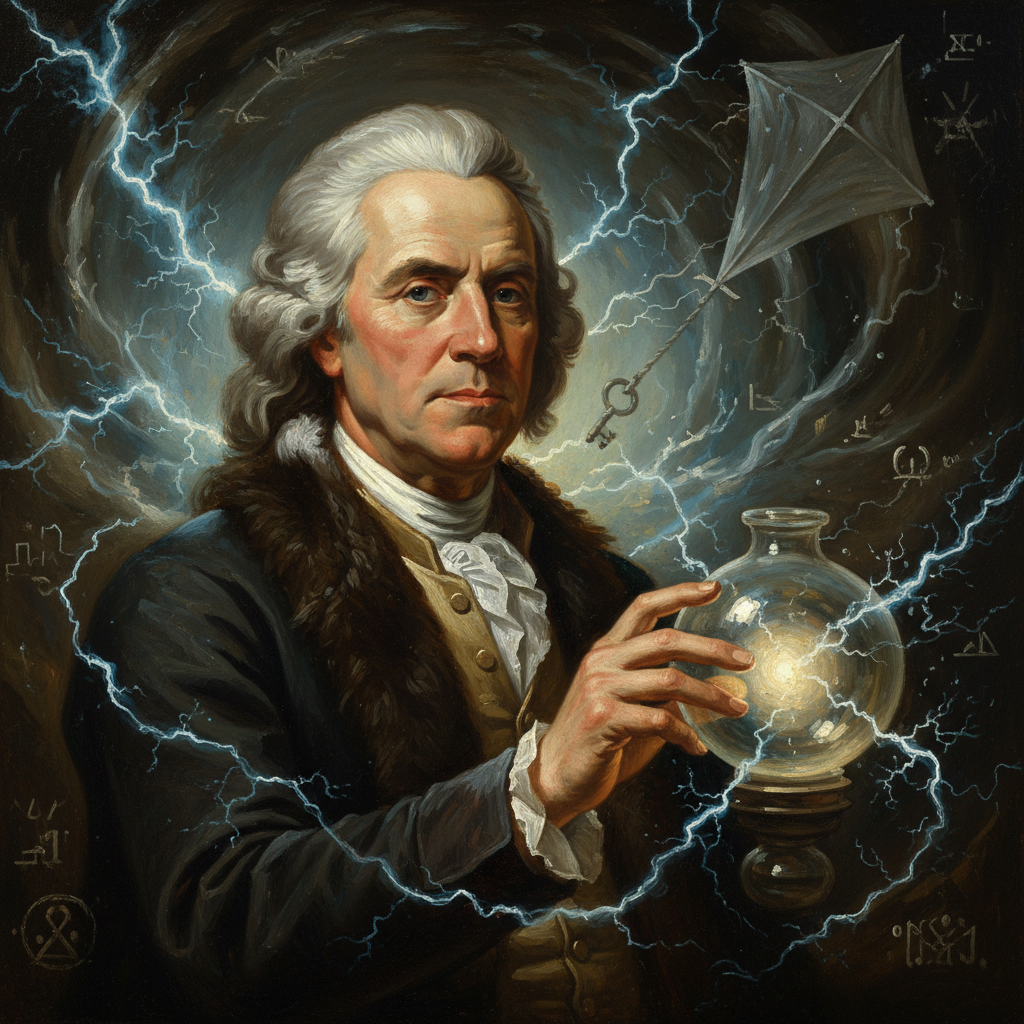
Benjamin Franklin — "It is a grand mistake to think of being great without ever being good."
It is a grand mistake to think of being great without ever being good.
It is a grand mistake to think of being great without ever being good.
Click any product to generate a realistic preview. Up to 3 at a time.
* Initial load can take up to 90 seconds — revising the preview in another color is nearly instant.
"A heavy ship cannot sink."
"A full belly makes a dull brain."
"He that has a Trade, has an Estate."
"Early to bed and early to rise makes a man healthy, wealthy, and wise."
"He that is used to go to bed hungry, and rise early, may be a good workman, but he is a bad master."
Polymath Founding Father, diplomat, and Poor Richard's Almanack author who helped draft the Declaration of Independence and the Constitution. Closely associated with John Adams (fellow Founder, Massachusetts statesman) and Thomas Jefferson (fellow Declaration drafter). For an intellectual contrast, see Thomas Hutchinson, last royal governor of colonial Massachusetts — Franklin leaked Hutchinson's loyalist correspondence to Boston in 1772 to inflame revolutionary sentiment — Hutchinson represented the colonial-aristocrat crown-loyalty that Franklin's revolution was organized to dismantle.
Found in 1 providers: grok
1 source checked
True greatness cannot exist without moral goodness. Chasing fame, power, or achievement while ignoring ethics is a fundamental error. Greatness built purely on talent, status, or ambition is hollow and unsustainable. Lasting greatness requires a foundation of virtue and integrity — the two are inseparable. You can be impressive, influential, or celebrated without being good, but you cannot be genuinely great.
Franklin embodied this belief through his famous 13 Virtues project, a daily self-improvement regimen tracking temperance, justice, humility, and industry. Despite international fame as a scientist and diplomat, he grounded his legacy in civic goodness — founding Philadelphia's first public library, hospital, and fire brigade. His autobiography frames success not through wealth or celebrity but through moral character and service to others.
Colonial and revolutionary America wrestled deeply with whether ambition and virtue could coexist. The Enlightenment celebrated reason and self-improvement, but also produced ruthless political ambition and slaveholding wealth. Founding a republic explicitly premised on virtuous citizenship made this tension urgent — could powerful men also be good men? Franklin's warning spoke directly to fears that the new nation's leaders would pursue greatness while abandoning the moral foundation republics require to survive.
AI-generated insights based on extensive research and information for context. Factual errors? Email [email protected].
Your cart is empty