Martin Luther — "If a woman grows weary and at last dies from childbearing, it matters not. Let h…"
If a woman grows weary and at last dies from childbearing, it matters not. Let her die in childbearing—she is there to do it.
If a woman grows weary and at last dies from childbearing, it matters not. Let her die in childbearing—she is there to do it.
Click any product to generate a realistic preview. Up to 3 at a time.
* Initial load can take up to 90 seconds — revising the preview in another color is nearly instant.
"Our Lord has written the promise of the resurrection, not in books alone, but in every leaf in springtime."
"The papacy is the kingdom of the devil, and the pope is the Antichrist."
"Nor let ministers cease studying until they have discovered and are sure that they have taught the devil to death and have become more learned than God himself and all His saints."
"Fifthly, passport and traveling privileges should be absolutely forbidden to the Jews. For they have no business in the countryside, since they are not farmers or craftsmen or merchants, but only usur…"
"The very devil himself would thank you for such an event, and no one but the miserable devil and his devilish scum."
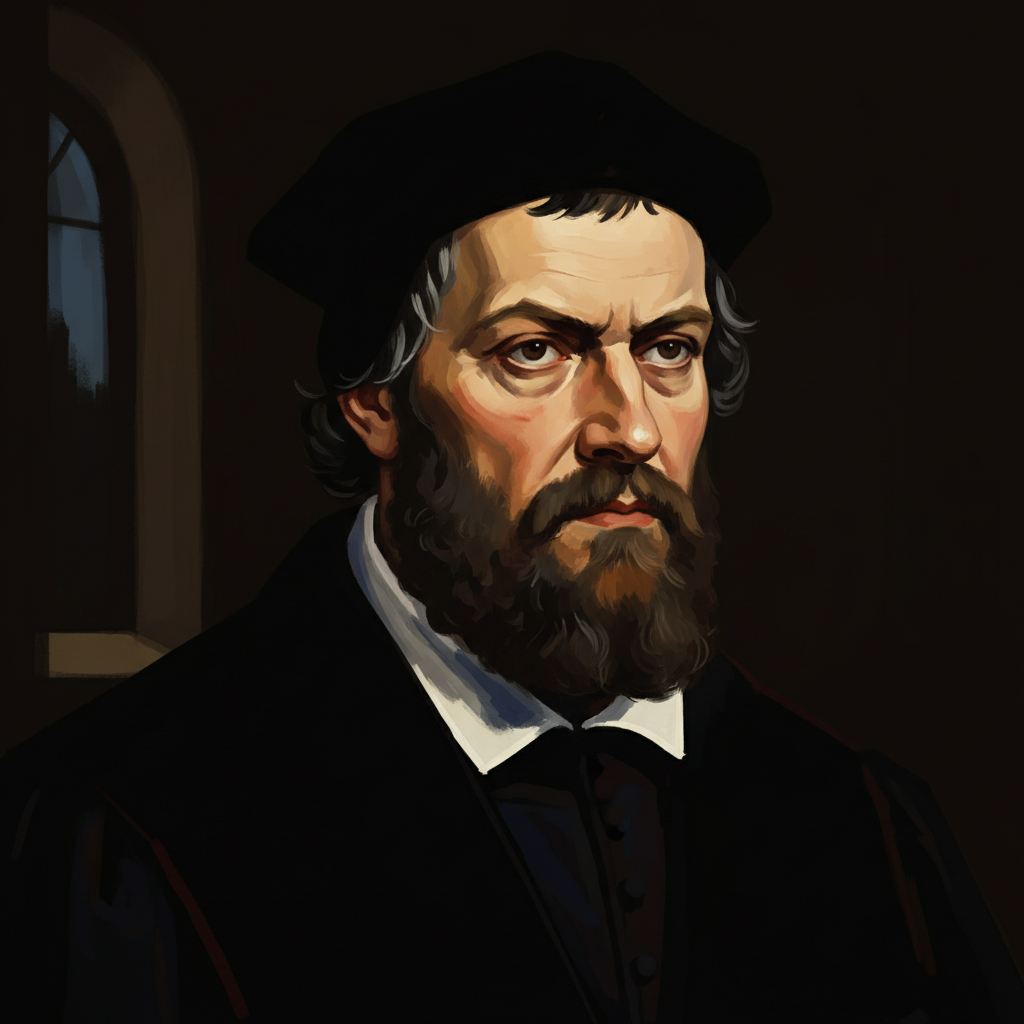
German theologian whose 95 Theses (1517) launched the Protestant Reformation and broke the Catholic Church's monopoly on Western Christianity. Closely associated with Philipp Melanchthon (Lutheran systematizer) and John Calvin (later Reformer who built on Luther's break). For an intellectual contrast, see Pope Leo X, Renaissance pope (1513-1521) — Leo X's indulgence sales triggered Luther's break and Leo excommunicated him in 1521 — Luther's entire Reformation is structured as a direct answer to the indulgence-funded Vatican Leo represented.
Found in 1 providers: grok
1 source checked
Luther bluntly argues that a woman's death from repeated childbirth is acceptable because bearing children is her God-given purpose. Even if pregnancy exhausts or kills her, she should not avoid it, since fulfilling that role matters more than preserving her own life. In modern terms, he frames motherhood as a duty so absolute that a woman's survival becomes secondary to carrying out the reproductive function he believed God assigned her.
Luther, an Augustinian friar turned reformer, rejected clerical celibacy and married ex-nun Katharina von Bora, who bore him six children. He preached that marriage and procreation were holy vocations, not lesser paths. His theology fused obedience to Scripture with rigid gender roles: men governed, women birthed. This harsh line reflects his literal reading of Genesis 3:16 and his broader willingness to state uncomfortable conclusions bluntly, a trait that fueled both his reforms and his controversies.
In early sixteenth-century Germany, childbirth killed roughly one in forty mothers per delivery, and large families were economic and spiritual expectations. The Reformation Luther led was dismantling monasticism, pushing former nuns and priests into marriage and household life. Infant and maternal mortality were accepted as God's providence rather than medical failures. Reformers elevated the Christian household as the new center of piety, making fertility a theological duty and framing maternal suffering as sanctified service rather than preventable tragedy.
AI-generated insights based on extensive research and information for context. Factual errors? Email [email protected].
Your cart is empty