What it means
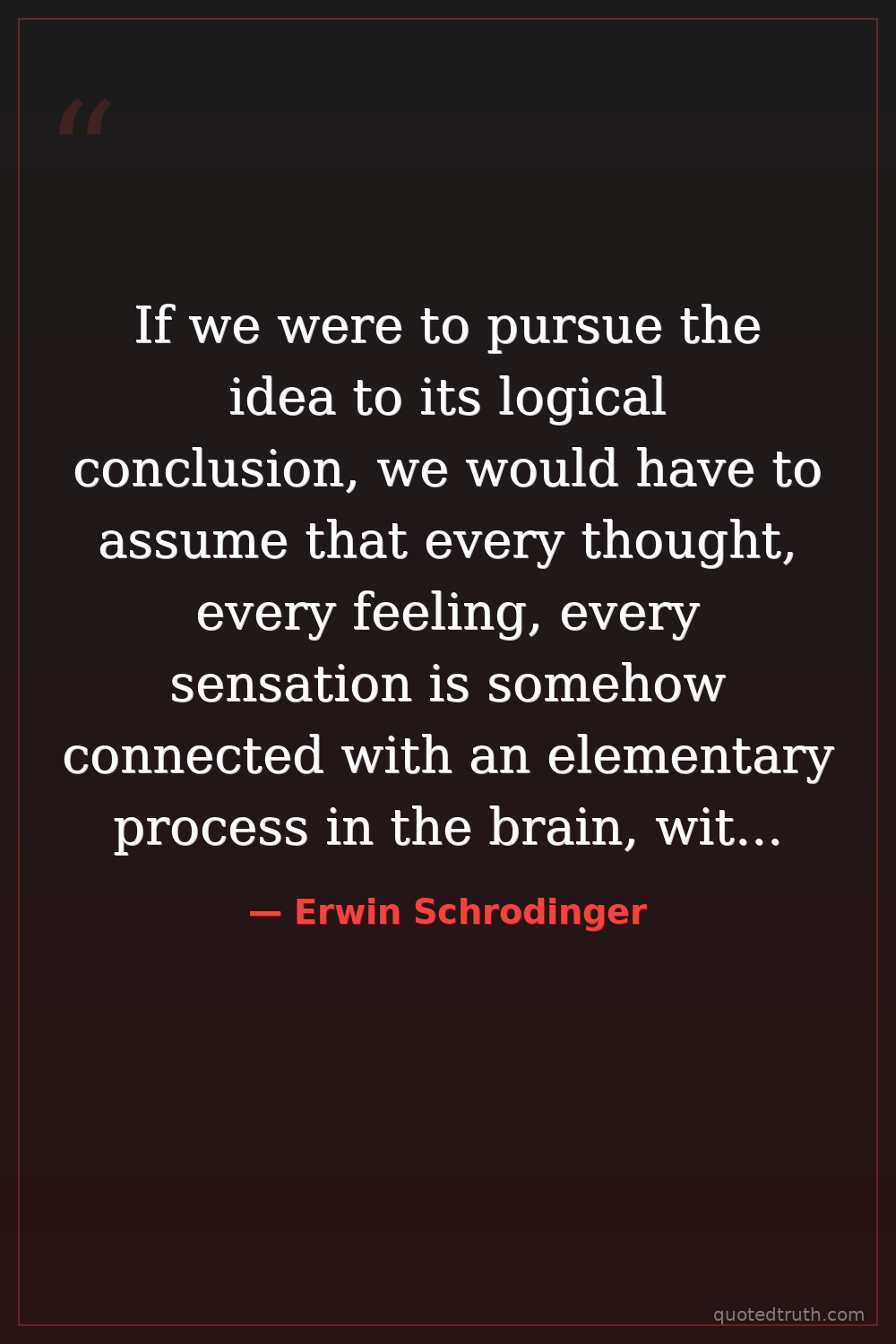
Every mental event—a thought, an emotion, a sensation—might ultimately trace back to a single quantum jump in the brain. Rather than consciousness emerging purely from classical chemistry, the mind could be grounded in discrete quantum transitions. Our richest inner experiences might be expressions of the same probabilistic, discontinuous events governing subatomic particles, making subjective experience a direct consequence of quantum physics rather than something separate from it.
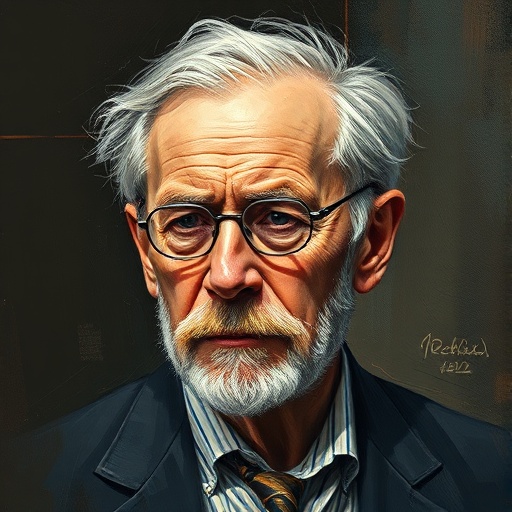
Relevance to Erwin Schrodinger
Schrödinger developed wave mechanics—the mathematical framework describing quantum state evolution—earning the 1933 Nobel Prize. His book What Is Life? (1944) applied quantum physics to biology, predicting the aperiodic crystal structure of genes before DNA's discovery. Deeply influenced by Vedanta philosophy, which holds consciousness as fundamental, he spent his later career bridging quantum formalism with the hard problem of mind, making this speculation a natural extension of his lifelong intellectual obsessions.
The era
In the 1950s and 1960s, quantum mechanics was triumphant but philosophically unsettled—the measurement problem and the observer's role remained hotly debated. Neuroscience was nascent: DNA's structure had just been cracked in 1953, and the brain's signaling mechanisms were barely mapped. Against this backdrop, Schrödinger's suggestion that consciousness might require quantum-level explanation was genuinely radical, anticipating by decades the quantum-mind debates that Penrose, Hameroff, and others would later formalize.
AI-generated insights based on extensive research and information for context. Factual errors? Email [email protected].