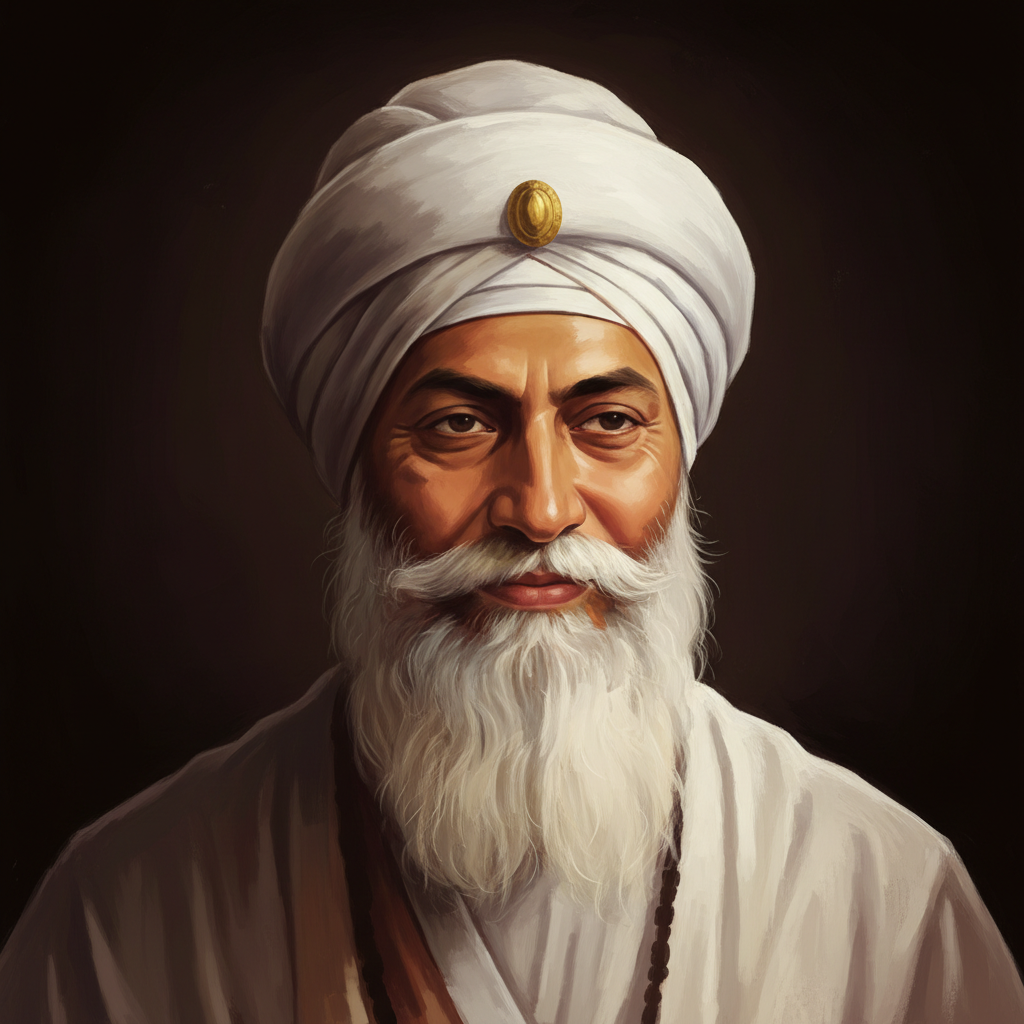
What it means
Worshipping physical idols is pointless because they have no power to grant anything or help anyone. Praying to carved stone is as futile as churning plain water and expecting butter to form. The idols themselves cannot even stay afloat when placed in water, so they certainly cannot rescue people from the turbulent sea of worldly suffering. Trust and devotion should go toward something real, not lifeless objects.
Relevance to Guru Nanak
Guru Nanak founded Sikhism on radical monotheism, rejecting idol worship, ritualism, and priestly mediation. He taught devotion to one formless God (Ik Onkar) accessed through honest work, remembrance of the Name, and sharing with others. His travels across India, Tibet, and Arabia were spent challenging empty rituals in both Hindu temples and Muslim shrines, insisting true worship is internal and that carved images distract seekers from direct connection with the Divine.
The era
In early-modern 15th–16th century Punjab, Hindu temple idol worship and elaborate Brahminical rituals dominated daily life, while Islamic rule under the Lodhis and early Mughals added its own orthodoxy. Caste hierarchy and priestly gatekeeping kept ordinary people dependent on intermediaries. Guru Nanak's era was ripe for the Bhakti and Sant reform movements, which rejected image worship and ritual in favor of personal, egalitarian devotion — a revolutionary stance in a deeply stratified religious landscape.
AI-generated insights based on extensive research and information for context. Factual errors? Email [email protected].