What it means
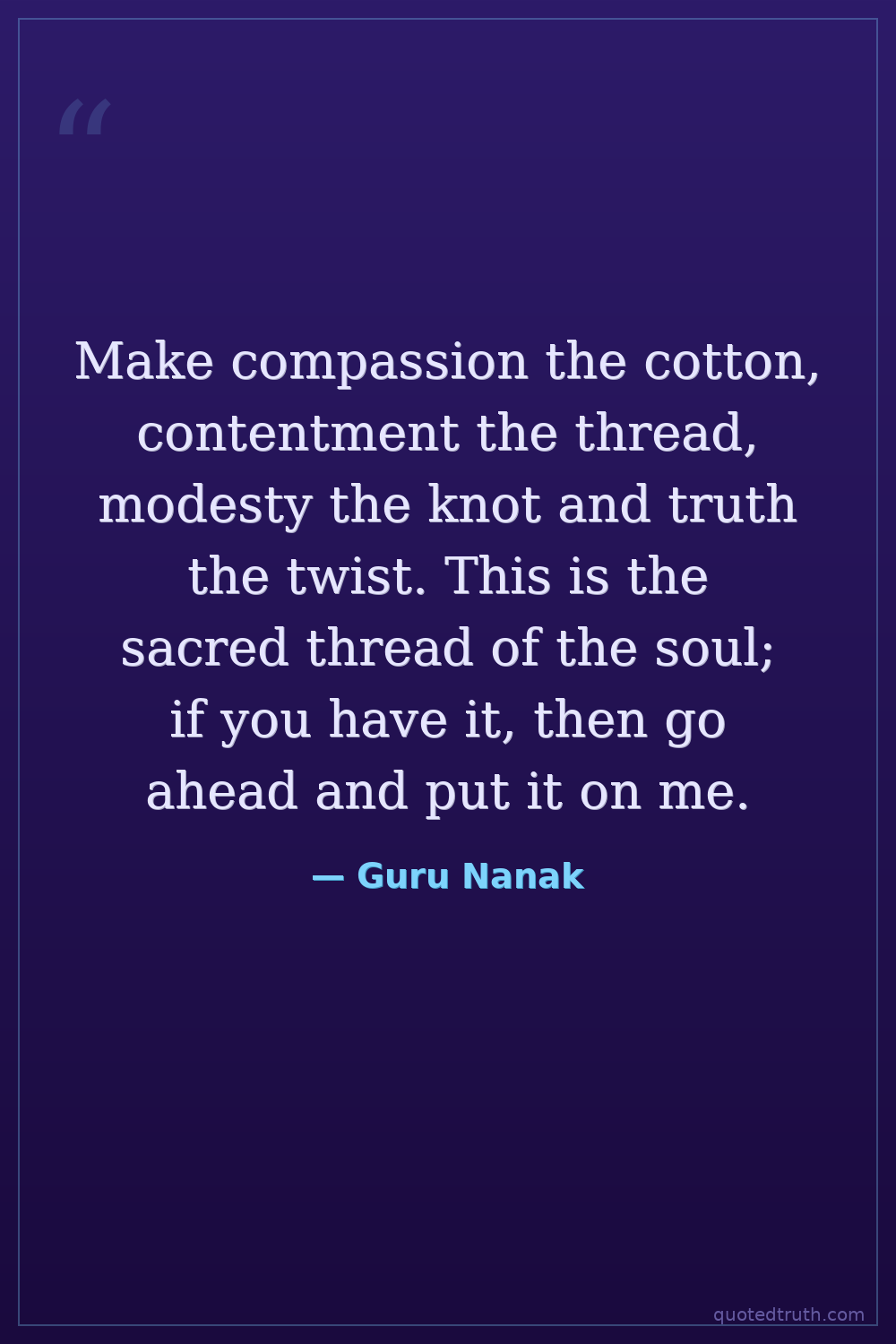
Real spiritual identity is not a physical token you wear but a character woven from inner virtues. Compassion, contentment, modesty, and truthfulness are the actual threads that make someone holy. If a ritual object represents those qualities, fine—offer it. Otherwise, an external string means nothing. The saying challenges people to stop confusing religious costume with actual goodness and to judge themselves by how they treat others, not by what they display.
Relevance to Guru Nanak
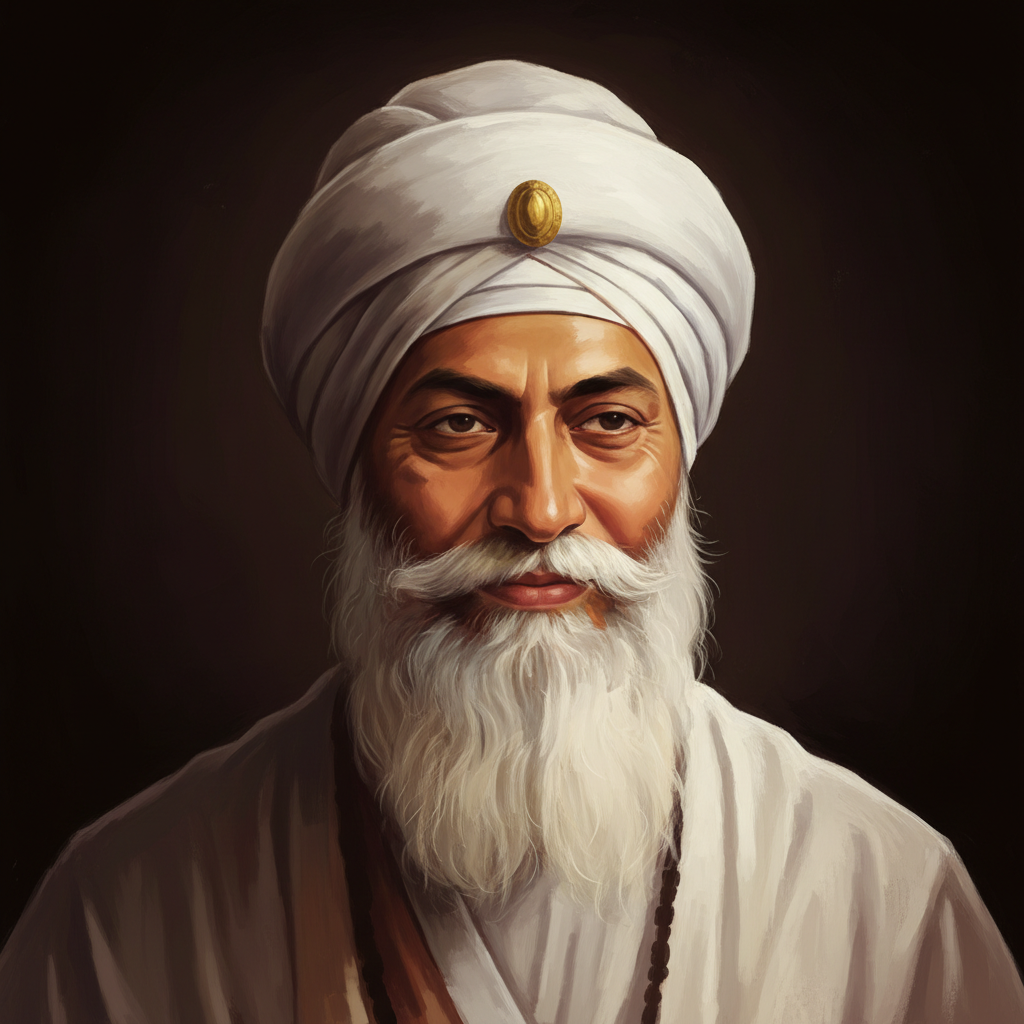
Guru Nanak founded Sikhism on the rejection of empty ritual and caste-based religion. He reportedly refused the Hindu janeu (sacred thread) ceremony as a boy, questioning why a cotton string conferred status when character did not. This quote is his direct response. His life's work—traveling across South Asia, eating with outcastes, composing hymns with Muslim companion Mardana—embodied the claim that virtue, not ceremony, defines the devout.
The era
In late 15th and early 16th century Punjab, Hindu ritualism and caste hierarchy governed daily life while the expanding Mughal presence heightened Hindu-Muslim tension. Brahmin priests gatekept spirituality through sacraments like the sacred thread, and untouchability was enforced. Nanak's era saw Kabir and the broader Bhakti-Sufi movements already questioning ritual, but Nanak crystallized the critique into a new tradition, preaching one God and human equality while regional rulers and clergy defended the old order.
AI-generated insights based on extensive research and information for context. Factual errors? Email [email protected].