Laozi — "If you realize that all things change, there is nothing you will try to hold on …"
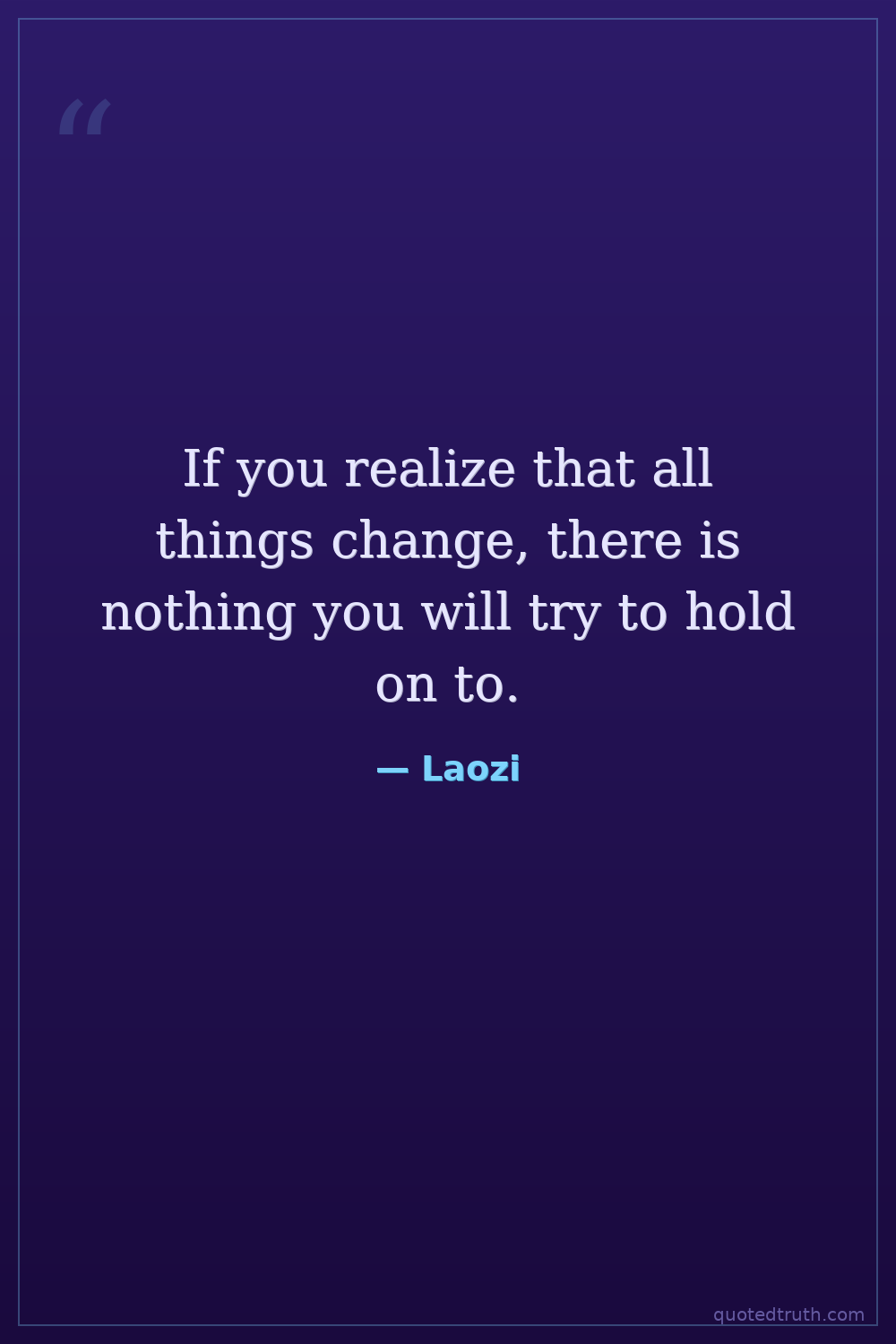
If you realize that all things change, there is nothing you will try to hold on to.
If you realize that all things change, there is nothing you will try to hold on to.
Click any product to generate a realistic preview. Up to 3 at a time.
* Initial load can take up to 90 seconds — revising the preview in another color is nearly instant.
"The five colors make one blind in the eyes; the five tones make one deaf in the ears."
"Do that which consists in taking no action; Pursue that which is not meddlesome; Savor that which has no flavor."
"A good traveler has no fixed plans and is not intent on arriving."
"The sage has no mind of his own. He takes the mind of the people as his mind."
"When the world has the Tao, the swift horses are used for hauling manure. When the world is without the Tao, war horses are bred in the suburbs."
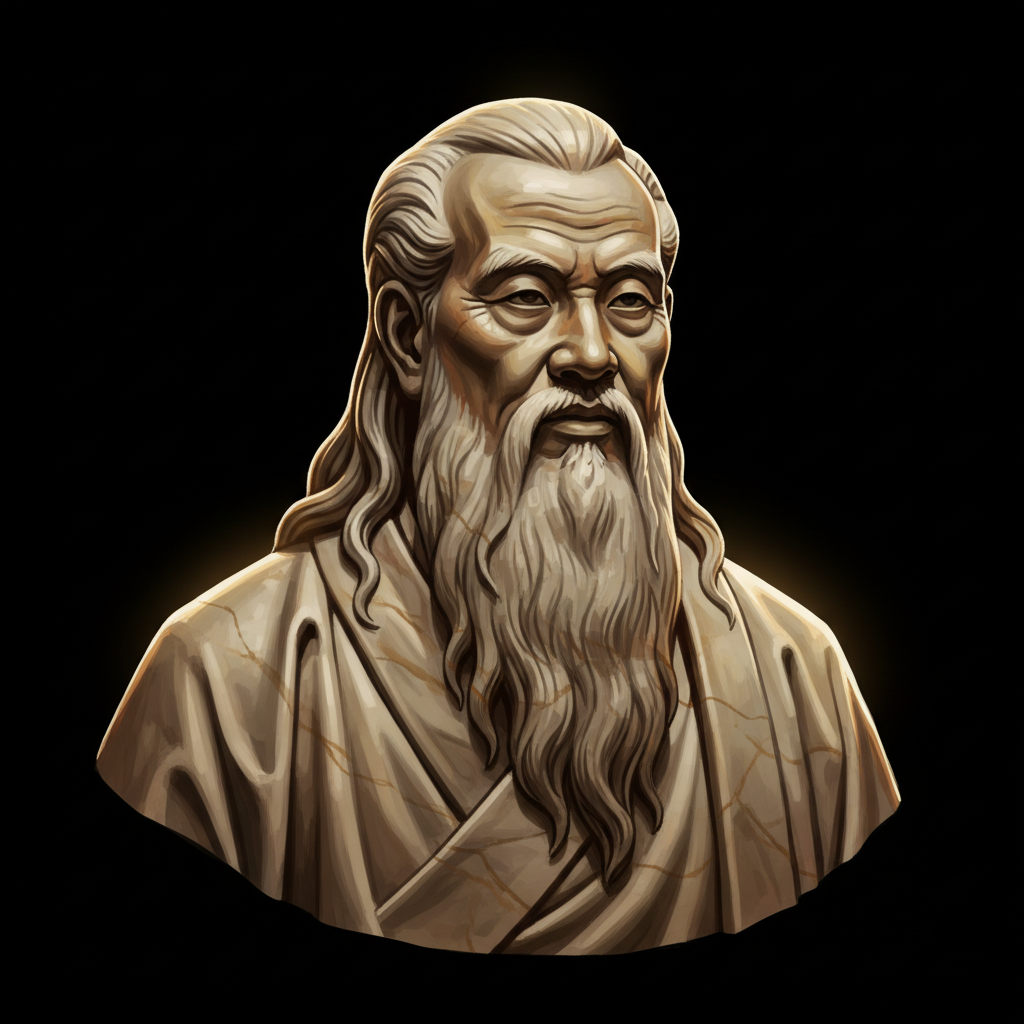
Reputed founder of Taoism and author of the Tao Te Ching, whose wu wei (effortless action) shaped East Asian philosophy. Closely associated with Zhuangzi (later Taoist who extended Laozi's framework). For an intellectual contrast, see Confucius, near-contemporary Chinese sage of social ritual and duty — Confucius systematized social order through ritual and hierarchy; Laozi argued that all such systems were the disease, not the cure — the two founding poles of Chinese moral philosophy.
Found in 1 providers: grok
1 source checked
Everything in existence is constantly shifting—relationships, possessions, emotions, even our own bodies and identities. Once you fully accept this truth, clinging becomes pointless and exhausting. You stop gripping tightly to outcomes, people, or past versions of yourself, because you see that holding on cannot freeze what is inherently fluid. Acceptance of impermanence naturally dissolves attachment, freeing you from the suffering that comes from resisting the flow of life.
Laozi built Taoism around wu wei, effortless action aligned with the Tao, the natural flow underlying all things. Legend says he worked as an archivist in the Zhou court before leaving civilization behind, handing the Tao Te Ching to a gatekeeper on his way west. That act itself—releasing his teachings and disappearing—embodies non-attachment. His philosophy consistently urges yielding over gripping, softness over force, and trusting change rather than fighting it.
Laozi lived during the late Zhou dynasty (6th century BCE), an era of collapsing feudal order later erupting into the Warring States period. Rulers clung desperately to power, territory, and rigid Confucian hierarchies as dynasties crumbled. Against this backdrop of frantic grasping and political chaos, Taoist detachment offered a radical alternative: stop struggling against impermanence. The saying spoke directly to people watching everything familiar dissolve, suggesting release rather than resistance as the path through turbulent times.
AI-generated insights based on extensive research and information for context. Factual errors? Email [email protected].
Your cart is empty