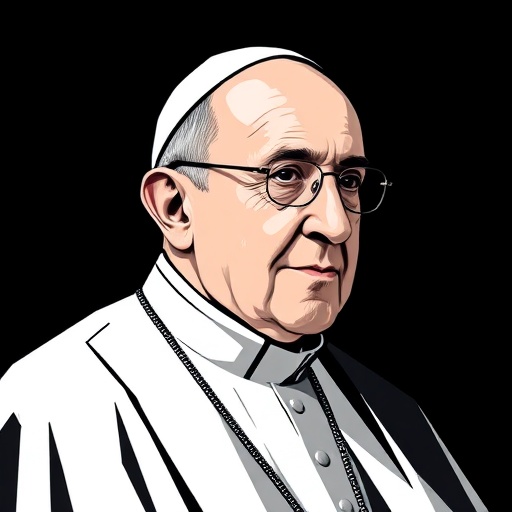
Pope Francis — "I'm a sinner."
I'm a sinner.
I'm a sinner.
Click any product to generate a realistic preview. Up to 3 at a time.
* Initial load can take up to 90 seconds — revising the preview in another color is nearly instant.
"The elderly are the roots of the family, and we must care for them."
"I like a lot to be on the street, but I can't."
"God always surprises us."
"The true power is service. The Pope must be a servant of servants."
"A good Catholic is interested in politics."
First Latin American and Jesuit pope (2013-), who has steered the Catholic Church toward pastoral inclusion on LGBTQ pastoral care, divorced Catholics, and climate. Closely associated with Pope John XXIII (the Vatican II reformer pope) and Cardinal Walter Kasper (his theological ally on pastoral reform). For an intellectual contrast, see Cardinal Raymond Burke, American traditionalist cardinal, former head of the Vatican Apostolic Signatura — Burke is the public face of Catholic traditionalism that views Francis's pastoral approach as doctrinally dangerous — he has formally challenged Amoris Laetitia and other Francis reforms.
Found in 1 providers: deepseek
1 source checked
A direct, unguarded admission of personal moral imperfection. Rather than projecting holiness or authority, it strips away pretense and places the speaker on equal footing with everyone else. It acknowledges that flaws, failures, and wrongdoing are part of being human—and that recognizing this honestly is the starting point of genuine faith, growth, and compassion toward others who also fail. It values humility over image.
Jorge Mario Bergoglio said this in his landmark 2013 America Magazine interview as his most accurate self-description—not as rhetoric but as lived conviction. A Jesuit formed in Ignatius of Loyola's rigorous examination of conscience, he built his papacy around mercy over judgment. His name choice—Francis of Assisi—signaled radical humility. He visited prisons, washed prisoners' feet, and prioritized the marginalized, living out the self-knowledge this confession demands.
Francis became Pope in 2013 as the Church reeled from clergy sexual abuse scandals, Vatican Bank corruption investigations, and Benedict XVI's unprecedented resignation. Global trust in institutions was collapsing while authenticity was being prized over authority. His self-identification as a sinner—not a figure above reproach—directly challenged the culture of clerical superiority that had enabled abuse, resonating with millions disillusioned by institutions demanding moral perfection while protecting wrongdoers internally.
AI-generated insights based on extensive research and information for context. Factual errors? Email [email protected].
Your cart is empty