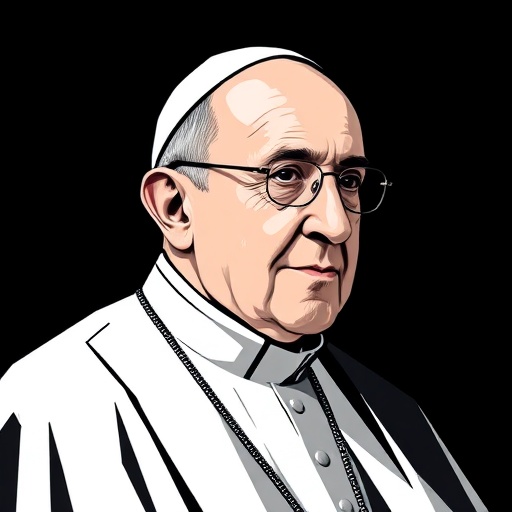
Pope Francis — "The true power is service. The Pope must be a servant of servants."
The true power is service. The Pope must be a servant of servants.
The true power is service. The Pope must be a servant of servants.
Click any product to generate a realistic preview. Up to 3 at a time.
* Initial load can take up to 90 seconds — revising the preview in another color is nearly instant.
"The family is threatened by growing efforts on the part of some to redefine the very institution of marriage, by relativism, by the culture of the ephemeral, by a lack of openness to life."
"I am not a Hollywood star."
"Money must serve, not rule."
"I am a disaster, but I am a disaster that asks for help."
"Every woman has a right to be respected."
First Latin American and Jesuit pope (2013-), who has steered the Catholic Church toward pastoral inclusion on LGBTQ pastoral care, divorced Catholics, and climate. Closely associated with Pope John XXIII (the Vatican II reformer pope) and Cardinal Walter Kasper (his theological ally on pastoral reform). For an intellectual contrast, see Cardinal Raymond Burke, American traditionalist cardinal, former head of the Vatican Apostolic Signatura — Burke is the public face of Catholic traditionalism that views Francis's pastoral approach as doctrinally dangerous — he has formally challenged Amoris Laetitia and other Francis reforms.
Found in 1 providers: grok
1 source checked
Real power doesn't come from hierarchy or command—it comes from service. This quote rejects authority as privilege or dominance, framing leadership as responsibility to lift others, not elevate oneself. 'Servant of servants' inverts the typical power structure: the person at the top exists to serve everyone beneath them. It calls for leaders who are accountable, humble, and defined by what they give rather than what they control or accumulate.
Jorge Mario Bergoglio chose the name Francis after the saint of poverty and radical service. He declined the Apostolic Palace to live in the communal Casa Santa Marta guesthouse, paid his own hotel bill on election night, and washed the feet of prisoners—including women and Muslims—breaking protocol. He has consistently criticized clericalism, championed a 'poor Church for the poor,' and pushed reform within a Vatican shaken by financial corruption and clergy sexual abuse cover-ups.
Francis became Pope in 2013 after Benedict XVI's historic resignation, inheriting a Church rocked by the clergy sexual abuse scandal, Vatileaks financial corruption, and plummeting Western attendance. Globally, populist strongmen were rising—projecting dominance over duty. His insistence that true power equals service countered both internal Vatican power games and a broader political culture increasingly equating leadership with personal brand, coercion, and wealth accumulation rather than accountability to those being led.
AI-generated insights based on extensive research and information for context. Factual errors? Email [email protected].
Your cart is empty