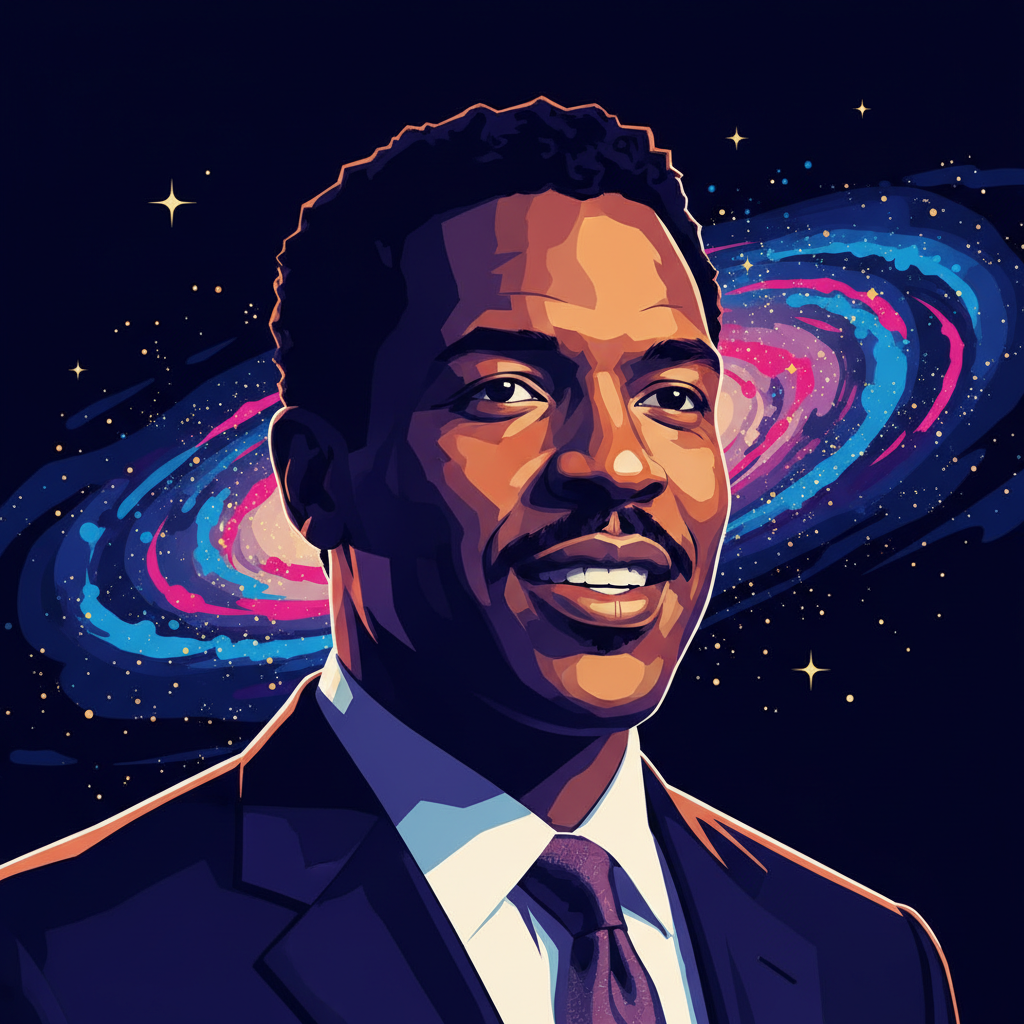
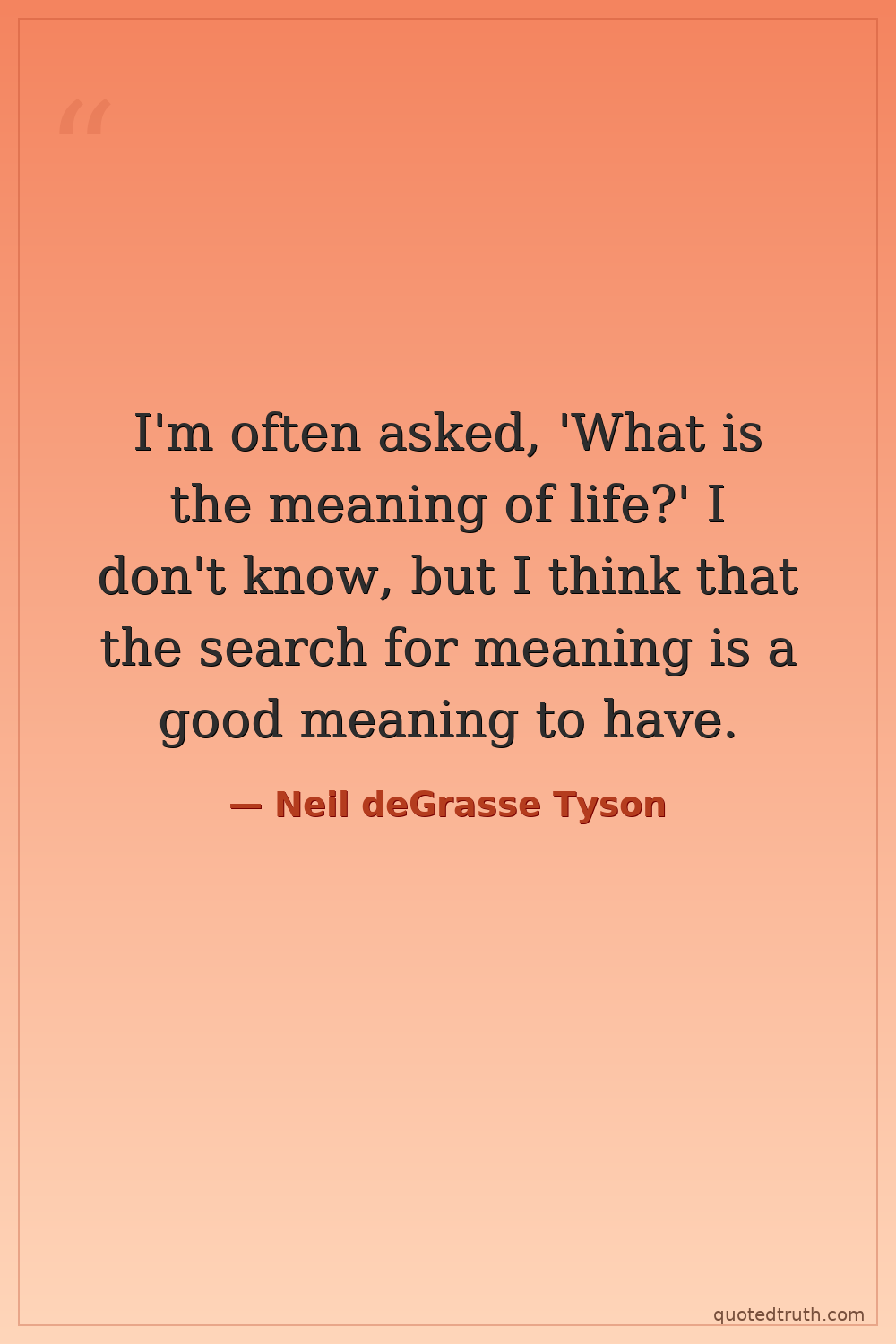
Neil deGrasse Tyson — "I'm often asked, 'What is the meaning of life?' I don't know, but I think that t…"
I'm often asked, 'What is the meaning of life?' I don't know, but I think that the search for meaning is a good meaning to have.
I'm often asked, 'What is the meaning of life?' I don't know, but I think that the search for meaning is a good meaning to have.
Click any product to generate a realistic preview. Up to 3 at a time.
* Initial load can take up to 90 seconds — revising the preview in another color is nearly instant.
"You know, the universe is a pretty big place. If it's just us, seems like an awful waste of space."
"Science is not just a collection of facts, but a way of thinking."
"If you're not failing, you're not pushing your limits, and if you're not pushing your limits, you're not maximizing your potential."
"The universe is not just a collection of facts. It's a story."
"I don't have a problem with people believing in God. I have a problem with people who think they know what God wants."
American astrophysicist, Hayden Planetarium director, and Cosmos: A Spacetime Odyssey host who carries the Carl Sagan public-science mantle. Closely associated with Bill Nye (fellow science communicator) and Brian Greene (theoretical physicist and string-theory popularizer). For an intellectual contrast, see Ken Ham, founder of Answers in Genesis and the Creation Museum — Ham's career has been organized around defending biblical 6-day creationism — exactly the science-education position Tyson's mainstream-science communication is structured to refute.
Found in 1 providers: grok
1 source checked
When people demand a definitive answer about why we exist, Tyson sidesteps the unanswerable and reframes it: the act of searching for meaning is itself a worthy purpose. You don't need a final answer to live meaningfully. Curiosity, inquiry, and the ongoing pursuit of understanding give life direction and value, even when the ultimate question remains permanently open.
Tyson built his career on making science accessible and inspiring public curiosity through StarTalk, Cosmos, and countless lectures. His worldview is rooted in empirical humility — acknowledging what we don't know while championing the pursuit itself. This quote mirrors his scientific ethos: the universe doesn't owe us easy answers, but exploration is its own reward.
In the early 21st century, amid polarized debates between religious traditionalism and secular materialism over life's purpose, Tyson's answer offers a pragmatic third path. Post-9/11 existential anxiety, rapid technological change, and declining institutional trust left millions questioning meaning. Framing inquiry itself as the answer resonated with a generation comfortable with uncertainty but hungry for intellectual engagement.
AI-generated insights based on extensive research and information for context. Factual errors? Email [email protected].
Your cart is empty