What it means
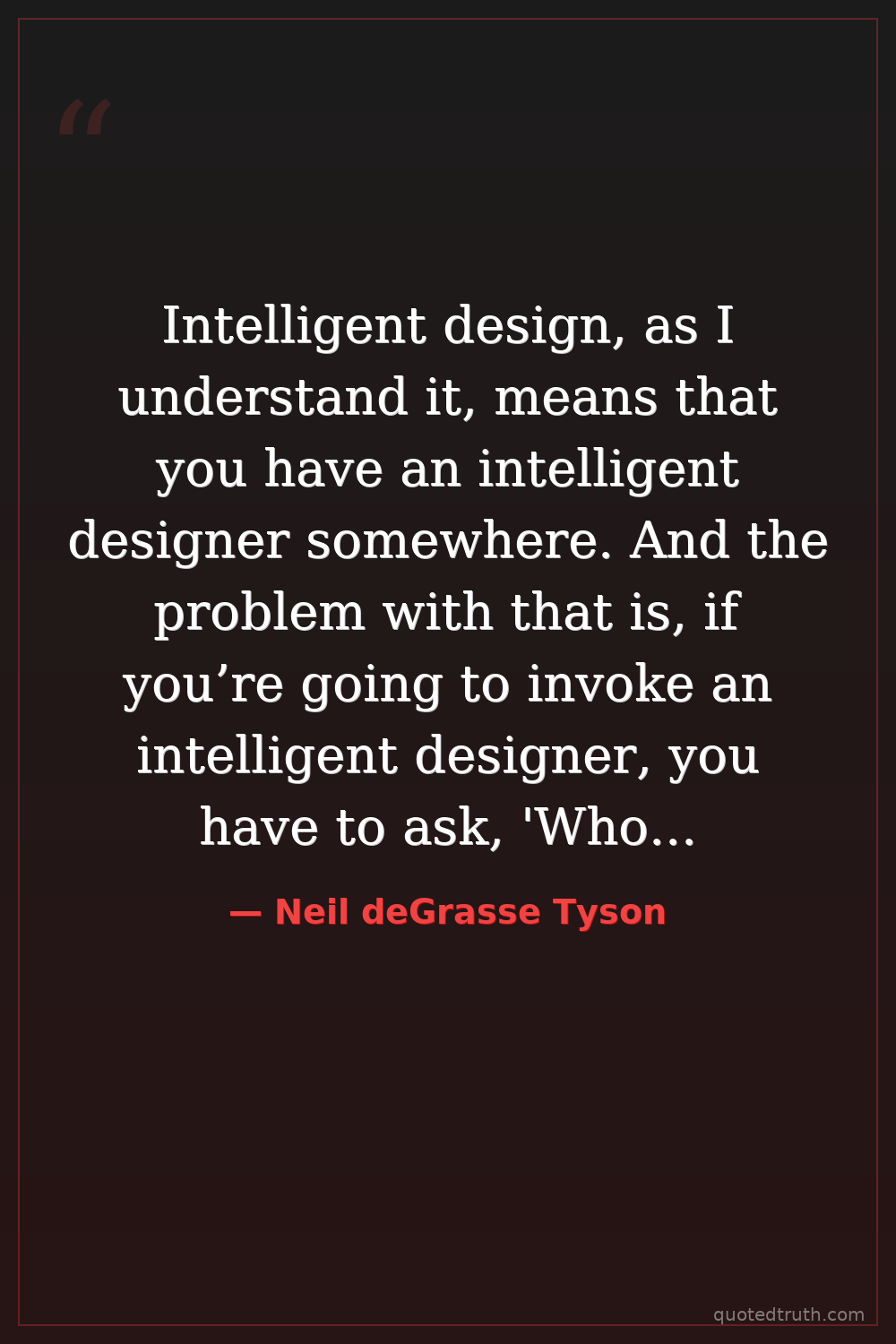
If something as complex as the universe needs an intelligent designer to explain it, then the designer itself—being presumably more complex—must also require a designer. This creates an infinite regress with no logical stopping point. The argument defeats itself: you cannot demand a creator for complexity while exempting that creator from the same demand. It is a classic reductio ad absurdum applied to creationist reasoning.
Relevance to Neil deGrasse Tyson
Tyson, director of the Hayden Planetarium and one of America's most prominent science communicators, regularly engages the intersection of science and religion without hostility. His signature approach is Socratic—turning a claim's own logic against itself. Known for his StarTalk podcast and PBS work making science accessible, this quote exemplifies his core conviction that intellectual honesty means following an argument's logic wherever it leads.
The era
The early 2000s saw intelligent design peak as a political and legal controversy. The Discovery Institute aggressively promoted ID as legitimate science, culminating in the landmark 2005 Kitzmiller v. Dover trial where a federal judge ruled it unconstitutional to teach in public schools. Fierce American culture wars over evolution in science curricula made Tyson's philosophical counter-argument particularly timely as a widely heard mainstream rebuttal.
AI-generated insights based on extensive research and information for context. Factual errors? Email [email protected].