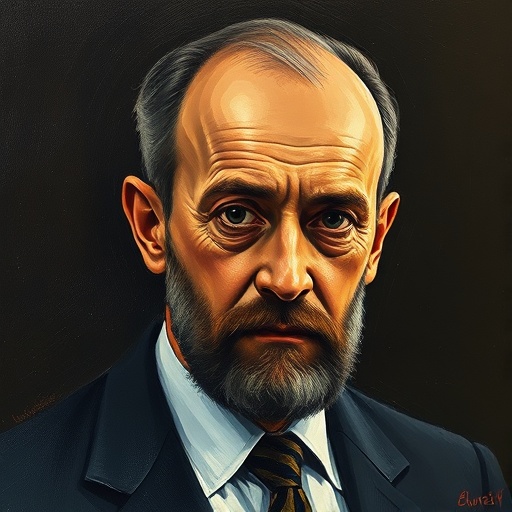
Enrico Fermi — "It does not say in the Bible that all laws of nature are expressible linearly!"
It does not say in the Bible that all laws of nature are expressible linearly!
It does not say in the Bible that all laws of nature are expressible linearly!
Click any product to generate a realistic preview. Up to 3 at a time.
* Initial load can take up to 90 seconds — revising the preview in another color is nearly instant.
"Whatever you do, don't let them make you a manager."
"The only way to do great work is to love what you do."
"Before I came here I was confused about this subject. Having listened to your lecture I am still confused. But on a higher level."
"I am a simple man, and I like simple explanations."
"The atomic age has brought with it great challenges, but also great opportunities."
Found in 1 providers: gemini
1 source checked
Nature isn't obligated to follow simple, linear equations. When scientists assume linearity—that doubling an input doubles an output—they're making a mathematical convenience, not a law of nature. Fermi challenges the habit of defaulting to linear models just because they're easier to solve. Real physical systems are often nonlinear: turbulence, nuclear chain reactions, quantum fields. There's no cosmic rule requiring nature to behave in ways mathematicians find convenient.
Fermi was famous for physical intuition and willingness to tackle messy, real-world problems. He built the first nuclear reactor, where chain reactions are inherently nonlinear—small changes cascade explosively. He pioneered numerical simulations with early computers to study nonlinear wave phenomena in the Fermi-Pasta-Ulam problem. Known for questioning unjustified assumptions, his irreverence toward mathematical shortcuts reflected his commitment to understanding nature as it actually behaves, not as theorists wish it would.
In the 1940s–1950s, physics relied heavily on linear approximations because nonlinear equations were nearly impossible to solve by hand. The Manhattan Project demanded precise modeling of nuclear reactions—inherently nonlinear processes. Early computers like MANIAC were just emerging, opening the door to nonlinear computation. Fermi himself used MANIAC in 1953 to study nonlinear oscillations. The era was a turning point: scientists were beginning to confront nature's true complexity rather than concealing it behind convenient linearizations.
AI-generated insights based on extensive research and information for context. Factual errors? Email [email protected].
Your cart is empty