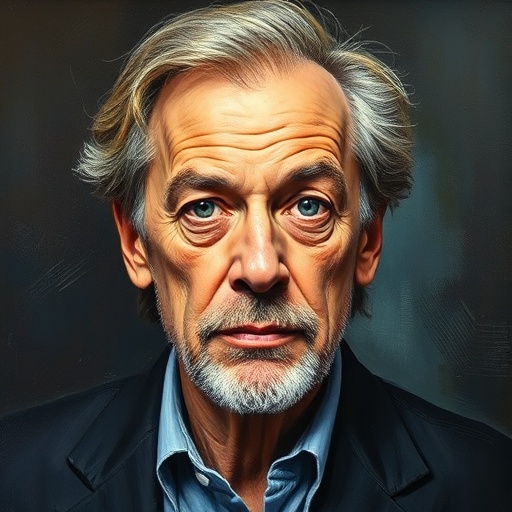
Richard Feynman — "It doesn't matter how beautiful your theory is, it doesn't matter how smart you …"
It doesn't matter how beautiful your theory is, it doesn't matter how smart you are. If it doesn't agree with experiment, it's wrong.
It doesn't matter how beautiful your theory is, it doesn't matter how smart you are. If it doesn't agree with experiment, it's wrong.
Click any product to generate a realistic preview. Up to 3 at a time.
* Initial load can take up to 90 seconds — revising the preview in another color is nearly instant.
"I had a lot of fun, and I'm very glad I was born."
"The only way to do something is to do it. Not to talk about it, not to plan it, but to do it."
"It doesn't seem to me that this fantastically marvelous universe, this tremendous range of time and space and different kinds of animals, and all the different planets, and all these atoms with all th…"
"The more you learn, the more you realize how much you don't know."
"The price of doing science is the necessity of not being a know-it-all."
American theoretical physicist who shared the 1965 Nobel for QED, developed Feynman diagrams, and wrote the Feynman Lectures on Physics. Closely associated with Julian Schwinger (co-Nobelist for QED) and Murray Gell-Mann (Caltech rival and Eightfold-Way physicist). For an intellectual contrast, see Deepak Chopra, physician and quantum-mysticism author — Feynman's Caltech 'cargo cult science' commencement address is the precise template for what he saw as misuse of physics terminology — Chopra-style appropriation of quantum vocabulary for metaphysical claims is the canonical example of what Feynman called 'fooling yourself'.
Found in 1 providers: grok
1 source checked
A theory's elegance or its creator's intelligence is irrelevant if experimental evidence contradicts it. Science is not determined by authority, beauty, or clever reasoning—it is determined by what nature actually does. When reality disagrees with your model, the model loses, no matter how convincing it seems on paper. Empirical testing is the ultimate and non-negotiable judge of scientific truth.
Feynman built quantum electrodynamics, one of history's most precisely verified theories, yet he remained fanatically committed to experimental falsifiability over aesthetic appeal. He famously demolished the Challenger disaster's O-ring theory with a cup of ice water. He distrusted philosophy disconnected from testable predictions and repeatedly warned colleagues against fooling themselves with beautiful mathematics that nature hadn't confirmed.
Post-WWII physics was intoxicating—relativity and quantum mechanics had reshaped reality, and theorists commanded enormous prestige. String theory and highly abstract frameworks were gaining momentum, sometimes outpacing experimental reach. Feynman pushed back against physics drifting toward unfalsifiable speculation, defending the Enlightenment principle that human observation of nature, not human intellect alone, defines what is true.
AI-generated insights based on extensive research and information for context. Factual errors? Email [email protected].
Your cart is empty