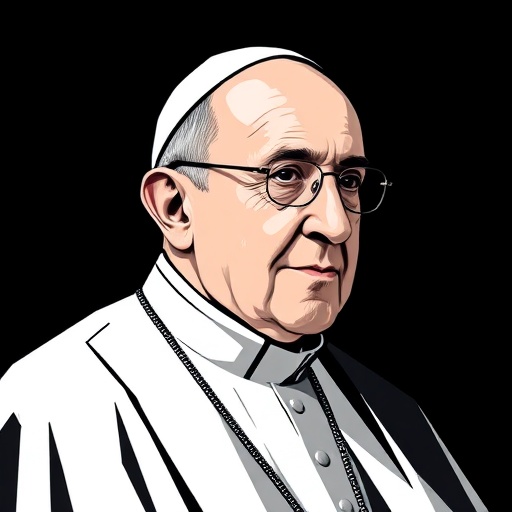
Pope Francis — "It hurts me when I see priests or nuns with the latest model car. You can’t do t…"
It hurts me when I see priests or nuns with the latest model car. You can’t do this.
It hurts me when I see priests or nuns with the latest model car. You can’t do this.
Click any product to generate a realistic preview. Up to 3 at a time.
* Initial load can take up to 90 seconds — revising the preview in another color is nearly instant.
"Climate change is a global problem with serious implications, environmental, social, economic, political and for the distribution of goods."
"I'm a bit allergic to airports."
"The Church is not a museum, but a hospital."
"The poor cannot wait."
"It is not true that the poor are a burden. The poor are a resource."
First Latin American and Jesuit pope (2013-), who has steered the Catholic Church toward pastoral inclusion on LGBTQ pastoral care, divorced Catholics, and climate. Closely associated with Pope John XXIII (the Vatican II reformer pope) and Cardinal Walter Kasper (his theological ally on pastoral reform). For an intellectual contrast, see Cardinal Raymond Burke, American traditionalist cardinal, former head of the Vatican Apostolic Signatura — Burke is the public face of Catholic traditionalism that views Francis's pastoral approach as doctrinally dangerous — he has formally challenged Amoris Laetitia and other Francis reforms.
Found in 1 providers: grok
1 source checked
Religious clergy who take vows of poverty and service undermine their mission when they display wealth through luxury purchases. Owning the latest, most expensive car signals status and materialism — the opposite of what priests and nuns profess to believe. This is a direct challenge to clerical hypocrisy, arguing that authentic ministry requires visible consistency between preached values and personal lifestyle choices.
Francis famously rejected the papal palace for a modest Vatican guesthouse, drove a battered Ford Focus, and personally carried his own luggage — choices that shocked observers accustomed to papal grandeur. As Buenos Aires Archbishop, he rode public buses and cooked his own meals. His Jesuit formation and years serving Argentina's slums made material austerity a non-negotiable, lived expression of his faith rather than rhetorical posturing.
Francis became pope in 2013 as the Church reeled from Vatican Bank corruption investigations and global clergy abuse cover-ups that shattered institutional trust. Simultaneously, wealth inequality reached historic levels — Piketty's research and the Occupy movement dominated public discourse. Visible clerical wealth read as profound institutional tone-deafness in this climate, making Francis's austerity demands a calculated response to both the spiritual and reputational crises facing Catholicism worldwide.
AI-generated insights based on extensive research and information for context. Factual errors? Email [email protected].
Your cart is empty