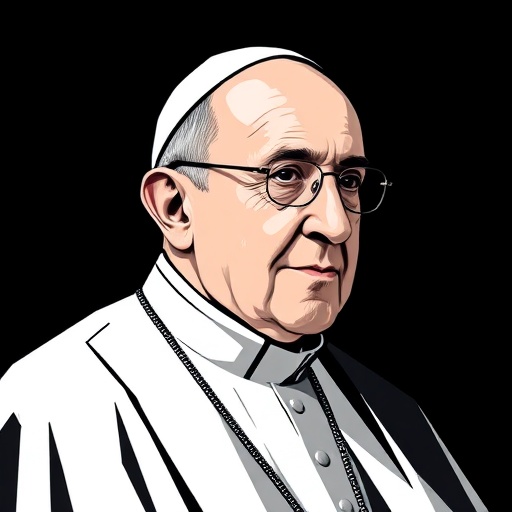
Pope Francis — "It is not true that the poor are a burden. The poor are a resource."
It is not true that the poor are a burden. The poor are a resource.
It is not true that the poor are a burden. The poor are a resource.
Click any product to generate a realistic preview. Up to 3 at a time.
* Initial load can take up to 90 seconds — revising the preview in another color is nearly instant.
"A closed heart is a sick heart."
"The Church is not a museum, but a hospital."
"The world needs more tenderness."
"The Church is not a club for the perfect, but a home for the imperfect."
"A good laugh is good for the soul."
First Latin American and Jesuit pope (2013-), who has steered the Catholic Church toward pastoral inclusion on LGBTQ pastoral care, divorced Catholics, and climate. Closely associated with Pope John XXIII (the Vatican II reformer pope) and Cardinal Walter Kasper (his theological ally on pastoral reform). For an intellectual contrast, see Cardinal Raymond Burke, American traditionalist cardinal, former head of the Vatican Apostolic Signatura — Burke is the public face of Catholic traditionalism that views Francis's pastoral approach as doctrinally dangerous — he has formally challenged Amoris Laetitia and other Francis reforms.
Found in 1 providers: grok
1 source checked
Poor people are not a drain on society — they hold untapped human potential, labor, creativity, and moral wisdom that communities need. Framing them as problems to be managed denies their dignity and overlooks what they contribute. Real progress happens when societies invest in the marginalized rather than excluding them. The poor can be active agents of change and engines of shared prosperity, not passive charity recipients.
Born Jorge Bergoglio in Buenos Aires, Francis grew up in economically unequal Argentina and ministered directly in the villas miserias — Buenos Aires shantytowns. He chose his papal name to honor St. Francis of Assisi, patron of the poor. His theology centers on the 'preferential option for the poor,' a Jesuit and liberation theology principle insisting the marginalized hold a privileged moral claim on society and the Church's mission.
Francis became pope in 2013, amid the long tail of the 2008 financial crisis. Austerity politics dominated Europe; welfare cuts were framed as fiscal necessity. The Occupy movement had just spotlighted extreme inequality, and refugee crises were mounting as Syrian and African displacement surged. Populist politicians across the West increasingly cast the poor and migrants as drains on national resources — making Francis's direct rebuttal both politically charged and theologically urgent.
AI-generated insights based on extensive research and information for context. Factual errors? Email [email protected].
Your cart is empty