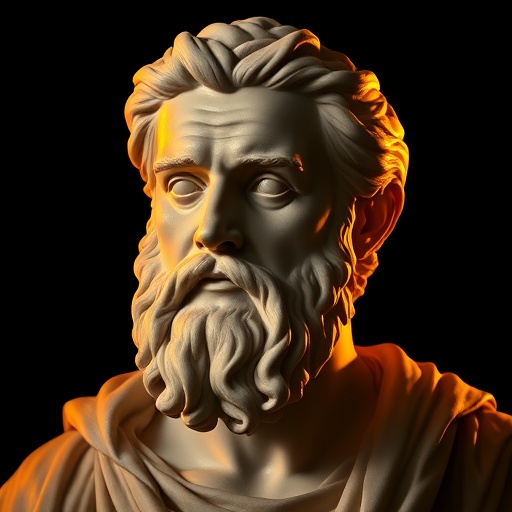
Hippocrates — "It is a disgrace to a man to grow old without seeing the beauty and strength of …"
It is a disgrace to a man to grow old without seeing the beauty and strength of which his body is capable.
It is a disgrace to a man to grow old without seeing the beauty and strength of which his body is capable.
Click any product to generate a realistic preview. Up to 3 at a time.
* Initial load can take up to 90 seconds — revising the preview in another color is nearly instant.
"The causes of disease are in the air, the water, and the place."
"Before you heal someone, ask him if he's willing to give up the things that make him sick."
"Conclusions which are merely verbal cannot bear fruit, only those do which are based on demonstrated fact. For affirmation and talk are deceptive and treacherous. Wherefore one must hold fast to facts…"
"It is more important to know what sort of person has a disease than to know what sort of disease a person has."
"The way to health is to have a good digestion, a good appetite, and a good sleep."
Found in 1 providers: grok
1 source checked
A person should not passively let their body deteriorate through neglect. Life demands active engagement with physical potential — pushing the body through exercise and discipline to discover what it can truly do. Reaching old age without ever testing your physical limits is a failure of self-knowledge and a wasted opportunity to experience the full range of human capability.
Hippocrates built medicine on careful observation of the body, treating it as a natural system governed by diet, exercise, and environment rather than supernatural forces. He prescribed physical activity as therapy and believed the physician must understand the body's capacities intimately. This quote reflects his conviction that bodily health is a moral and intellectual responsibility, not merely a physical accident.
In ancient Greece, physical excellence was a civic and spiritual ideal — the Olympics honored gods through athletic competition, and gymnasia were centers of education and community life. A weak or neglected body reflected poorly on one's character and citizenship. Hippocrates wrote during the 5th–4th century BCE, when philosophers like Socrates also linked bodily discipline to virtue and self-mastery.
AI-generated insights based on extensive research and information for context. Factual errors? Email [email protected].
Your cart is empty