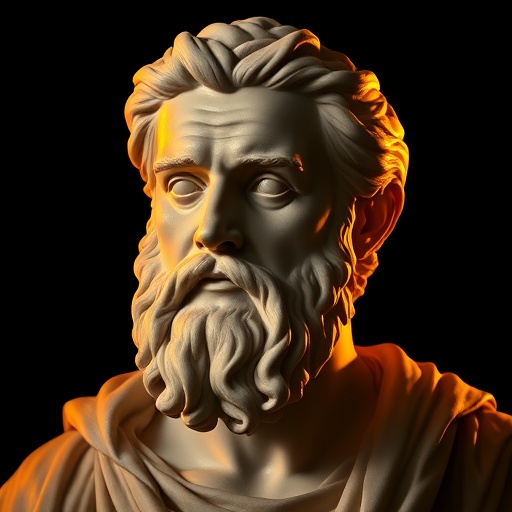
Hippocrates — "It is more important to know what sort of person has a disease than to know what…"
It is more important to know what sort of person has a disease than to know what sort of disease a person has.
It is more important to know what sort of person has a disease than to know what sort of disease a person has.
Click any product to generate a realistic preview. Up to 3 at a time.
* Initial load can take up to 90 seconds — revising the preview in another color is nearly instant.
"To do nothing is sometimes a good remedy."
"The greatest mistake in the treatment of diseases is that there are physicians for the body and physicians for the soul, although the two cannot be separated."
"The patient must be taught to help himself."
"The greatest joy in life is to be healthy."
"Illnesses do not come upon us out of the blue. They are developed from small daily sins against Nature. When enough sins have accumulated, illnesses will suddenly appear."
Emphasizing the importance of individual patient characteristics over disease categorization.
Date: c. 460-370 BCE
WisdomFound in 2 providers: gemini,grok
2 sources checked
The whole person matters more than the diagnosis alone. Two patients with identical diseases may need entirely different treatments based on their constitution, habits, lifestyle, and environment. Understanding someone's diet, occupation, stress, and physical tendencies reveals why they got sick and how they will recover. Effective healing requires reading the individual, not just identifying a condition, because the same disease behaves differently in different bodies and lives.
Hippocrates built medicine on meticulous patient observation at his school in Kos, teaching physicians to record detailed histories covering diet, sleep, climate exposure, and occupation before diagnosing. His Corpus stresses prognosis: predicting how a specific body will respond, not merely naming a condition. This quote reflects his foundational conviction that each patient is a unique living system shaped by constitution and environment, determining both susceptibility and the path to recovery.
In 5th-century BCE Greece, disease was widely attributed to divine punishment or demonic forces, with Asclepius temple priests dominating healing practice. Hippocrates lived alongside Socrates as rational philosophy was just beginning to challenge supernatural explanations. His insistence on cataloguing individual patients through climate, diet, and bodily constitution was a direct revolt against one-size-fits-all religious remedies, repositioning medicine as an empirical, secular discipline grounded in observable natural causes.
AI-generated insights based on extensive research and information for context. Factual errors? Email [email protected].
Your cart is empty