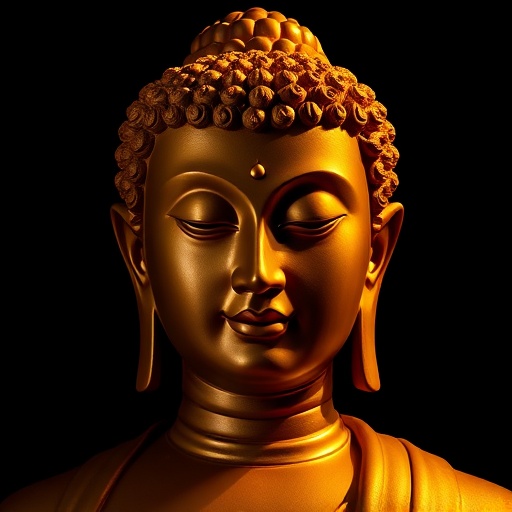
Siddhartha Gautama (Buddha) — "It is a man's own mind, not his enemy or foe, that lures him to evil ways."
It is a man's own mind, not his enemy or foe, that lures him to evil ways.
It is a man's own mind, not his enemy or foe, that lures him to evil ways.
Click any product to generate a realistic preview. Up to 3 at a time.
* Initial load can take up to 90 seconds — revising the preview in another color is nearly instant.
"Give, even if you only have a little."
"Do not dwell in the past, do not dream of the future, concentrate the mind on the present moment."
"To enjoy good health, to bring true happiness to one's family, to bring peace to all, one must first discipline and control one's own mind. If a man can control his mind he can find the way to Enlight…"
"He who is not disturbed by the clamor of the world, nor by its sorrows, nor by its joys, is truly a wise man."
"'As I am, so are they; as they are, so am I.' Comparing others with oneself, do not kill nor cause others to kill."
Found in 1 providers: gemini
1 source checked
Your own thoughts, not outside people or circumstances, are what lead you toward harmful choices. Blaming enemies, bad luck, or tempters misses the real source: the untrained mind that generates craving, anger, and delusion. Every destructive action begins as an internal impulse you agreed to follow. Responsibility for moral failure lies inward, and so does the power to correct course by watching and disciplining your own thinking.
Buddha built his entire teaching around mental cultivation. After leaving his palace at twenty-nine and sitting under the Bodhi tree, he concluded suffering arises from craving inside the mind, not from external forces. The Dhammapada repeatedly names the mind as forerunner of all conditions. His Noble Eightfold Path centers on right intention, right mindfulness, and right concentration—tools for supervising the very faculty this saying warns about.
In 5th-century BCE northern India, dominant Vedic religion located spiritual danger in ritual impurity, demons, and offended gods requiring Brahmin-led sacrifice. Buddha's era saw the shramana movement—wandering ascetics like Mahavira and the Ajivikas—challenging this external framework. Relocating evil's origin from supernatural enemies to one's own untrained psychology was a radical democratization: liberation became available to anyone willing to examine their mind, bypassing priests, caste, and costly offerings.
AI-generated insights based on extensive research and information for context. Factual errors? Email [email protected].
Your cart is empty