What it means
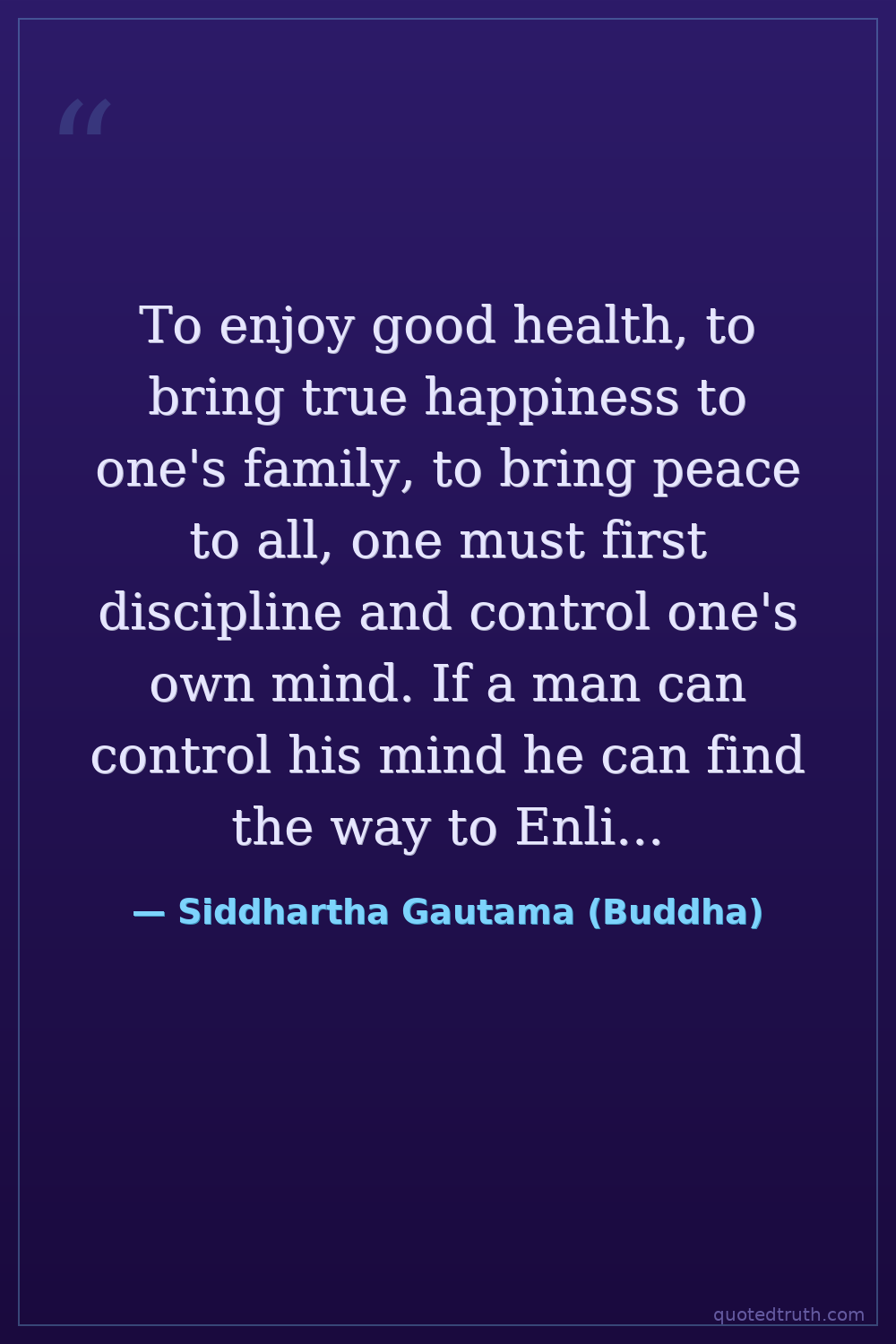
Real well-being starts inside you, not outside. Before you can be healthy, make your family happy, or contribute to peace in the world, you have to get a handle on your own thoughts and reactions. Once you actually train your mind and stop letting it run wild, clarity follows on its own. Insight, good judgment, and ethical behavior aren't things you chase separately, they show up naturally as byproducts of inner discipline.
Relevance to Siddhartha Gautama (Buddha)
Siddhartha abandoned palace luxury at 29 after seeing sickness, aging, and death, then spent six years testing extreme asceticism before rejecting it for the Middle Way. His breakthrough under the Bodhi tree came through meditative mastery of his own mind, not external ritual. This teaching distills his core method: right mindfulness and right concentration as two limbs of the Eightfold Path. He taught that craving and untrained mental habits, not circumstances, generate suffering.
The era
Around the 5th century BCE in the Gangetic plain of northern India, Vedic Brahmin orthodoxy dominated spiritual life, emphasizing sacrifice, caste hierarchy, and external ritual performed by priests. A wave of shramana movements, including Jainism and the Ajivikas, pushed back by prioritizing personal renunciation and inner discipline over birthright. The Buddha's emphasis on mental cultivation rather than sacrificial offering was radical democratization, opening awakening to anyone who trained their mind, regardless of caste.
AI-generated insights based on extensive research and information for context. Factual errors? Email [email protected].