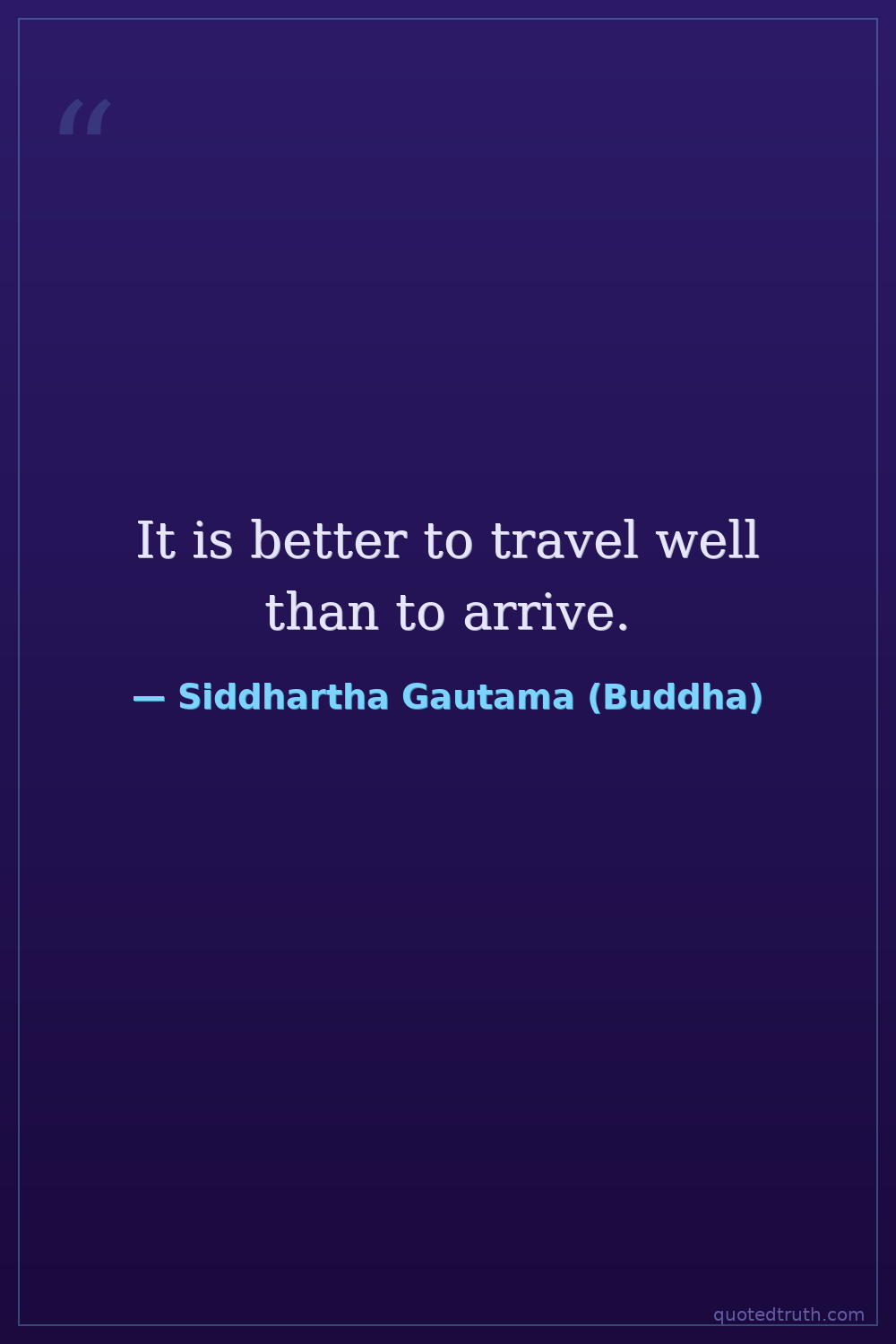
Siddhartha Gautama (Buddha) — "It is better to travel well than to arrive."
It is better to travel well than to arrive.
It is better to travel well than to arrive.
Click any product to generate a realistic preview. Up to 3 at a time.
* Initial load can take up to 90 seconds — revising the preview in another color is nearly instant.
"Nothing can harm you as much as your own thoughts unguarded."
"To be idle is a short road to death and to be diligent is a long road to life."
"If you light a lamp for someone else, it will also brighten your own path."
"When watching after yourself, you watch after others. When watching after others, you watch after yourself."
"When the mind is pure, joy follows like a shadow that never leaves."
Attributed, often cited in various Buddhist texts and teachings.
Date: c. 5th century BCE
WisdomFound in 2 providers: grok,gemini
2 sources checked
The value of life lies in how you move through it, not in reaching some final destination. Growing, learning, and acting with care during the journey matters more than any endpoint you might hit. Goals can motivate you, but fixating on outcomes cheapens the experience. A thoughtful, skillful path produces more worth than a rushed arrival, because the process itself shapes who you become and what you carry forward.
Siddhartha walked away from a palace and spent years wandering as a seeker before his awakening under the Bodhi tree. His teaching framed life as a path, literally the Noble Eightfold Path, where right effort and right mindfulness matter at every step. Enlightenment for him was not a trophy but a way of being present. Even after awakening, he kept walking and teaching across northern India for decades, embodying the journey rather than retiring to a destination.
In 5th-century BCE northern India, the Vedic ritual order was cracking under new urban kingdoms, trade wealth, and the rise of shramana wanderers questioning caste and sacrifice. Jains, Ajivikas, and early Upanishadic thinkers competed over how to end suffering and rebirth. Many sought moksha as a fixed goal reached through extreme asceticism. The Buddha's emphasis on a middle-way path, practiced daily, pushed back against both ritual shortcuts and harsh austerity as mere destinations.
AI-generated insights based on extensive research and information for context. Factual errors? Email [email protected].
Your cart is empty