What it means
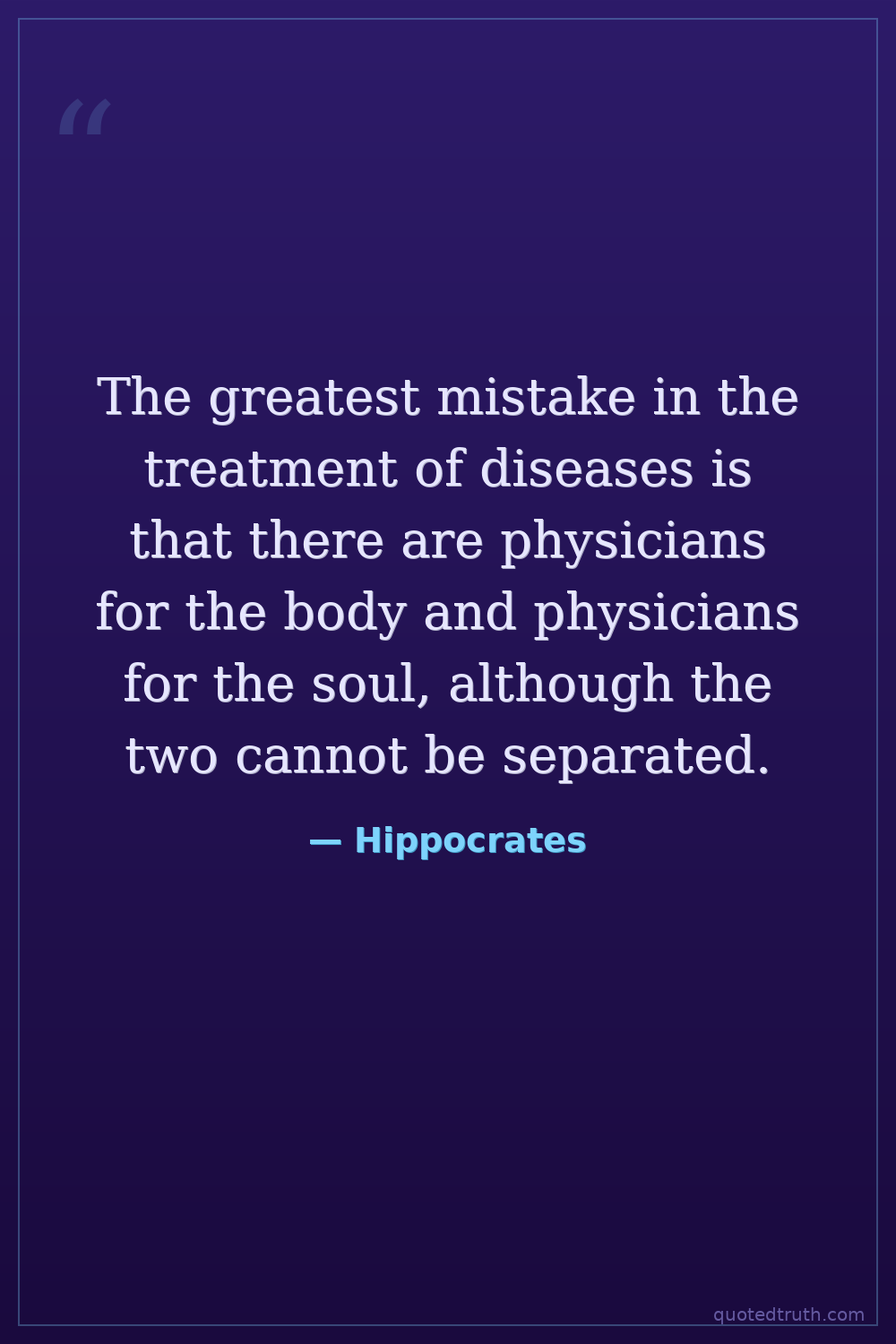
Splitting healthcare into separate domains — one for the body, another for the mind or soul — is fundamentally flawed because the two are inseparable. Physical illness can stem from or worsen mental states, and mental distress manifests in the body. True healing must treat the whole person. What we now call psychosomatic medicine, holistic care, or the mind-body connection, Hippocrates identified as medicine's core blind spot over 2,400 years ago.
Relevance to Hippocrates
Hippocrates built medicine on systematic observation and naturalistic reasoning, rejecting supernatural explanations for illness. He understood disease as arising from the whole patient — diet, environment, emotional state. His Hippocratic Corpus covers not just physical symptoms but disposition and mental condition as diagnostic factors. This quote directly mirrors his holistic clinical philosophy: the same physician who catalogued bodily symptoms also insisted that ignoring the patient's interior life was professional negligence.
The era
In 5th–4th century BCE Greece, bodily healing and soul-care were strictly divided: physicians treated physical ailments while priests, philosophers, and temple healers addressed the soul at sanctuaries like Asclepius's at Epidaurus. Plato and his contemporaries debated the soul as philosophy's domain. Hippocrates, working to establish medicine as a rational science separate from religion, paradoxically recognized this division was harmful — a remarkable insight when the culture itself enforced that very split.
AI-generated insights based on extensive research and information for context. Factual errors? Email [email protected].