What it means
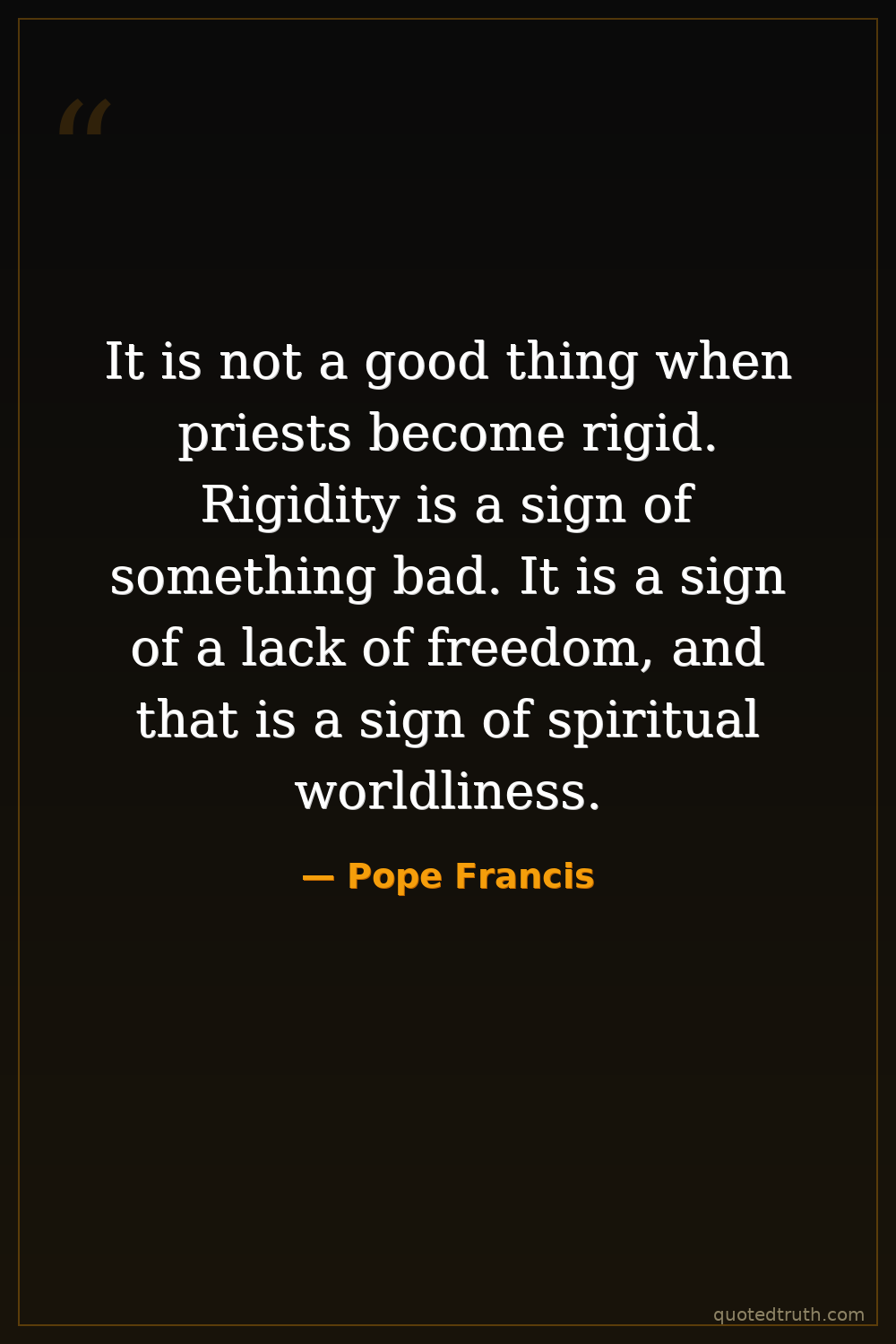
When clergy become inflexible — fixated on rules, appearances, or forms — something has gone wrong spiritually. Rigidity signals a soul imprisoned by fear, pride, or performance rather than genuine faith. True freedom in God produces openness and warmth, not defensive hardness. A priest who clings to rigid structures is often hiding behind them, prioritizing outward religious posture over authentic inner transformation. That kind of spiritual facade is itself a worldly trap.
Relevance to Pope Francis
As a Jesuit, Francis was trained in spiritual discernment and adaptability — finding God in all things, not rigid formulas. His years as Archbishop of Buenos Aires showed him how clerical rigidity drove ordinary people away from the Church. He has consistently battled clericalism throughout his papacy, calling priests to be shepherds who smell like the sheep, not gatekeepers hiding behind vestments, rules, and institutional prestige.
The era
Francis became Pope in 2013 amid catastrophic clergy sexual abuse scandals globally — many perpetrators shielded by institutional rigidity and clericalism. Simultaneously, traditionalist clergy responded to Vatican II's reforms by retreating into increasingly rigid liturgical and doctrinal positions, creating open tension between pastoral flexibility and defensive formalism. His critique directly addressed both crises: abuse cover-ups enabled by clerical culture and culture-war entrenchment hardening divisions within the institution.
AI-generated insights based on extensive research and information for context. Factual errors? Email [email protected].