What it means
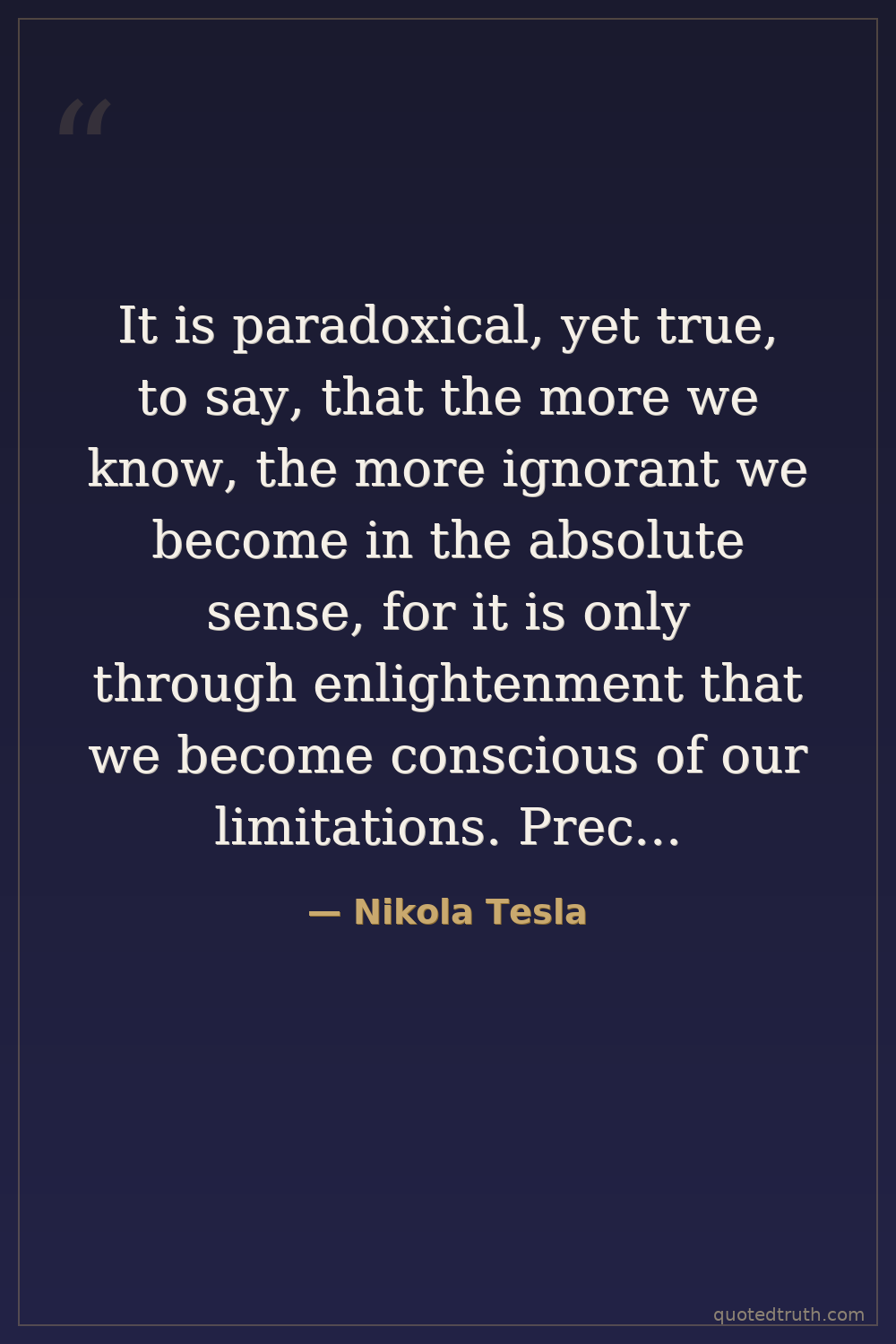
Gaining knowledge reveals how much more there is to discover — real understanding exposes the vastness of what remains unknown. This isn't discouraging; it means your mind has grown enough to see further horizons. True ignorance is not knowing you don't know. The reward of learning isn't certainty but a continuously expanding view of possibility, where each answer opens ten better questions.
Relevance to Nikola Tesla
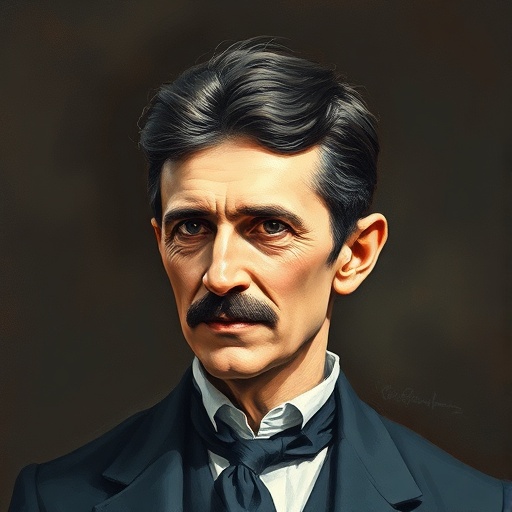
Tesla's entire career embodied this paradox. Each breakthrough — AC induction motors, polyphase power systems, early radio transmission — revealed deeper physical mysteries rather than resolving them. He held over 300 patents yet described himself as always scratching the surface of nature's secrets. His obsessive notebooks show a mind perpetually discovering new questions, not resting on answers. His later unrealized projects, like wireless global energy, reflect an imagination always chasing an expanding horizon.
The era
Tesla worked during the Second Industrial Revolution, when electricity was reshaping civilization and classical physics seemed nearly complete. Yet Maxwell's equations, thermodynamics, and early quantum experiments were simultaneously revealing the universe was stranger than Victorian science assumed. Einstein's relativity arrived in 1905, overturning Newtonian certainty. Scientists were discovering their best theories were approximations. This collision between confident industrial progress and deepening scientific uncertainty gave Tesla's observation particular resonance.
AI-generated insights based on extensive research and information for context. Factual errors? Email [email protected].