What it means
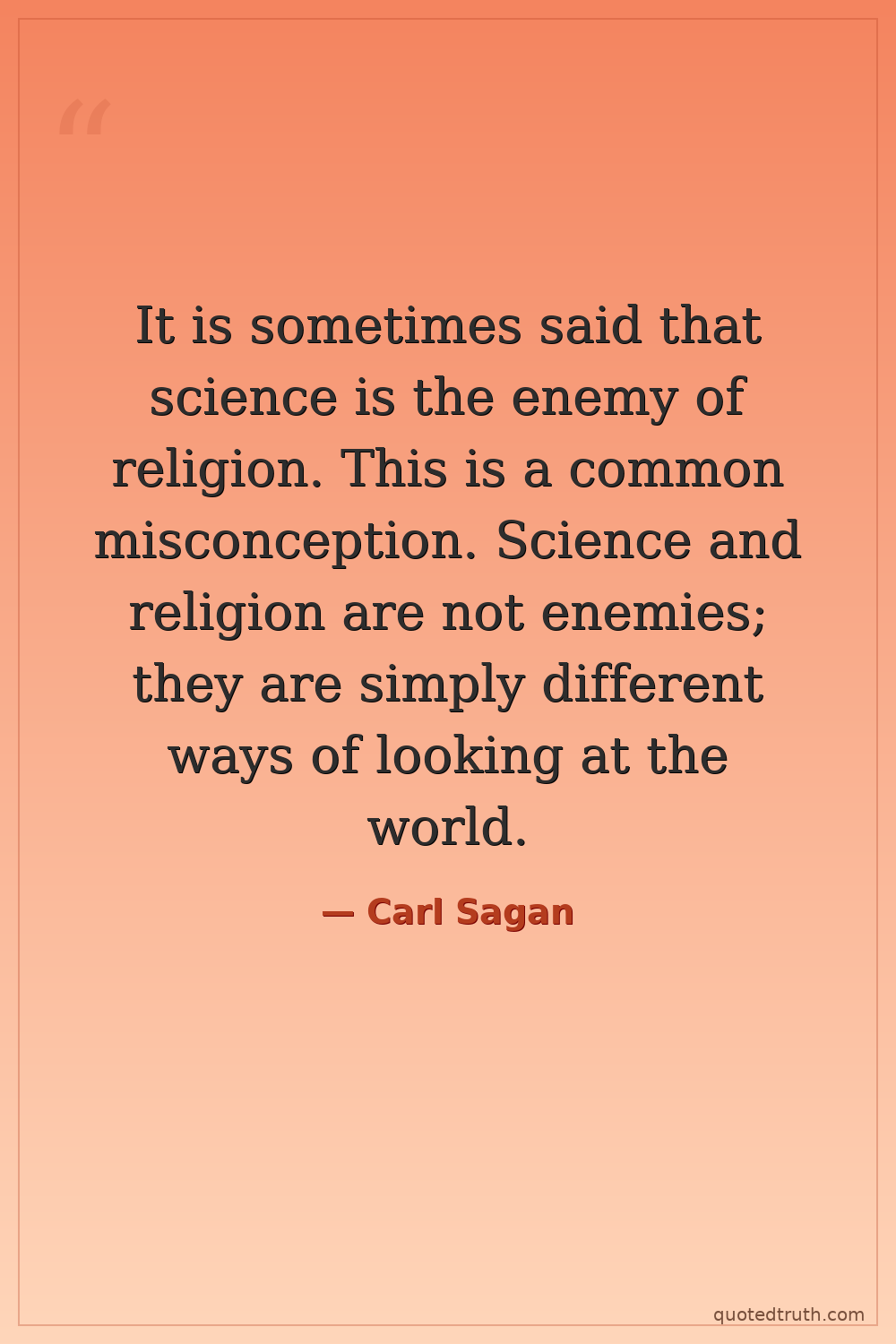
Science and religion operate in different domains and need not conflict. Science investigates how the natural world works through evidence and testing; religion addresses meaning, morality, and human purpose. Treating them as opponents creates a false war. Both can coexist as complementary lenses—one mapping physical reality, the other exploring existential questions humanity has always wrestled with.
Relevance to Carl Sagan
Sagan spent his career making science accessible while engaging seriously with spiritual and philosophical questions in works like 'The Demon-Haunted World' and 'Pale Blue Dot.' Though a skeptic, he described cosmic awe in near-religious terms. He consistently refused cheap attacks on faith, preferring to champion critical thinking without dismissing humanity's deeper search for meaning.
The era
The late 20th century saw renewed culture-war tension between scientific materialism and religious conservatism—particularly around evolution, creationism, and the origins of the universe. The rise of New Atheism and fundamentalist backlash made this perceived conflict feel urgent. Sagan wrote during a period when Cold War existential dread also pushed people toward both scientific rationalism and spiritual searching simultaneously.
AI-generated insights based on extensive research and information for context. Factual errors? Email [email protected].