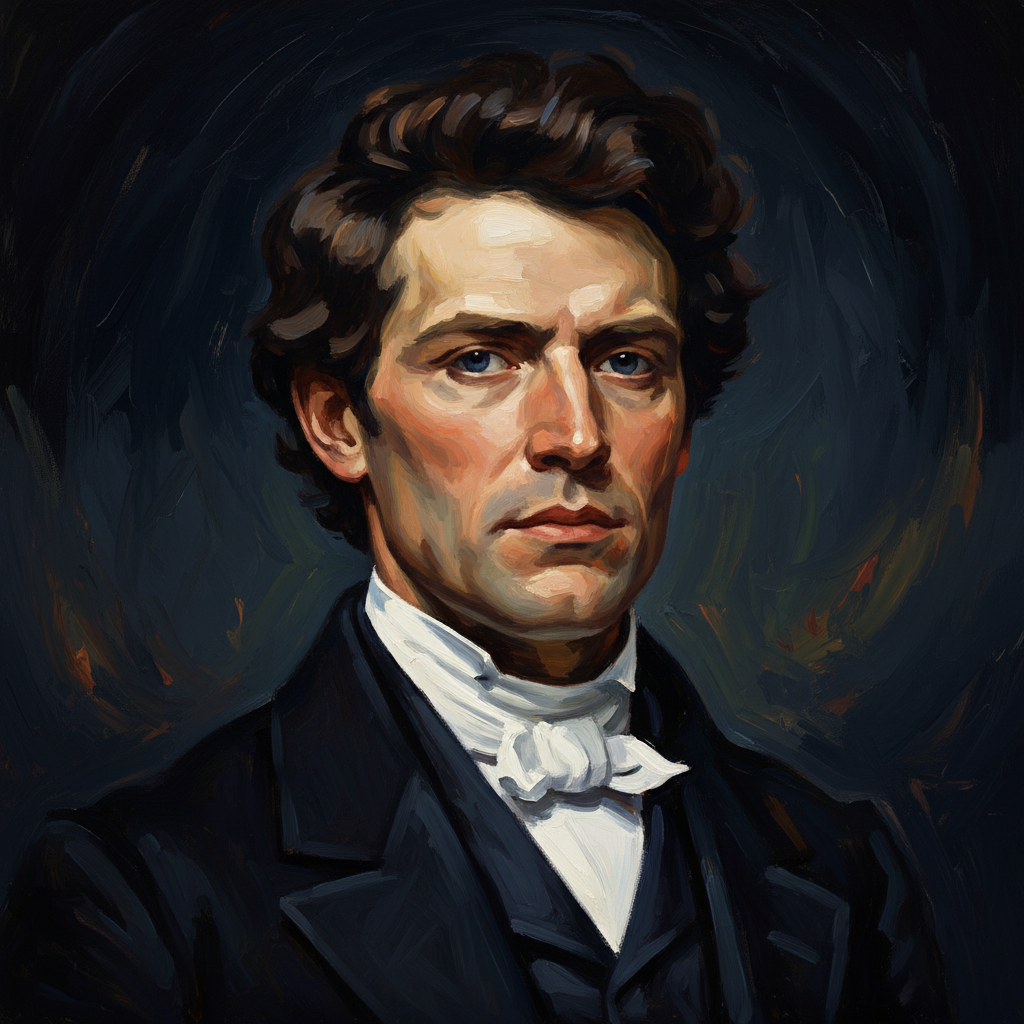
What it means
This quote asserts that directly encountering and conversing with God is a fundamental right every believer should confidently expect — not a rare miracle reserved for ancient prophets. Rather than treating God as distant or unknowable, it declares that literal, face-to-face dialogue with the divine is the very starting point of genuine faith. Belief is not abstract doctrine but an active, experiential relationship between a person and a present, communicating God.
Relevance to Joseph Smith
Smith founded the entire Latter-day Saint movement on his claimed First Vision of 1820, in which he said God the Father and Jesus Christ appeared to him as two distinct, embodied beings who spoke to him directly. He taught that God was not an abstract spirit but a glorified, physical being — making literal conversation genuinely possible. This quote encapsulates his prophetic identity: he was a man who claimed to have actually seen and spoken with God.
The era
Smith spoke in the 1830s–1840s during America's Second Great Awakening — a surge of revivalism that nonetheless upheld cessationism: the mainstream Protestant belief that God no longer communicated directly with humans after the biblical era. Most denominations positioned clergy as necessary intermediaries before a distant deity. Smith's claim that any believer could personally encounter God was democratically radical, directly challenging established church authority and prevailing doctrines of divine inaccessibility.
AI-generated insights based on extensive research and information for context. Factual errors? Email [email protected].