Joseph Smith — "Had I anything to do with the negro, I would confine them by strict law to their…"
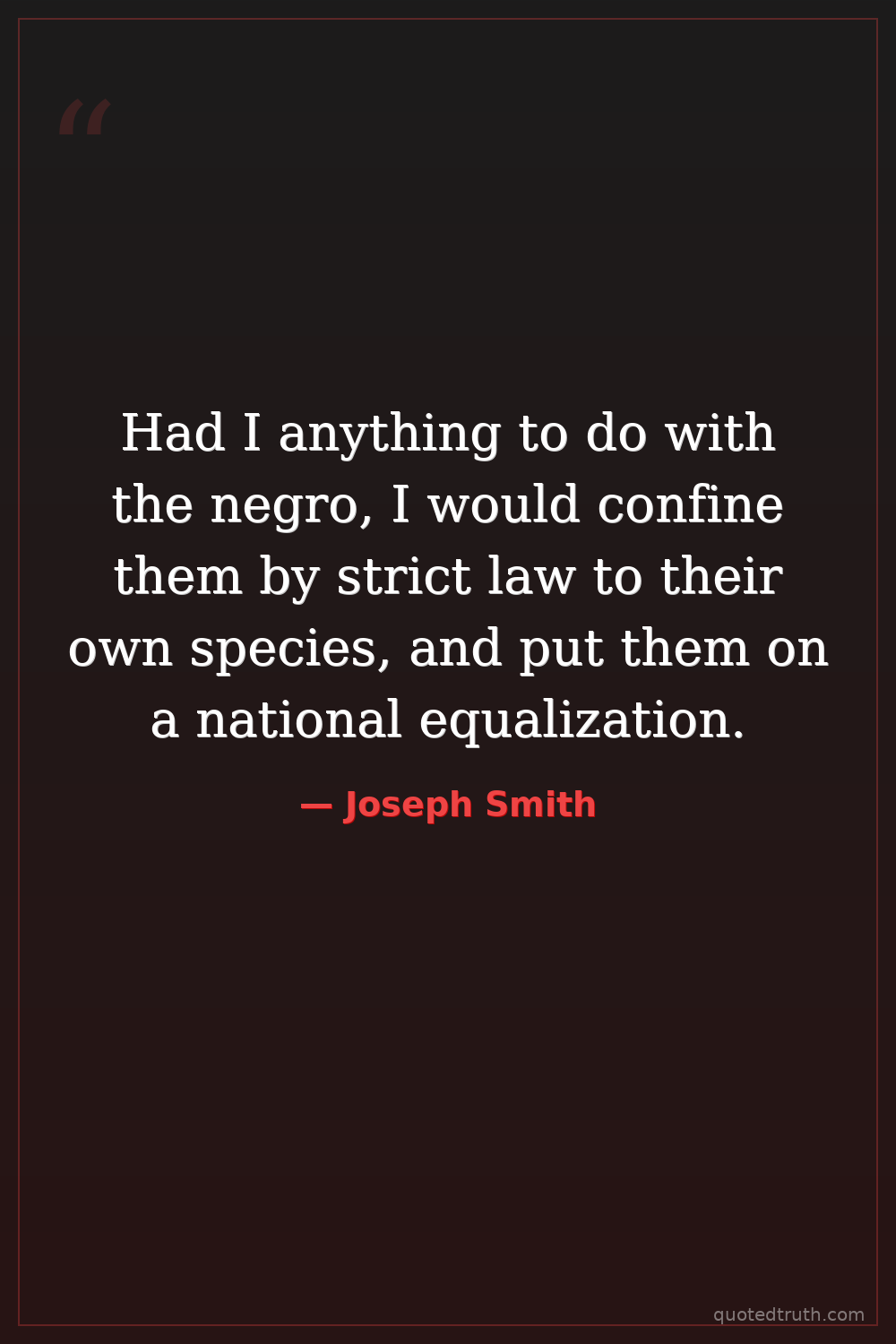
Had I anything to do with the negro, I would confine them by strict law to their own species, and put them on a national equalization.
Had I anything to do with the negro, I would confine them by strict law to their own species, and put them on a national equalization.
Click any product to generate a realistic preview. Up to 3 at a time.
* Initial load can take up to 90 seconds — revising the preview in another color is nearly instant.
"I have learned for myself that God is a being of great condescension, and that he will reveal himself to man."
"I have learned for myself that there is no power in man that can do anything for him unless God helps him."
"Come on! ye prosecutors! ye false swearers! All hell, boil over! Ye burning mountains, roll down your lava! for I will come out on the top at last. I have more to boast of than ever any man had. I am …"
"I have been in the midst of more wickedness and persecution than any man living."
"I calculated to be one of the instruments of setting up the kingdom of Daniel, by establishing a theocracy."
Found in 1 providers: gemini
1 source checked
This quote expresses a belief that Black Americans should be legally confined to racial separation from white society, prevented from intermingling, and placed under a government-recognized but separate status called 'national equalization.' Smith is advocating strict legal racial barriers rather than integration, a position that distinguished between ending slavery and accepting racial mixing — a distinction many antebellum moderates held simultaneously.
Smith ran for U.S. President in 1844 with a platform directly addressing slavery, proposing gradual emancipation funded by public land sales. Though he opposed slavery economically, he held racial separation views reflected here. As LDS founder, his racial theology had lasting institutional consequences — the church denied Black men the priesthood until 1978, a policy rooted in doctrines formulated under his leadership.
Antebellum America (1830s–1844) was fracturing over slavery, with the Missouri Compromise and abolitionist agitation intensifying. The American Colonization Society's plan to resettle freed Black Americans in Liberia was considered a mainstream moderate position. Many reformers who opposed slavery still advocated racial separation over integration, making Smith's framing of 'national equalization' representative of a broad middle position in the era's increasingly volatile national debate.
AI-generated insights based on extensive research and information for context. Factual errors? Email [email protected].
Your cart is empty