What it means
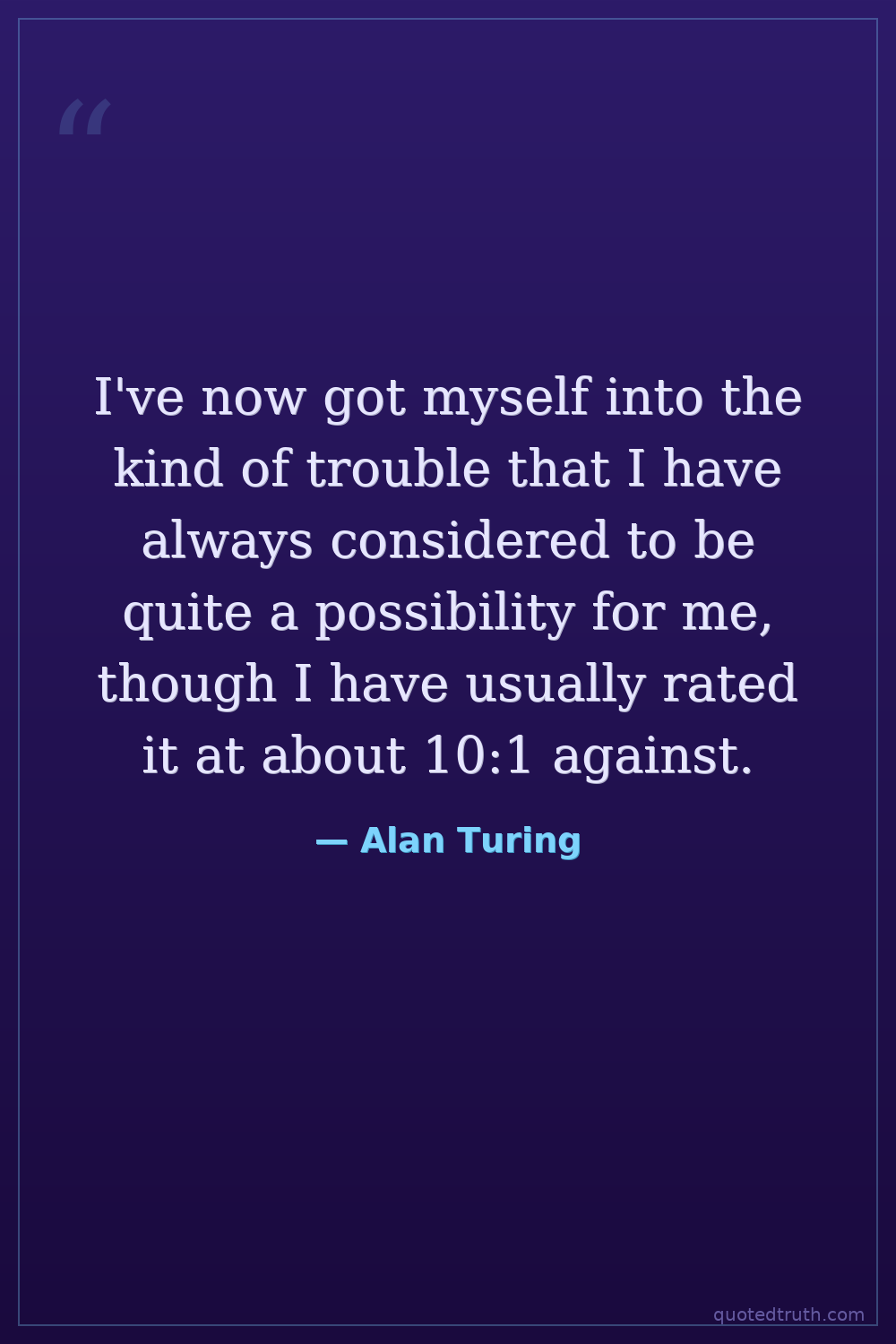
The speaker acknowledges falling into a serious predicament they always knew was a real risk in their life—not a shock, but a feared outcome they considered unlikely yet possible. They had mentally prepared for this scenario while hoping it would never arrive. The calm, almost analytical tone suggests acceptance rather than panic, as if updating a personal probability estimate that has finally resolved against them.
Relevance to Alan Turing
Turing wrote this in 1952 after being arrested for gross indecency following his relationship with Arnold Murray. His phrasing—assigning a 10:1 odds ratio—is quintessentially mathematical, revealing how he processed even personal catastrophe through probabilistic thinking. As a gay man in postwar Britain, he had lived with constant awareness of legal danger, yet continued living authentically, a quiet act of defiance.
The era
In 1952 Britain, homosexuality was a criminal offense under the 1885 Labouchere Amendment. The postwar climate combined moral conservatism with heightened surveillance of perceived social threats. Turing, despite his wartime heroism at Bletchley Park cracking Enigma, received no protection from prosecution. He was subsequently subjected to chemical castration via hormone injections as an alternative to prison, dying in 1954.
AI-generated insights based on extensive research and information for context. Factual errors? Email [email protected].