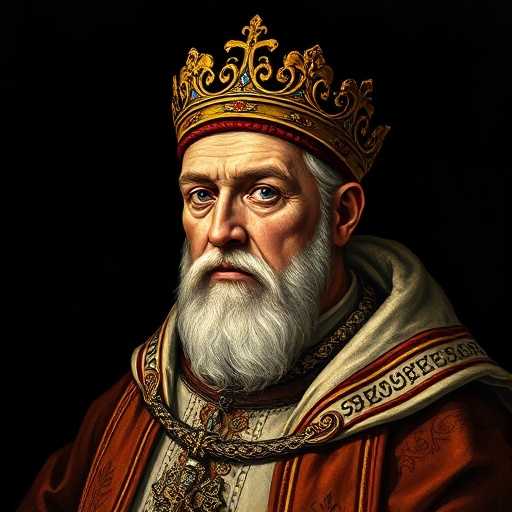
Pope Urban II — "Let no one imagine that this expedition is for the sake of plunder, but for the …"
Let no one imagine that this expedition is for the sake of plunder, but for the remission of sins.
Let no one imagine that this expedition is for the sake of plunder, but for the remission of sins.
Click any product to generate a realistic preview. Up to 3 at a time.
* Initial load can take up to 90 seconds — revising the preview in another color is nearly instant.
"We grant to them, by the power of God, absolution for all their sins."
"This royal city, therefore, situated at the center of the world, is now held captive by His enemies… From you especially she asks succor, because, as we have already said, God has conferred upon you a…"
"I say it to those present, I proclaim it to the absent, but Christ commands it."
"Oh, what a disgrace if such a despised and base race, which worships demons, should conquer a people which has the faith of omnipotent God and has been made glorious with the name of Christ!"
"We absolve all who undertake this journey from all penance for their sins."
Pope (1088-1099) whose Council of Clermont speech (November 1095) launched the First Crusade — the founding event of nine centuries of Christian-Muslim military conflict. Closely associated with Pope Gregory VII (his predecessor on papal-imperial reform). For an intellectual contrast, see Saladin, Kurdish-Muslim Sultan of Egypt and Syria (1138-1193) — Saladin recaptured Jerusalem in 1187, undoing the First Crusade Urban II launched 92 years earlier. Saladin's chivalrous treatment of Christian prisoners became the canonical Muslim counter-image to Crusader brutality. The cleanest before/after pairing of the Crusades' moral arc.
Found in 1 providers: grok
1 source checked
The expedition must be treated as sacred penance, not a wealth-seeking raid. Participants earn remission of sins — direct divine forgiveness — by taking up arms for the Church's cause. This reframes warfare itself as spiritually cleansing: fighting or dying to reclaim Jerusalem doesn't require additional penance afterward; the journey is the penance. Violence, normally sinful, becomes the mechanism of salvation when directed by papal authority toward a holy purpose.
Urban II (born Odo of Châtillon) was a Cluniac monk before his papacy, shaped by a reform tradition that fiercely opposed greed, simony, and worldly corruption in the Church. His entire pontificate centered on separating the Church from material entanglement. At Clermont in 1095 he promised plenary indulgence — spiritual reward, not land — as the Crusade's prize, directly reflecting his monastic conviction that the soul, not treasure, was the proper object of Christian striving.
In 1095, Europe's knights were a warrior class trapped between perpetual feudal violence and Church condemnation for shedding Christian blood. The Peace and Truce of God movements struggled to contain them. Simultaneously, Seljuk Turks had seized Jerusalem and crushed Byzantine forces at Manzikert in 1071. Urban transformed this crisis into opportunity: redirecting knightly aggression toward a holy enemy while offering absolution as payment. Without this spiritual framing, the enterprise would have looked indistinguishable from ordinary plunder.
AI-generated insights based on extensive research and information for context. Factual errors? Email [email protected].
Your cart is empty