What it means
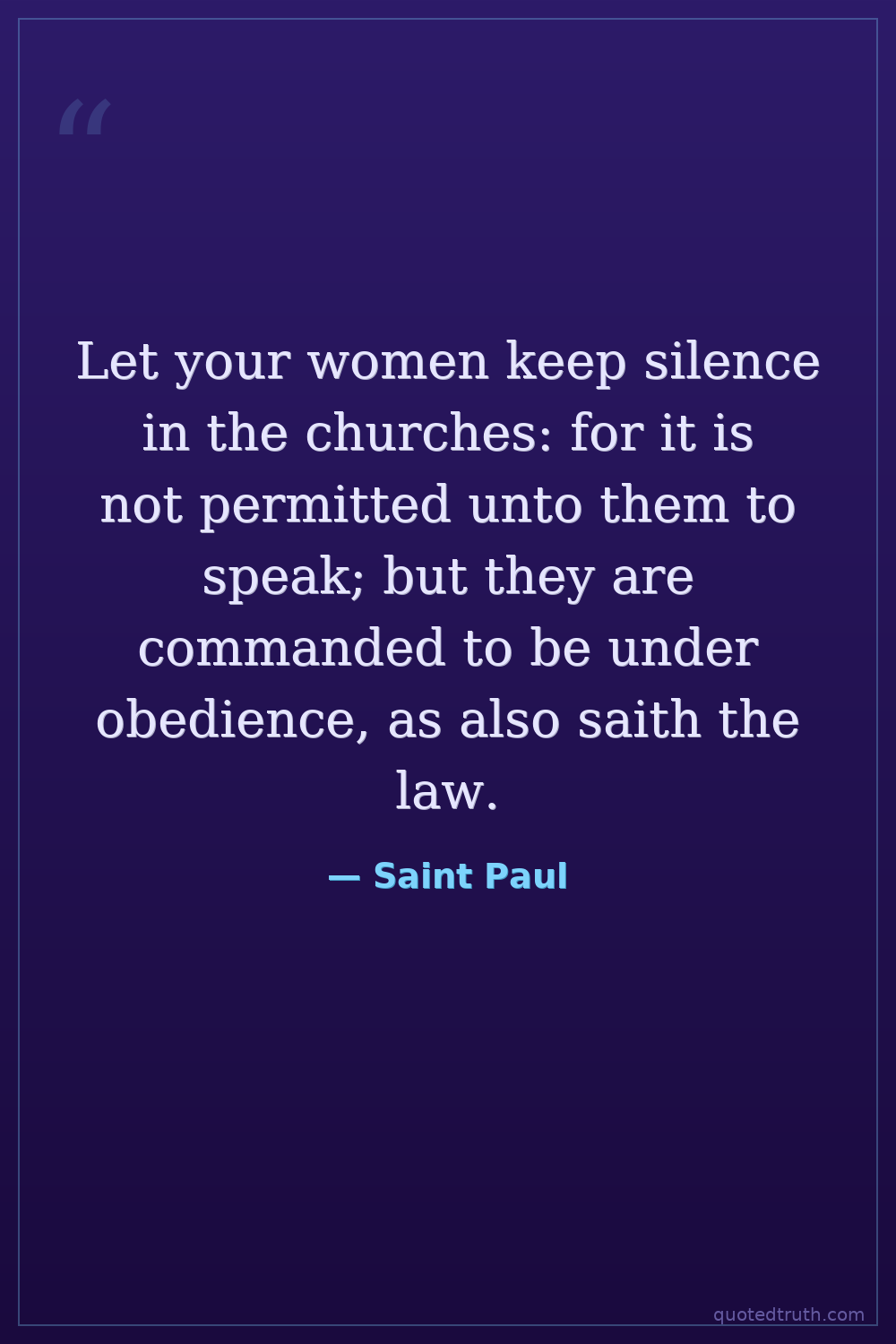
Women should remain quiet during church gatherings and are not allowed to speak publicly in those settings. Instead, they are expected to submit to authority, following the same principle found in traditional religious law. If they have questions, they should wait until they get home and ask their husbands rather than disrupting the assembly with inquiries or commentary.
Relevance to Saint Paul
Paul, a former Pharisee trained under Rabbi Gamaliel, planted churches across the Roman world and wrote letters instructing new congregations on worship order. This directive appears in his first letter to the Corinthians, a chaotic port-city church he founded around 50 CE. His rabbinic background shaped his appeal to Torah-based submission codes while organizing fledgling Gentile communities.
The era
First-century Corinth mixed Greco-Roman, Jewish, and pagan customs, with ecstatic worship practices causing disorder in house churches. Respectable Greek and Roman women traditionally stayed silent in public assemblies, and Jewish synagogues segregated them. Christianity initially attracted many women drawn to its relative inclusivity, creating tensions as congregations navigated propriety norms under Roman scrutiny, where unusual gatherings risked being labeled subversive cults.
AI-generated insights based on extensive research and information for context. Factual errors? Email [email protected].