What it means
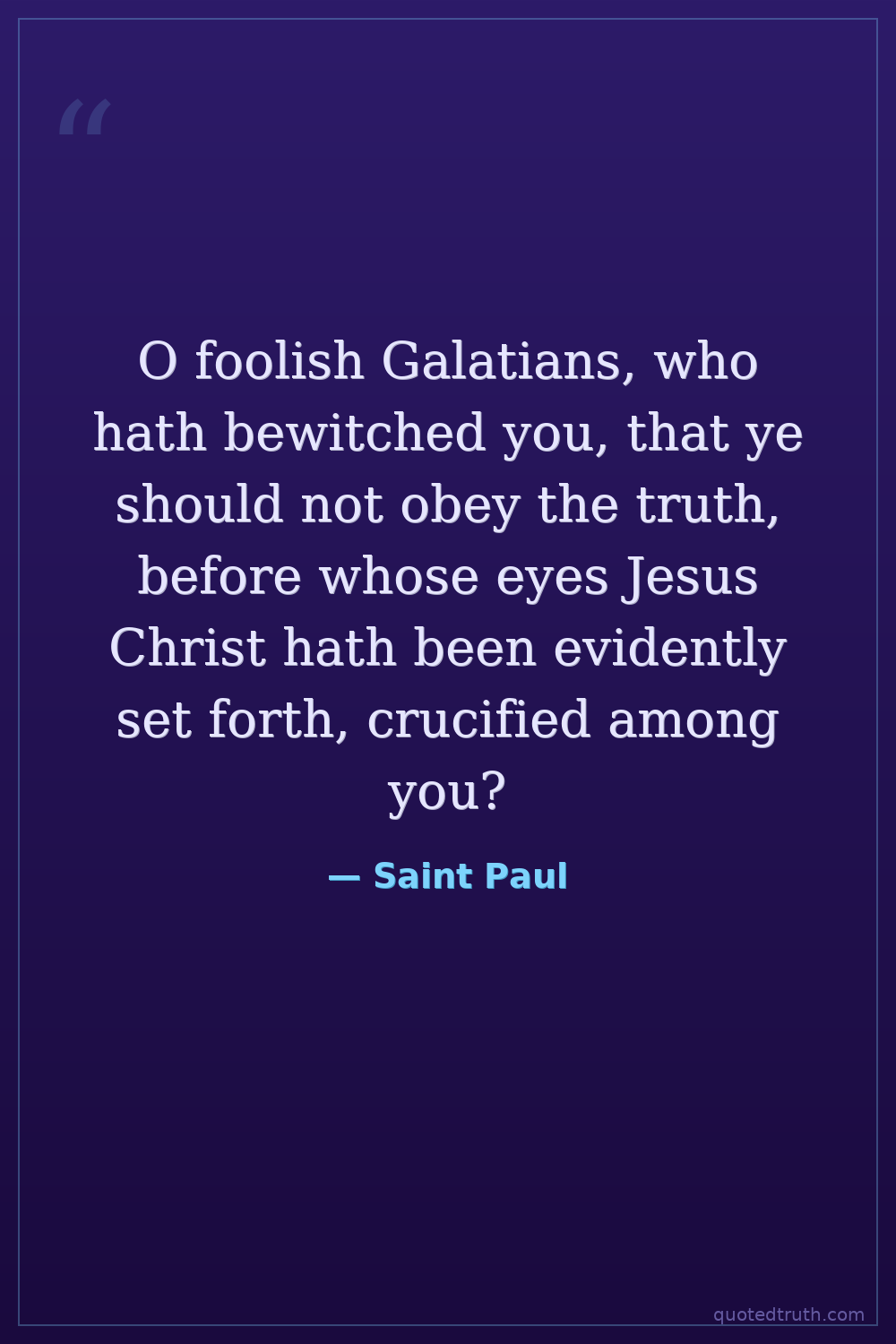
Paul is frustrated and scolding the Galatian Christians for abandoning what he taught them. He asks who tricked or manipulated them into rejecting the clear message about Jesus's crucifixion, which he had vividly explained. He's essentially saying: you knew the truth, you saw it plainly, so why are you now being misled into believing something different? It's a mix of disappointment, anger, and genuine confusion at their rapid change.
Relevance to Saint Paul
Paul founded the Galatian churches during his missionary journeys and felt personal responsibility for their faith. Known for blunt, passionate letters, he confronted conflict directly rather than diplomatically. This rebuke reflects his core belief that salvation comes through faith in Christ's crucifixion alone, not through following Jewish law. As a former Pharisee who once persecuted Christians, he fiercely defended the gospel he'd suffered for against rival teachers undermining his work.
The era
In the first century, Galatian churches faced pressure from Judaizers who insisted Gentile converts must follow Mosaic law, including circumcision, to be true Christians. This theological battle defined early Christianity's identity: was it a Jewish sect or a universal faith? Roman-era Galatia mixed Celtic, Greek, and Jewish populations, making religious syncretism common. Paul wrote around 48-55 CE, when Christianity's boundaries were still being fought over, and superstition and magical thinking were widespread cultural assumptions.
AI-generated insights based on extensive research and information for context. Factual errors? Email [email protected].