What it means
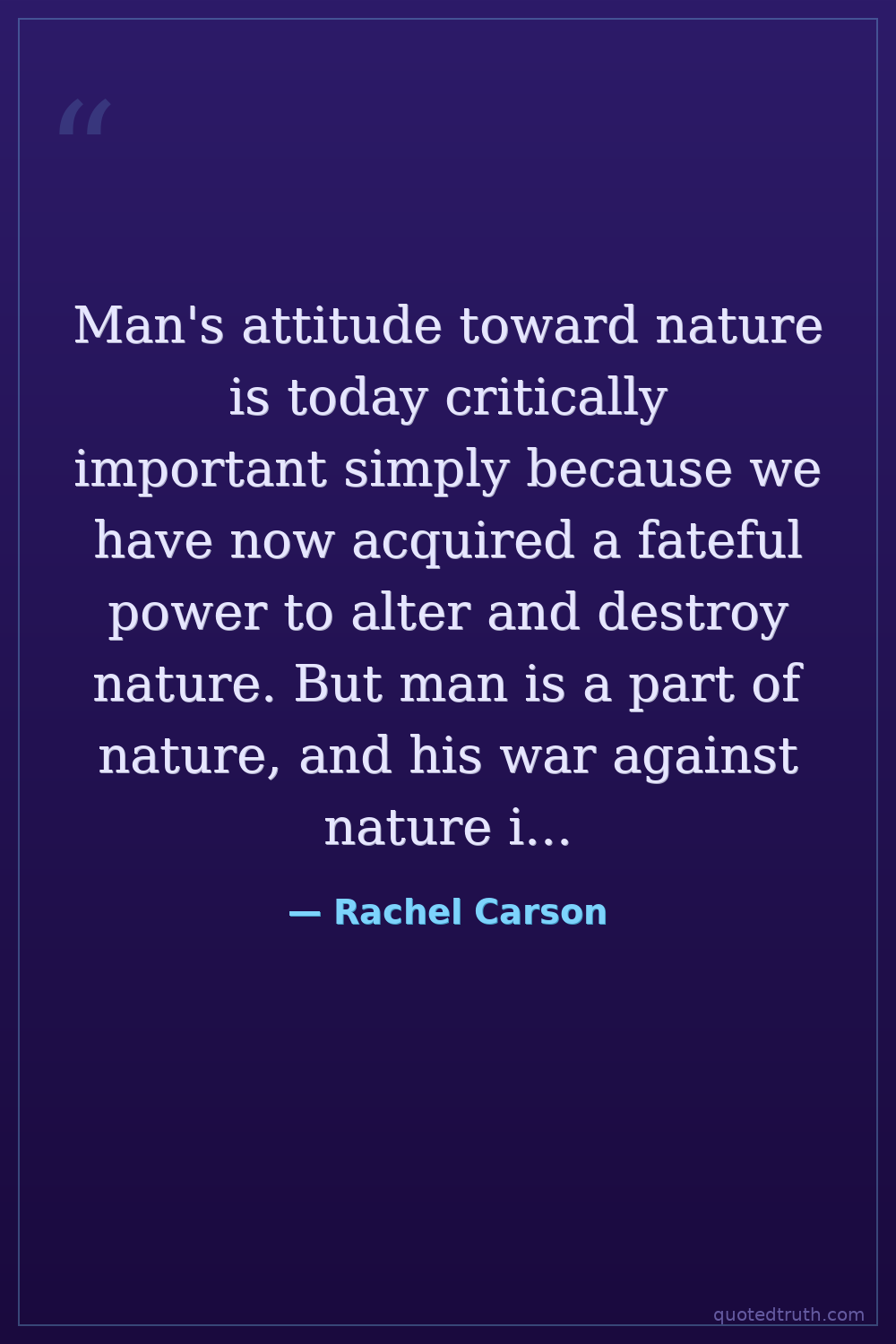
Humanity has gained unprecedented power to reshape and destroy the natural world, but that power carries a lethal irony: we are not separate from nature — we are embedded within it. Every river poisoned, every ecosystem collapsed, ultimately harms us too. Environmental destruction circles back, threatening human health, food, water, and survival. Treating nature as an enemy to conquer is a war we inevitably wage against ourselves.
Relevance to Rachel Carson
Carson was a marine biologist whose 1962 book Silent Spring documented how DDT and synthetic pesticides were silently killing birds, contaminating food chains, and poisoning humans. She spent decades studying nature's interconnected systems and believed industrial hubris was severing humanity's ecological self-awareness. Facing fierce attacks from the chemical industry, she held firm: harming the natural world was not progress — it was slow collective suicide.
The era
Carson wrote in the postwar boom of the 1950s–60s, when DDT was celebrated as a miracle chemical, nuclear testing was irradiating the Pacific, and conquering nature was synonymous with American progress. Suburbanization, industrial agriculture, and petrochemical expansion were accelerating rapidly. Few questioned the ecological cost. Silent Spring shattered that silence, helping catalyze the EPA's founding in 1970 and the modern environmental movement that redefined humanity's relationship with the planet.
AI-generated insights based on extensive research and information for context. Factual errors? Email [email protected].