What it means
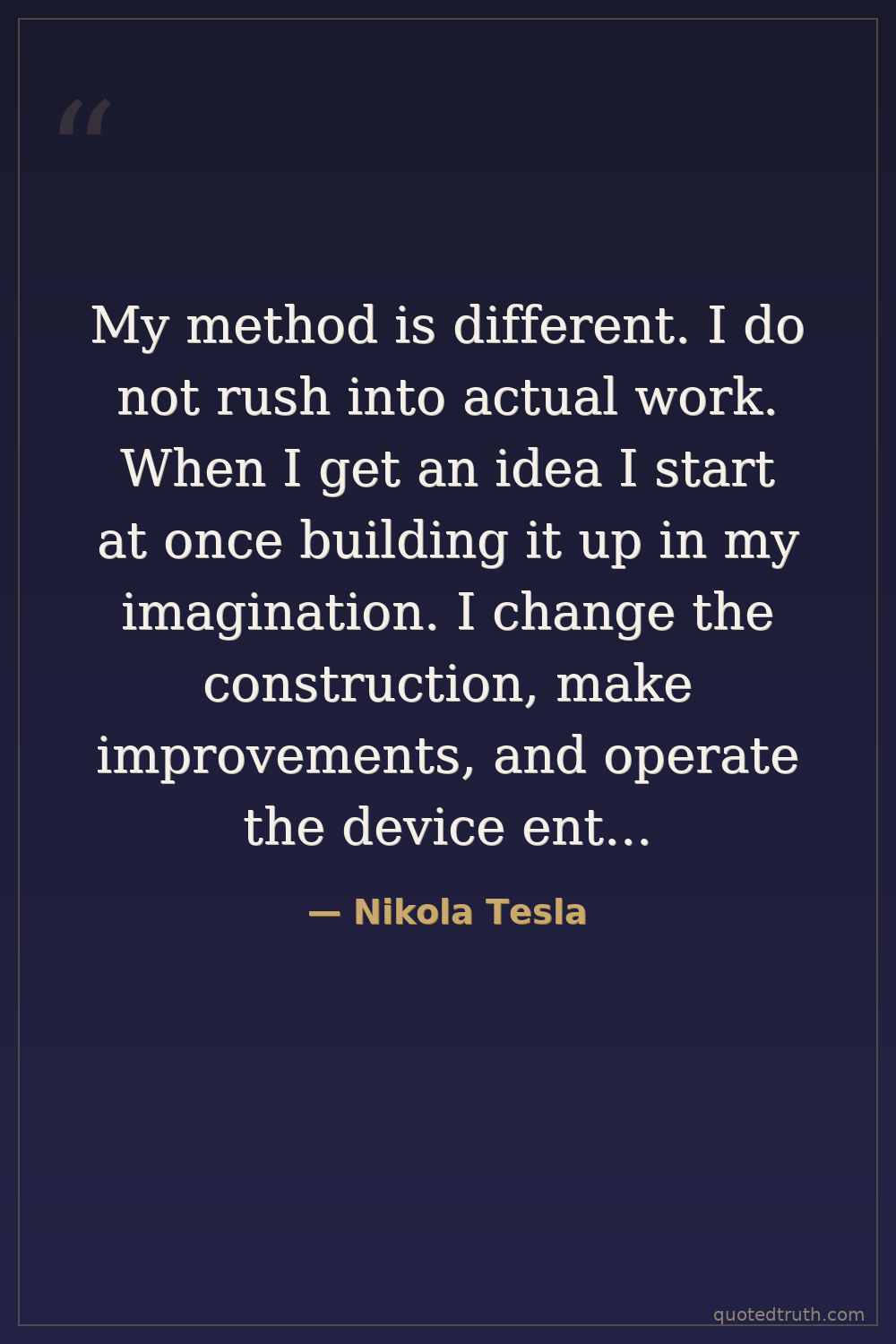
Before touching any physical materials, thoroughly develop and refine the concept entirely within your mind. Visualize the complete system, identify flaws, make corrections, and perfect the design mentally before committing resources. This disciplined mental simulation saves time, reduces waste, and produces superior results because problems are solved in imagination rather than through costly trial-and-error experimentation.
Relevance to Nikola Tesla
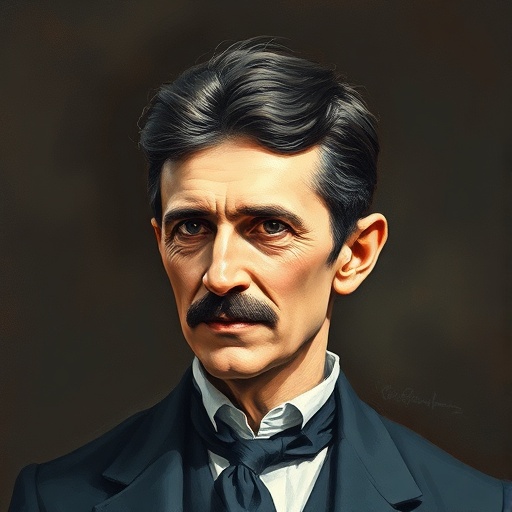
Tesla's entire inventive process relied on extraordinary mental visualization. He reportedly could construct complete machines in his mind, run them mentally for weeks, and identify wear points before building physical prototypes. His AC induction motor, polyphase systems, and Tesla coil all emerged fully formed from mental simulation rather than iterative physical tinkering—a method he attributed to his exceptional spatial reasoning abilities.
The era
In late 19th and early 20th century invention culture, Edison's famous trial-and-error empiricism dominated—thousands of physical experiments, massive teams, and brute-force iteration. Tesla's purely mental design methodology was radical and contrarian. Industrial manufacturing was expensive and slow, making failed physical prototypes genuinely costly. Tesla's approach was an intellectual rebellion against prevailing workshop culture, anticipating modern computational simulation and computer-aided design by nearly a century.
AI-generated insights based on extensive research and information for context. Factual errors? Email [email protected].