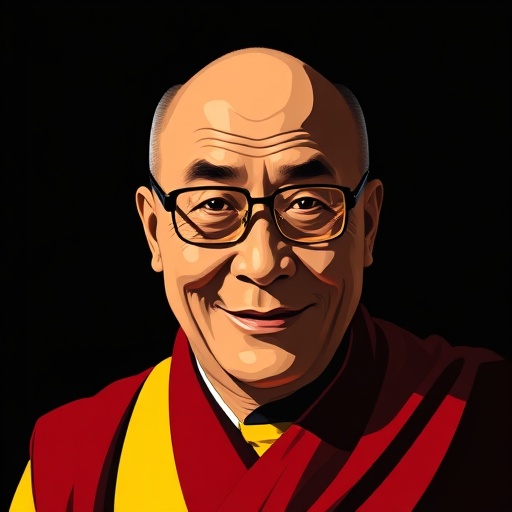
Dalai Lama (14th) — "My only weapon is truth."
My only weapon is truth.
My only weapon is truth.
Click any product to generate a realistic preview. Up to 3 at a time.
* Initial load can take up to 90 seconds — revising the preview in another color is nearly instant.
"I feel that if one has a good heart, one will be happy."
"I am not afraid of death. I believe that death is just a transition to a new life."
"I meditate every morning for about four hours. It's a bit much, but it's important."
"I think the Chinese government is a little bit like a child. Sometimes they behave a little bit naughty."
"We need to learn to live together in peace and harmony, and not just tolerate each other."
Found in 1 providers: grok
1 source checked
When you lack armies, political power, or wealth, honesty itself becomes your most potent force. This quote argues that speaking truth openly—refusing to deceive, manipulate, or retaliate with violence—carries its own authority and moral weight. In a world where power typically flows from money, military strength, or institutional influence, the claim is radical: transparent, uncompromising honesty can move people and shape history more durably than any coercive force.
Tenzin Gyatso, born 1935, has led Tibet's government-in-exile from Dharamsala, India since China's 1959 military occupation. With no army, no nuclear leverage, and most governments unwilling to confront Beijing, he built the Tibetan cause entirely on moral authority: nonviolent protest, open dialogue, and consistent refusal to endorse armed resistance. His 1989 Nobel Peace Prize validated this approach. Documented repression, cultural destruction, and witness testimony remain his sole instruments of advocacy.
Since China annexed Tibet in 1950 and crushed the 1959 uprising, the Dalai Lama has operated in a world where great-power economics silence human rights concerns. China's rise into the world's second-largest economy by the 2010s made governments increasingly reluctant to formally back Tibet. Yet global human rights movements, social media transparency, and post-Cold War democratic idealism created space where documented truth—not guns—could still shift international opinion and keep a suppressed cause visible.
AI-generated insights based on extensive research and information for context. Factual errors? Email [email protected].
Your cart is empty