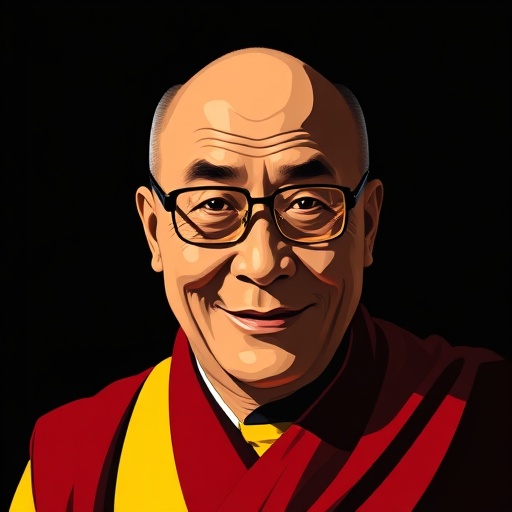
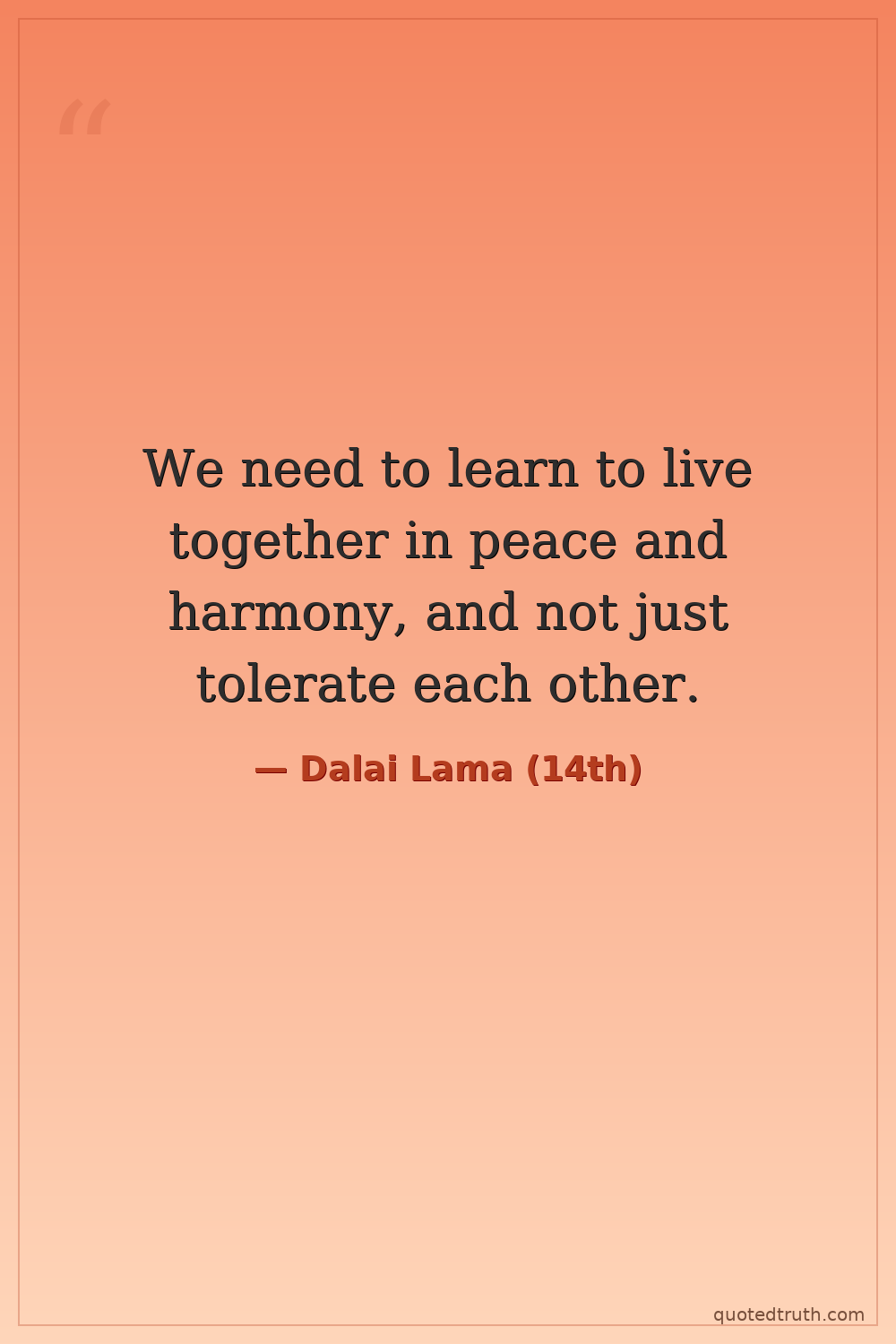
Dalai Lama (14th) — "We need to learn to live together in peace and harmony, and not just tolerate ea…"
We need to learn to live together in peace and harmony, and not just tolerate each other.
We need to learn to live together in peace and harmony, and not just tolerate each other.
Click any product to generate a realistic preview. Up to 3 at a time.
* Initial load can take up to 90 seconds — revising the preview in another color is nearly instant.
"Sometimes I feel very sad when I see so much suffering in the world. But then I remember that I have a responsibility to help."
"I remain convinced that the basic human nature is gentle and compassionate."
"Sometimes I joke that if I come back as a woman, I want to be a beautiful woman."
"Our prime purpose in this life is to help others. And if you can't help them, at least don't hurt them."
"I am just one human being, but I am also part of the seven billion human beings on this planet."
Found in 1 providers: grok
1 source checked
Tolerance alone is insufficient for genuine coexistence — it implies merely enduring differences rather than embracing them. True peace requires actively cultivating warmth, understanding, and genuine connection across divisions of religion, culture, and ideology. Living together in harmony means finding common ground and shared humanity, not simply avoiding conflict while remaining indifferent or grudgingly accepting those who differ from us.
Tenzin Gyatso has lived this principle through decades of exile from Tibet following China's 1959 occupation. Rather than preaching hatred toward oppressors, he consistently advocates compassion even for those who harmed his people. His interfaith dialogues with Christian, Jewish, and Muslim leaders demonstrate his belief that harmony requires genuine engagement, not mere coexistence. His Nobel Peace Prize in 1989 recognized this philosophy in practice.
The Dalai Lama speaks in an era of rising nationalism, religious extremism, and geopolitical fragmentation. The post-Cold War world saw ethnic cleansing in the Balkans, sectarian violence across the Middle East, and growing Islamophobia post-9/11. Climate change and globalization force interdependence while political forces exploit division. His message directly counters the 'clash of civilizations' narrative that dominated late 20th and early 21st century discourse.
AI-generated insights based on extensive research and information for context. Factual errors? Email [email protected].
Your cart is empty