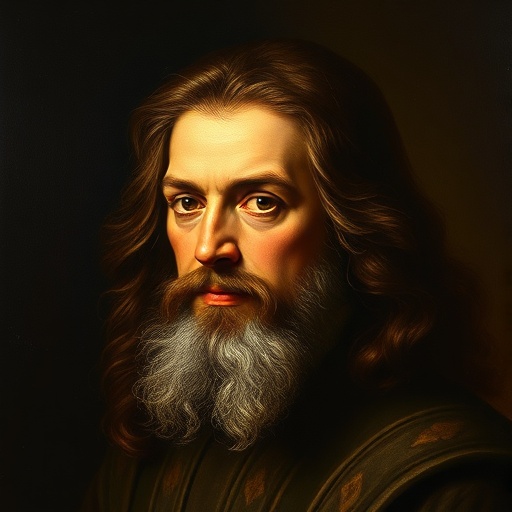
Leonardo da Vinci — "Necessity is the mistress and guide of nature."
Necessity is the mistress and guide of nature.
Necessity is the mistress and guide of nature.
Click any product to generate a realistic preview. Up to 3 at a time.
* Initial load can take up to 90 seconds — revising the preview in another color is nearly instant.
"Oh, how many times have I been deceived by my own opinions!"
"The painter who draws merely by practice and by eye, without any reason, is like a mirror which copies everything placed in front of it without understanding."
"The act of procreation and anything that has any relation to it is so disgusting that human beings would soon die out if it were not a traditional custom and if there were no pretty faces and sensuous…"
"The knowledge of all things is possible."
"Study without desire spoils the memory, and it retains nothing that it takes in."
Found in 1 providers: grok
1 source checked
Nature doesn't act randomly — it follows necessity. Every natural form, process, or behavior exists because conditions demanded it. The shape of a bird's wing, the branching of rivers, the structure of bone — all are answers to problems that had to be solved. Necessity is what compels nature to innovate and adapt. Nothing in nature is arbitrary; everything is a functional response to what circumstances absolutely require.
Da Vinci's entire career embodied this belief. His anatomical dissections revealed how muscles and bones serve necessary mechanical functions — not mere aesthetic study. His flying machines mimicked birds because nature's solutions were already optimally necessitated. Engineering notebooks show designs driven by problems demanding solutions. He believed artists and inventors must understand why nature works as it does, not copy its surface — necessity was his core investigative lens across anatomy, hydraulics, and flight.
During the Renaissance, medieval theology still explained nature as divine expression — God's will rather than earthly necessity. Da Vinci's era witnessed the first stirrings of empirical natural philosophy challenging pure scriptural authority. Asserting that necessity governs nature was quietly radical, aligning with proto-scientific thinking that would fuel the Scientific Revolution a century later. While humanists recovered classical texts, Leonardo went further — observing nature directly to discover the governing principles beneath its visible surface.
AI-generated insights based on extensive research and information for context. Factual errors? Email [email protected].
Your cart is empty