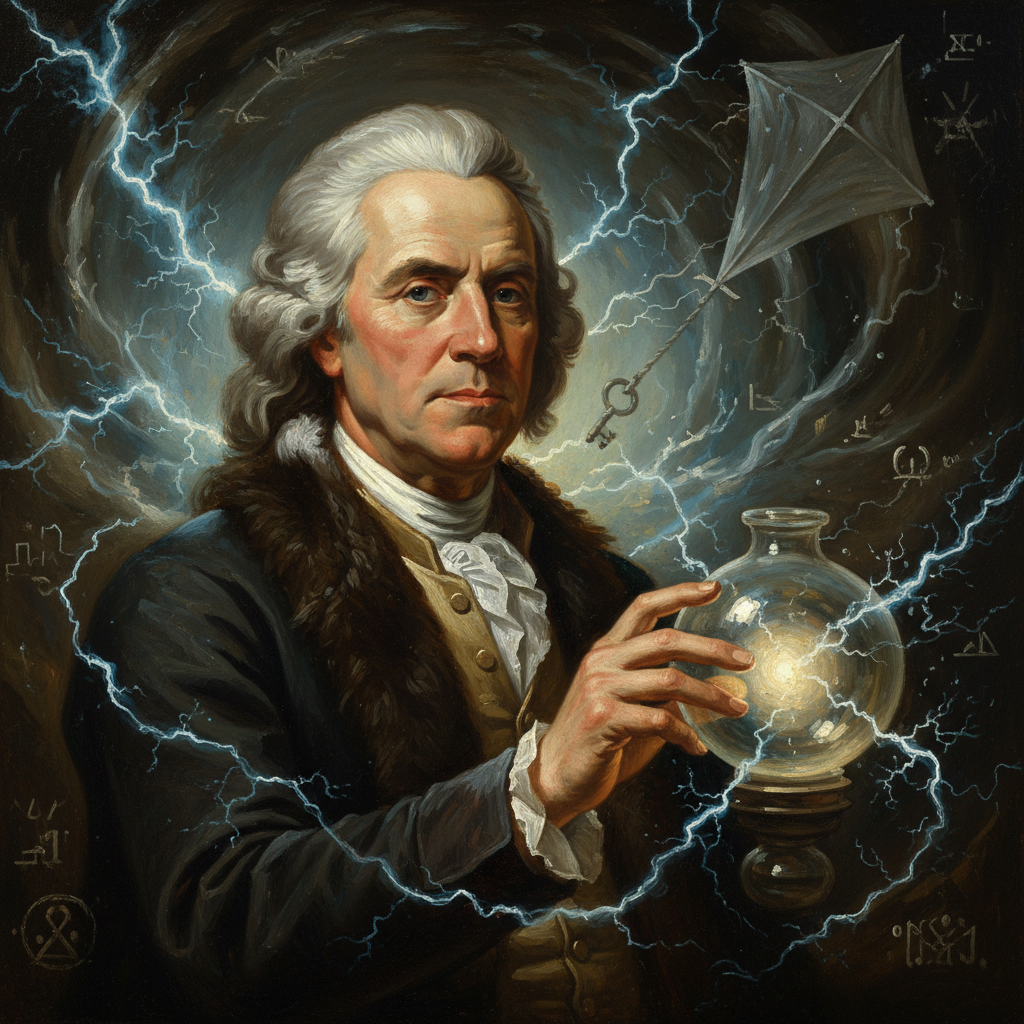
Benjamin Franklin — "Necessity never made a good bargain."
Necessity never made a good bargain.
Necessity never made a good bargain.
Click any product to generate a realistic preview. Up to 3 at a time.
* Initial load can take up to 90 seconds — revising the preview in another color is nearly instant.
"To be proud of knowledge is to be blind with light."
"Rather go to bed supperless, than rise in debt."
"Never leave that till tomorrow which you can do today."
"For every pound of sand you eat, another shilling's yours to keep."
"Hunger is the best sauce."
Polymath Founding Father, diplomat, and Poor Richard's Almanack author who helped draft the Declaration of Independence and the Constitution. Closely associated with John Adams (fellow Founder, Massachusetts statesman) and Thomas Jefferson (fellow Declaration drafter). For an intellectual contrast, see Thomas Hutchinson, last royal governor of colonial Massachusetts — Franklin leaked Hutchinson's loyalist correspondence to Boston in 1772 to inflame revolutionary sentiment — Hutchinson represented the colonial-aristocrat crown-loyalty that Franklin's revolution was organized to dismantle.
Found in 2 providers: grok,gemini
2 sources checked
When you desperately need something, you lose all negotiating leverage and end up accepting whatever terms are offered, no matter how unfavorable. Urgency is the enemy of good deals: the party who needs the outcome more always concedes the most. Plan ahead, build reserves, and never let scarcity force your hand at the table. Whoever controls their own desperation controls the negotiation.
Franklin published this in Poor Richard's Almanack, his annual compendium of practical wisdom aimed at ordinary tradespeople and farmers. As a printer and merchant himself, he understood commerce viscerally. He later negotiated the 1778 French alliance and the 1783 Treaty of Paris for a young nation often bargaining from weakness, proving he lived this principle: prepare, accumulate leverage, and never let desperation show at the table.
In colonial America, most settlers lived close to economic precarity — crops could fail, credit from British merchants was expensive, and the Navigation Acts restricted trade options. When desperate farmers or tradesmen needed credit or supplies, they faced take-it-or-leave-it terms from merchants who knew their leverage. Franklin's aphorism captured real hardship, urging colonists to build savings and avoid the debt traps that kept working people permanently subordinate to creditors.
AI-generated insights based on extensive research and information for context. Factual errors? Email [email protected].
Your cart is empty