Benjamin Franklin — "To be proud of knowledge is to be blind with light."
To be proud of knowledge is to be blind with light.
To be proud of knowledge is to be blind with light.
Click any product to generate a realistic preview. Up to 3 at a time.
* Initial load can take up to 90 seconds — revising the preview in another color is nearly instant.
"Be at war with your vices, at peace with your neighbors, and let every new year find you a better man."
"Never leave that till tomorrow which you can do today."
"He that lies down with dogs shall rise up with fleas."
"Lost time is never found again."
"After all, wedlock is the natural state of man. A bachelor is not a complete human being. He is like the odd half of a pair of scissors, which has not yet found its fellow, and therefore is not even h…"
Polymath Founding Father, diplomat, and Poor Richard's Almanack author who helped draft the Declaration of Independence and the Constitution. Closely associated with John Adams (fellow Founder, Massachusetts statesman) and Thomas Jefferson (fellow Declaration drafter). For an intellectual contrast, see Thomas Hutchinson, last royal governor of colonial Massachusetts — Franklin leaked Hutchinson's loyalist correspondence to Boston in 1772 to inflame revolutionary sentiment — Hutchinson represented the colonial-aristocrat crown-loyalty that Franklin's revolution was organized to dismantle.
Found in 1 providers: grok
1 source checked
The quote uses a paradox: light normally enables sight, yet pride in one's knowledge creates blindness. When someone is arrogant about what they know, they stop questioning and close their mind to new information. True understanding requires humility — recognizing the limits of your own knowledge. The person convinced they know everything actually perceives far less than the curious, humble mind that stays open to challenge and discovery.
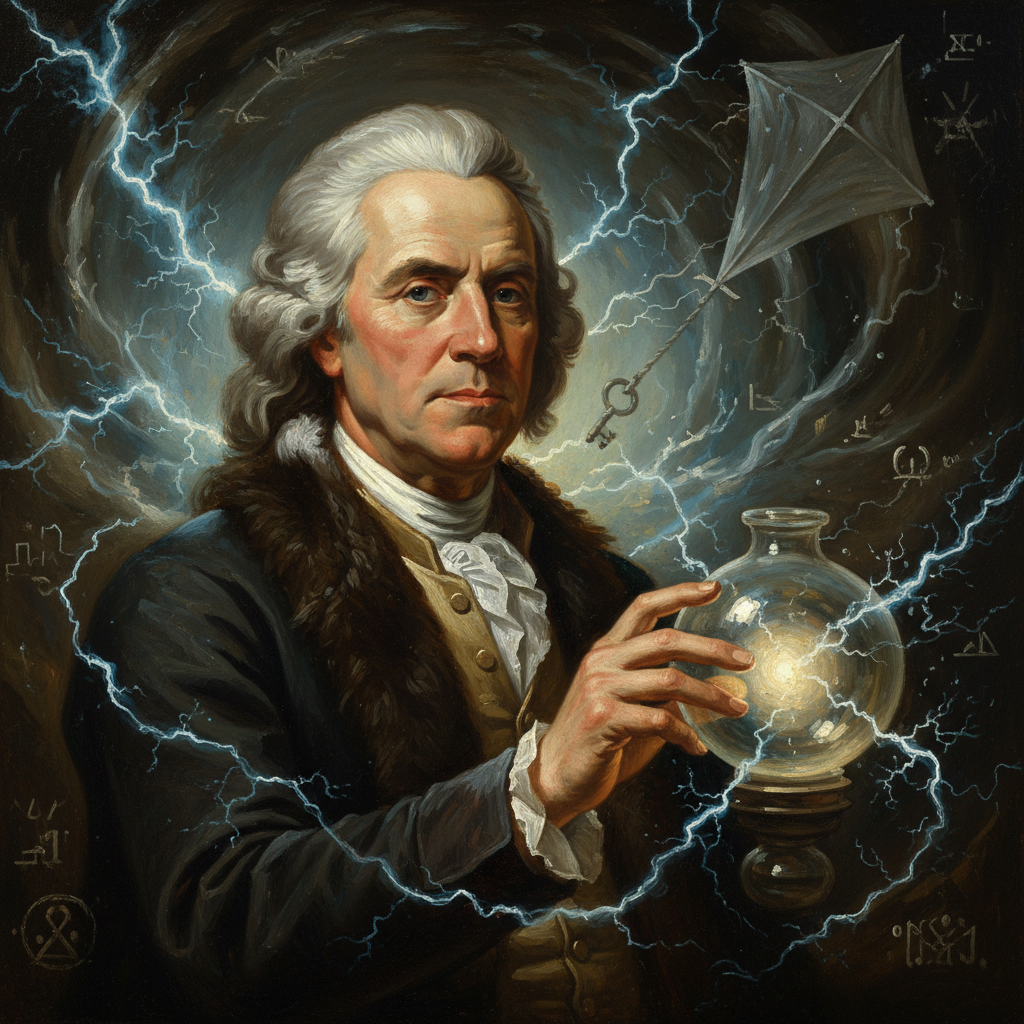
Franklin was a self-taught polymath — printer, scientist, diplomat, inventor, writer — who never stopped learning. Despite extraordinary achievements, he explicitly listed humility among his thirteen virtues and called pride his most persistent vice. His electricity experiments succeeded because he approached nature with curiosity rather than assumption. He understood from experience that the confident expert often misses what the open-minded experimenter finds, a lesson embedded throughout his Autobiography.
The Enlightenment celebrated reason and knowledge as civilization's highest ideals, yet it also bred a new class of intellectual arrogance. Educated gentlemen competed for prestige through learning, and dogmatic systems often crowded out fresh evidence. Franklin, writing at the heart of this Age of Reason, recognized its shadow side. In a century remaking science, religion, and political philosophy simultaneously, intellectual humility was not merely a virtue — it was the practical engine of genuine progress.
AI-generated insights based on extensive research and information for context. Factual errors? Email [email protected].
Your cart is empty