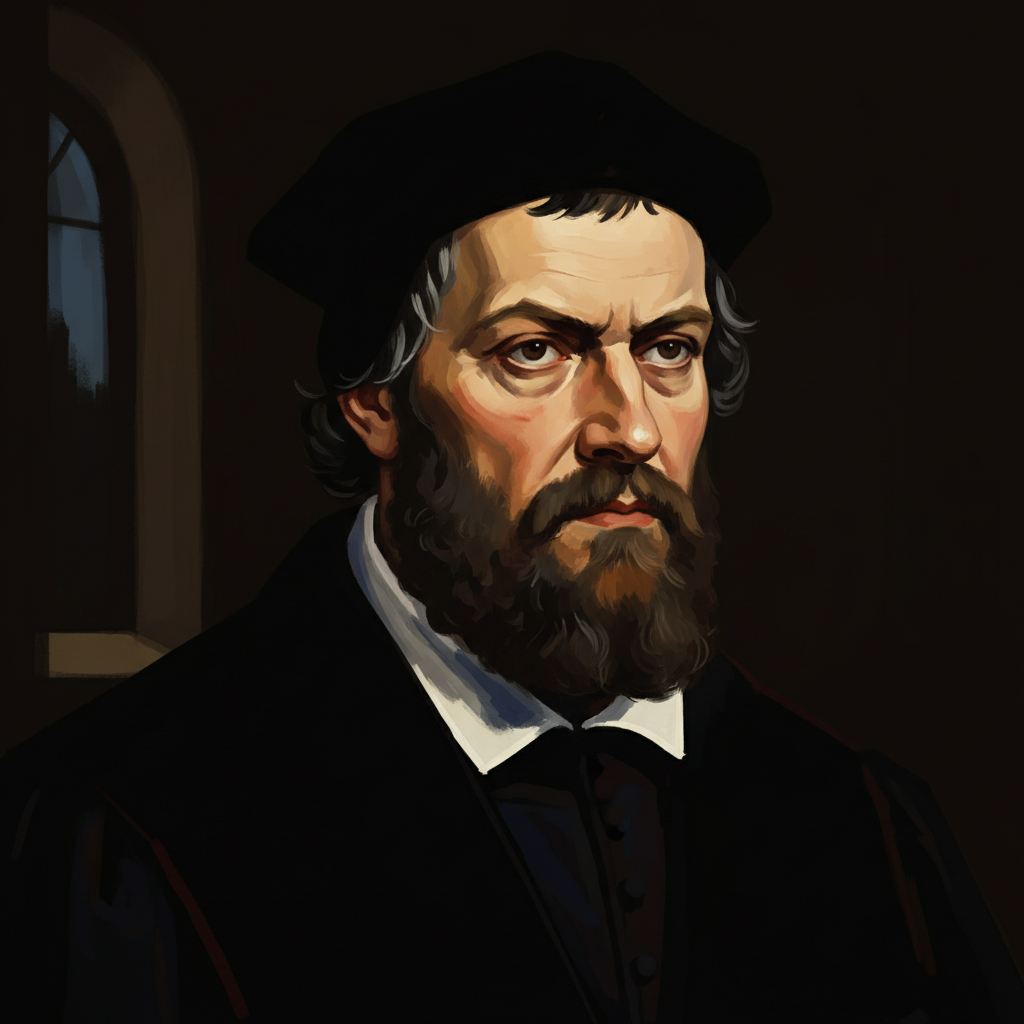
Martin Luther — "Next to the Word of God, the noble art of music is the greatest treasure in the …"
Next to the Word of God, the noble art of music is the greatest treasure in the world. It controls our thoughts, minds, hearts, and spirits.
Next to the Word of God, the noble art of music is the greatest treasure in the world. It controls our thoughts, minds, hearts, and spirits.
Click any product to generate a realistic preview. Up to 3 at a time.
* Initial load can take up to 90 seconds — revising the preview in another color is nearly instant.
"Eating is a serious business. You must eat with delight and not as if you were doing penance."
"God created the world out of nothing, and so long as we are nothing, he can make something out of us."
"I am nothing but a poor, stinking bag of worms."
"The hair is the finest ornament a woman has. If she be a virgin, let her wear it loose; if married, let her wear it up."
"To gather with God's people in united adoration of the Father is as necessary to the Christian life as prayer."
German theologian whose 95 Theses (1517) launched the Protestant Reformation and broke the Catholic Church's monopoly on Western Christianity. Closely associated with Philipp Melanchthon (Lutheran systematizer) and John Calvin (later Reformer who built on Luther's break). For an intellectual contrast, see Pope Leo X, Renaissance pope (1513-1521) — Leo X's indulgence sales triggered Luther's break and Leo excommunicated him in 1521 — Luther's entire Reformation is structured as a direct answer to the indulgence-funded Vatican Leo represented.
Found in 1 providers: grok
1 source checked
Luther places music just below Scripture as humanity's most precious gift. He argues music isn't mere entertainment but a powerful force that shapes how we think, feel, and respond emotionally and spiritually. It can calm anger, lift depression, focus the mind, and stir devotion. In plain terms: music reaches parts of us that reason alone cannot touch, making it uniquely valuable for both daily life and worship.
Luther was a trained singer, lutenist, and composer who wrote hymns like 'A Mighty Fortress Is Our God.' He insisted congregations sing in their own language, breaking from Latin-only worship. He believed music was a divine gift that drove away the devil and taught theology to illiterate peasants. This quote captures why he embedded chorales into Protestant liturgy—music wasn't decoration but core to his reformation of Christian practice.
In the early 1500s, church music was dominated by Latin plainchant performed by clergy while laypeople listened passively. The Reformation coincided with the printing press spreading vernacular hymnals across German-speaking lands. Luther's push for congregational singing democratized worship and shaped Western music history, directly influencing Bach two centuries later. Meanwhile, Renaissance humanism was reviving ancient Greek ideas about music's power over the soul, giving Luther's claims cultural resonance.
AI-generated insights based on extensive research and information for context. Factual errors? Email [email protected].
Your cart is empty