Martin Luther — "God created the world out of nothing, and so long as we are nothing, he can make…"
God created the world out of nothing, and so long as we are nothing, he can make something out of us.
God created the world out of nothing, and so long as we are nothing, he can make something out of us.
Click any product to generate a realistic preview. Up to 3 at a time.
* Initial load can take up to 90 seconds — revising the preview in another color is nearly instant.
"He who does not love wine, women, and song remains a fool his whole life long."
"I am much afraid that schools will prove to be great gates of hell unless they diligently labor in explaining the Holy Scriptures, engraving them in the hearts of youth. I advise no one to place his c…"
"What does not kill me makes me stronger."
"Drinking and eating are the highest pleasures."
"The assembly of his greased and religious crew in praying was altogether like the croaking of frogs, which edified nothing at all."
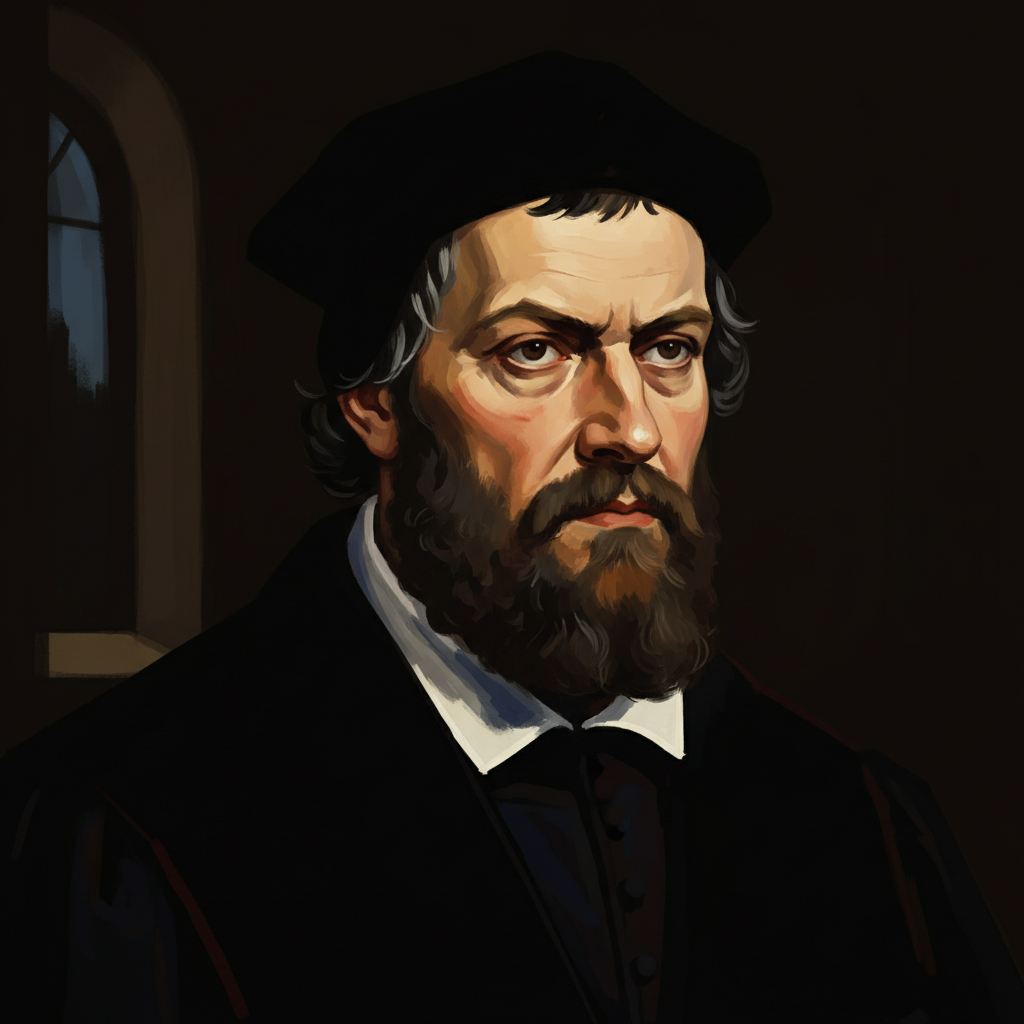
German theologian whose 95 Theses (1517) launched the Protestant Reformation and broke the Catholic Church's monopoly on Western Christianity. Closely associated with Philipp Melanchthon (Lutheran systematizer) and John Calvin (later Reformer who built on Luther's break). For an intellectual contrast, see Pope Leo X, Renaissance pope (1513-1521) — Leo X's indulgence sales triggered Luther's break and Leo excommunicated him in 1521 — Luther's entire Reformation is structured as a direct answer to the indulgence-funded Vatican Leo represented.
Found in 1 providers: grok
1 source checked
Real transformation requires humility. When we stop clinging to our own achievements, status, or sense of self-importance and accept that we are empty-handed, we become open to genuine change and growth. Pride and self-sufficiency block progress; admitting our limitations and nothingness creates space for something meaningful to take shape in us. Emptying yourself is the precondition for being filled with something greater.
Luther built his theology on this exact principle. His doctrine of justification by faith alone taught that humans contribute nothing to their salvation; only God's grace transforms the sinner. A former Augustinian monk tormented by his own inadequacy, Luther found peace in surrender rather than striving. His 95 Theses attacked indulgences precisely because they let people think they could earn merit, rather than admit their spiritual nothingness before God.
In early 16th-century Europe, the Catholic Church dominated spiritual life, selling indulgences and emphasizing works, relics, and sacraments as paths to salvation. Luther's 1517 challenge ignited the Protestant Reformation, shattering Western Christendom. The Renaissance exalted human potential, yet Luther countered by insisting on human helplessness before God. This tension between humanist confidence and reformed humility defined the age, reshaping theology, politics, literacy, and the printing press's cultural power.
AI-generated insights based on extensive research and information for context. Factual errors? Email [email protected].
Your cart is empty