What it means
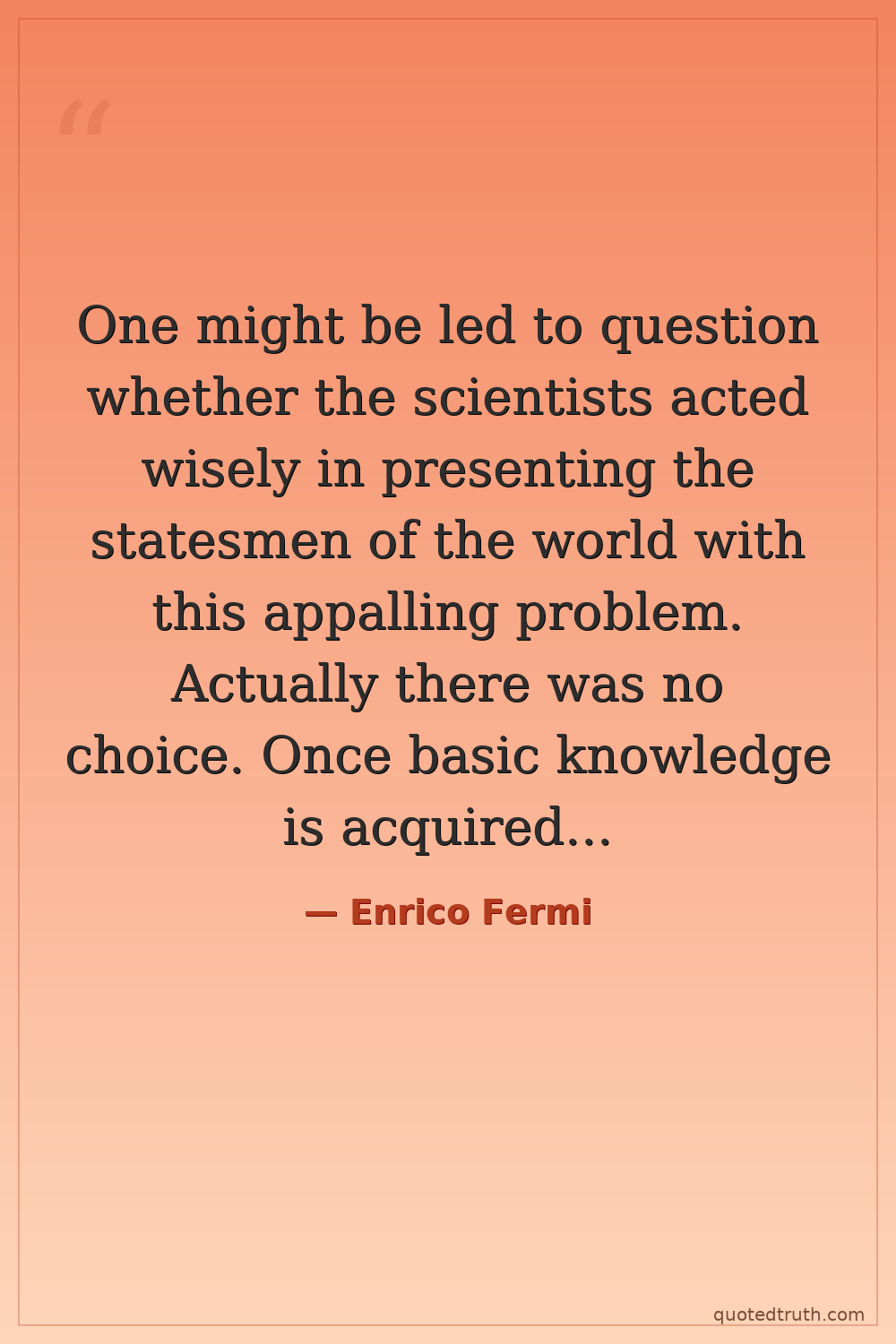
Once fundamental scientific knowledge exists, its practical application becomes inevitable—no human authority can suppress it. Scientists who shared nuclear discoveries with world governments had no genuine alternative. Attempting to contain basic knowledge is as futile as reversing planetary motion. The 'appalling problem' is nuclear weapons capability handed to statesmen. Responsibility belongs to civilization's response, not to whether the underlying physics gets discovered or communicated. Knowledge, like gravity, is unstoppable.
Relevance to Enrico Fermi
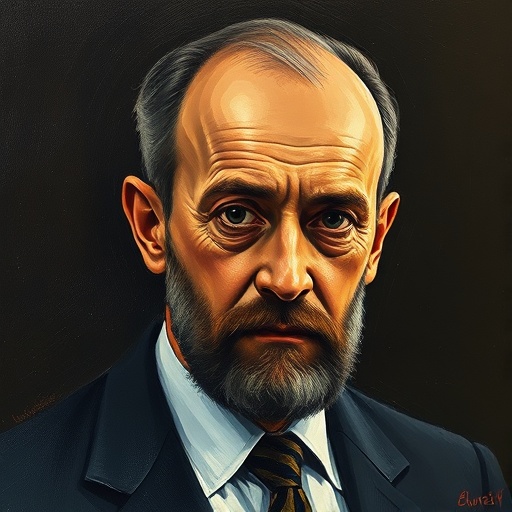
Fermi built the world's first nuclear reactor under Chicago's Stagg Field in 1942, then contributed to the Manhattan Project at Los Alamos. He personally transformed theoretical physics into civilization-altering technology. Born in Italy, he fled fascism and understood that unilateral restraint by any one scientist or nation changes nothing. This quote reflects his lifelong tension: pride in discovery, grief over Hiroshima, and conviction that science operates beyond political control.
The era
This statement emerged in the late 1940s, as atomic bombings of Hiroshima and Nagasaki reshaped world consciousness. Scientists faced intense moral scrutiny—was physics responsible for mass death? The Soviet Union was racing toward its own bomb (achieved 1949), making containment arguments seem naive. Oppenheimer himself faced government persecution. Fermi spoke into a civilization wrestling with whether scientific progress could be governed—a tension that birthed the Cold War nonproliferation movement.
AI-generated insights based on extensive research and information for context. Factual errors? Email [email protected].