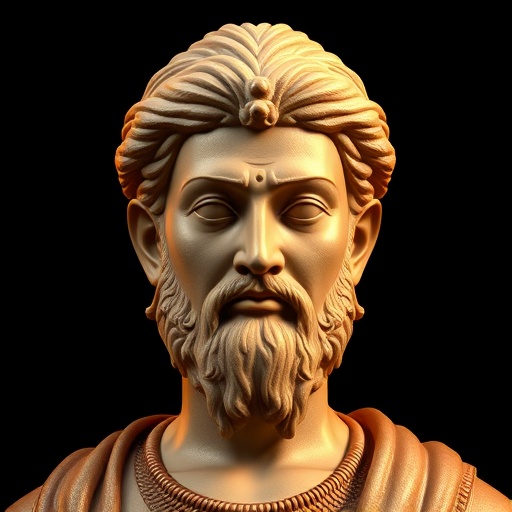
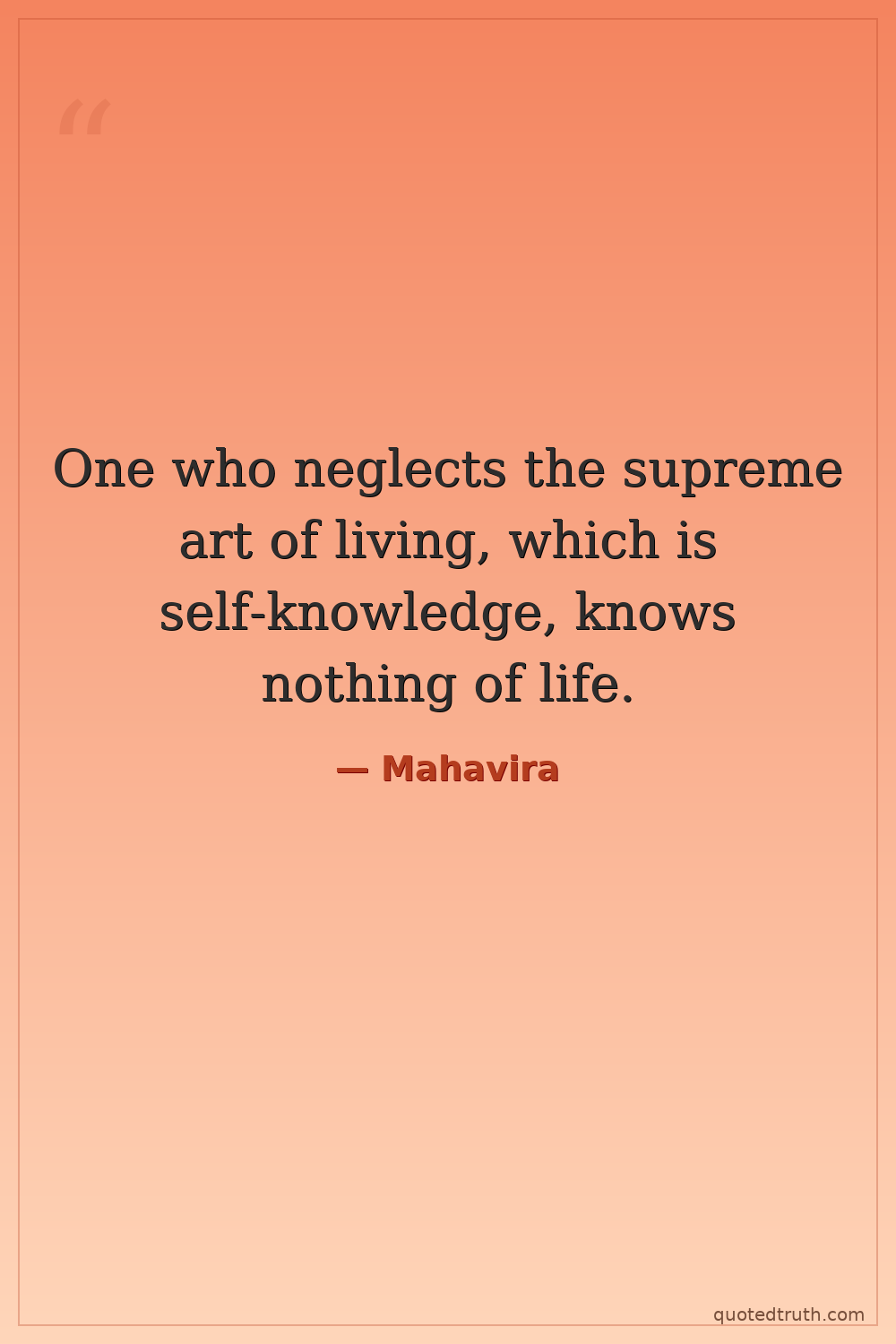
Mahavira — "One who neglects the supreme art of living, which is self-knowledge, knows nothi…"
One who neglects the supreme art of living, which is self-knowledge, knows nothing of life.
One who neglects the supreme art of living, which is self-knowledge, knows nothing of life.
Click any product to generate a realistic preview. Up to 3 at a time.
* Initial load can take up to 90 seconds — revising the preview in another color is nearly instant.
"The greatest wealth is health."
"Conquer anger by forgiveness, pride by humility, deceit by straightforwardness, and greed by contentment."
"The soul is the only thing that is permanent; everything else is impermanent."
"The real self is beyond all forms of karma."
"The path to liberation is difficult, but it is the only path to true happiness."
24th and last Tirthankara of Jainism, whose teachings of strict ahimsa (non-violence), aparigraha (non-attachment), and karma reshaped ancient Indian religion. Closely associated with The Buddha (near-contemporary moral revolutionary, also reacting against Vedic ritualism). For an intellectual contrast, see Vedic Brahmanical ritual sacrifice, the animal-sacrifice-centered Vedic religion of his era — Mahavira's ahimsa demanded total non-violence, including not eating root vegetables that kill the plant — a maximum-distance ethical move from the Vedic priestly tradition that ritually sacrificed cattle and horses. The two cleanest poles of ancient Indian religious ethics.
Found in 1 providers: grok
1 source checked
Self-knowledge is not optional self-improvement — it is the foundation of all meaningful living. Without honestly understanding your own nature, motives, and inner workings, every action and belief rests on a false base. You can accumulate facts, wealth, or status and still be fundamentally ignorant about existence itself. Genuine understanding of life is impossible until you first understand the self doing the living.
Mahavira renounced his royal household at 30 and spent 12 years in intense solitary asceticism before achieving Kevala Jnana — omniscient self-realization. Jainism's entire liberation framework centers on right knowledge of the soul, the Jiva, as the first of three jewels. His spiritual path was radically inward, stripping karmic accumulation through self-discipline rather than ritual. This quote is not metaphor for Mahavira — it describes exactly what he spent his life doing.
Mahavira lived in 6th-century BCE India during the Axial Age, when Vedic religion dominated through ritual sacrifice, priestly intermediaries, and caste-determined spiritual fate. Personal introspection held no institutional value — liberation was mediated by Brahmin priests, not individual inquiry. Mahavira's declaration that self-knowledge surpasses all external religious observance was genuinely subversive, relocating spiritual authority entirely within the individual and directly challenging the priestly hierarchy that controlled religious life.
AI-generated insights based on extensive research and information for context. Factual errors? Email [email protected].
Your cart is empty