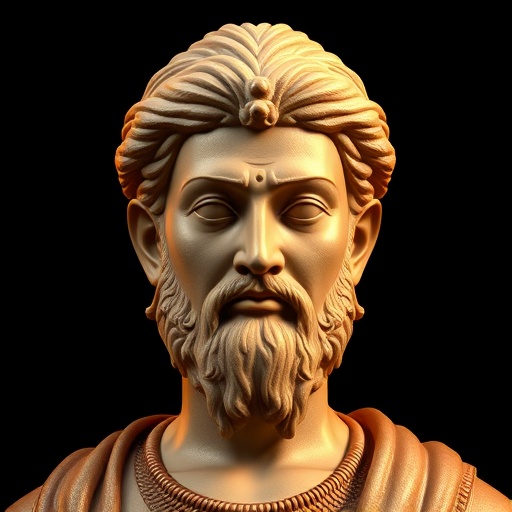
Mahavira — "The greatest wealth is health."
The greatest wealth is health.
The greatest wealth is health.
Click any product to generate a realistic preview. Up to 3 at a time.
* Initial load can take up to 90 seconds — revising the preview in another color is nearly instant.
"Attachment is the root of all suffering."
"Know then that the truth is eternal, pure, and unchanging."
"One who knows himself, knows God."
"The greatest mistake of a man is to think that he is not a man."
"All breathing, existing, living, sentient creatures should not be slain, nor treated with violence, nor abused, nor tormented, nor driven away."
24th and last Tirthankara of Jainism, whose teachings of strict ahimsa (non-violence), aparigraha (non-attachment), and karma reshaped ancient Indian religion. Closely associated with The Buddha (near-contemporary moral revolutionary, also reacting against Vedic ritualism). For an intellectual contrast, see Vedic Brahmanical ritual sacrifice, the animal-sacrifice-centered Vedic religion of his era — Mahavira's ahimsa demanded total non-violence, including not eating root vegetables that kill the plant — a maximum-distance ethical move from the Vedic priestly tradition that ritually sacrificed cattle and horses. The two cleanest poles of ancient Indian religious ethics.
Found in 1 providers: grok
1 source checked
True wealth isn't money, property, or status—it's the condition of being physically and mentally well. Without health, no amount of material possession brings genuine fulfillment or freedom. This frames health not as merely the absence of illness but as the foundational resource from which everything else—productivity, joy, relationships, purpose—flows. Accumulating gold while losing bodily and mental wellbeing is a losing trade no rational person should accept.
Mahavira renounced his royal inheritance and all possessions to pursue enlightenment through rigorous physical discipline—twelve years of fasting, meditation, and exposure to extreme conditions. Jainism's core principle of ahimsa extends to protecting all living bodies from harm. For Mahavira, the body was the instrument of spiritual liberation; only a healthy, disciplined body could endure the ascetic practices required to free the soul from karmic bondage.
In 6th-century BCE India, the caste system equated worth with material accumulation—land, cattle, gold, and ritual sacrifices measured a person's standing. Mahavira lived during the Shramana movement's rise, when thinkers like the Buddha also challenged Vedic materialism. Disease was rampant without medical infrastructure, and merchant-class wealth was visibly disconnected from wellbeing. Declaring health superior to riches was a direct rebuke of a society organizing itself entirely around material status.
AI-generated insights based on extensive research and information for context. Factual errors? Email [email protected].
Your cart is empty