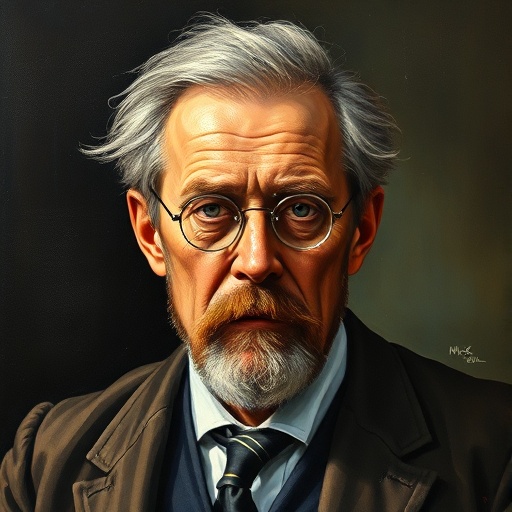
Max Planck — "Science is not only a discipline of reason but also one of romance and passion."
Science is not only a discipline of reason but also one of romance and passion.
Science is not only a discipline of reason but also one of romance and passion.
Click any product to generate a realistic preview. Up to 3 at a time.
* Initial load can take up to 90 seconds — revising the preview in another color is nearly instant.
"The quantum of action plays a fundamental role in atomic theory."
"The world is not a collection of things, but a collection of events."
"My Führer! I am most deeply shaken by the message that my son Erwin has been sentenced to death by the People's Court. The acknowledgement for my achievements in service of our fatherland, which you, …"
"The world needs men who can think for themselves, and not just repeat what they have been taught."
"Science advances one funeral at a time."
Found in 1 providers: grok
1 source checked
Scientific work is not just cold logic and rigorous method. It is also driven by wonder, emotional attachment to ideas, and a deep love for discovery. Real inquiry requires both careful reasoning and the willingness to chase questions that move you. Without passion, reason becomes mechanical; without reason, passion becomes mere speculation. Genuine science fuses analytical discipline with the almost poetic thrill of uncovering how nature works.
Planck upended classical physics in 1900 by proposing energy quanta, a leap he initially resisted because it defied his own intuitions. He spoke often of the scientist needing faith and imagination, and he pursued physics partly for its beauty despite being warned the field was nearly complete. His later writings on religion, philosophy, and music reveal a man who saw research as a vocation of the spirit, not just calculation.
Planck worked during a revolution when Newtonian certainty was dissolving into relativity and quantum mechanics. Europe at the turn of the twentieth century prized scientific rigor yet was also swept by Romanticism, idealism, and debates over whether materialism could explain the human experience. German academia especially cultivated the scientist-philosopher ideal. Against two world wars and personal tragedies, Planck publicly defended science as a humane, almost spiritual pursuit rather than a purely mechanical enterprise.
AI-generated insights based on extensive research and information for context. Factual errors? Email [email protected].
Your cart is empty