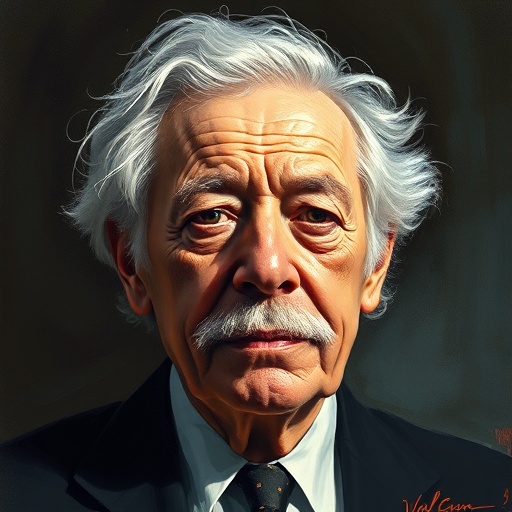
Linus Pauling — "Science is the search for truth, and engineering is the search for ways to make …"
Science is the search for truth, and engineering is the search for ways to make things work.
Science is the search for truth, and engineering is the search for ways to make things work.
Click any product to generate a realistic preview. Up to 3 at a time.
* Initial load can take up to 90 seconds — revising the preview in another color is nearly instant.
"The most important quality for a scientist is imagination."
"Well David, I have a lot of ideas and throw away the bad ones."
"I believe that science and ethics are inextricably linked, and that we have a responsibility to use our knowledge wisely."
"I am a scientist, and I believe in the scientific method. But I also believe that there are things that science cannot explain."
"The most important thing in life is to be happy, and to make others happy."
Found in 1 providers: grok
1 source checked
Science and engineering serve different masters: science pursues understanding — asking what is true and why — while engineering focuses on what works. Neither is superior; they're complementary. A scientist asks why the sky is blue; an engineer designs a lens that captures it. One builds knowledge, the other builds solutions. Both require rigor and creativity, but they measure success differently — truth versus function.
Pauling embodied both sides of this divide. His 1954 Nobel Prize in Chemistry came from pure truth-seeking — his quantum model of the chemical bond transformed how scientists understand molecular structure. Yet he also acted as an engineer of peace, applying scientific reasoning to argue against nuclear weapons testing, earning a second Nobel Prize in 1962. He believed science's moral obligation was to make truth serve humanity.
Pauling worked through much of the 20th century, when the Cold War made the science-engineering divide consequential in an entirely new way — pure nuclear physics became atomic weapons within years of discovery. Post-WWII government and industry poured funding into research, forcing debates about whether science should chase truth or deliver strategic advantage. His framing offered clarity at a moment when the boundary between discovery and destruction felt dangerously blurred.
AI-generated insights based on extensive research and information for context. Factual errors? Email [email protected].
Your cart is empty