What it means
Guard your senses and stop meddling in every matter, and you'll preserve your energy for life. Chase every stimulus, stick your nose into every problem, and force outcomes, and you'll burn out and stay in constant danger. The advice is to conserve attention, limit exposure to noise and drama, and resist the urge to fix things that don't need fixing. Restraint protects you; overreach drains and exposes you.
Relevance to Laozi
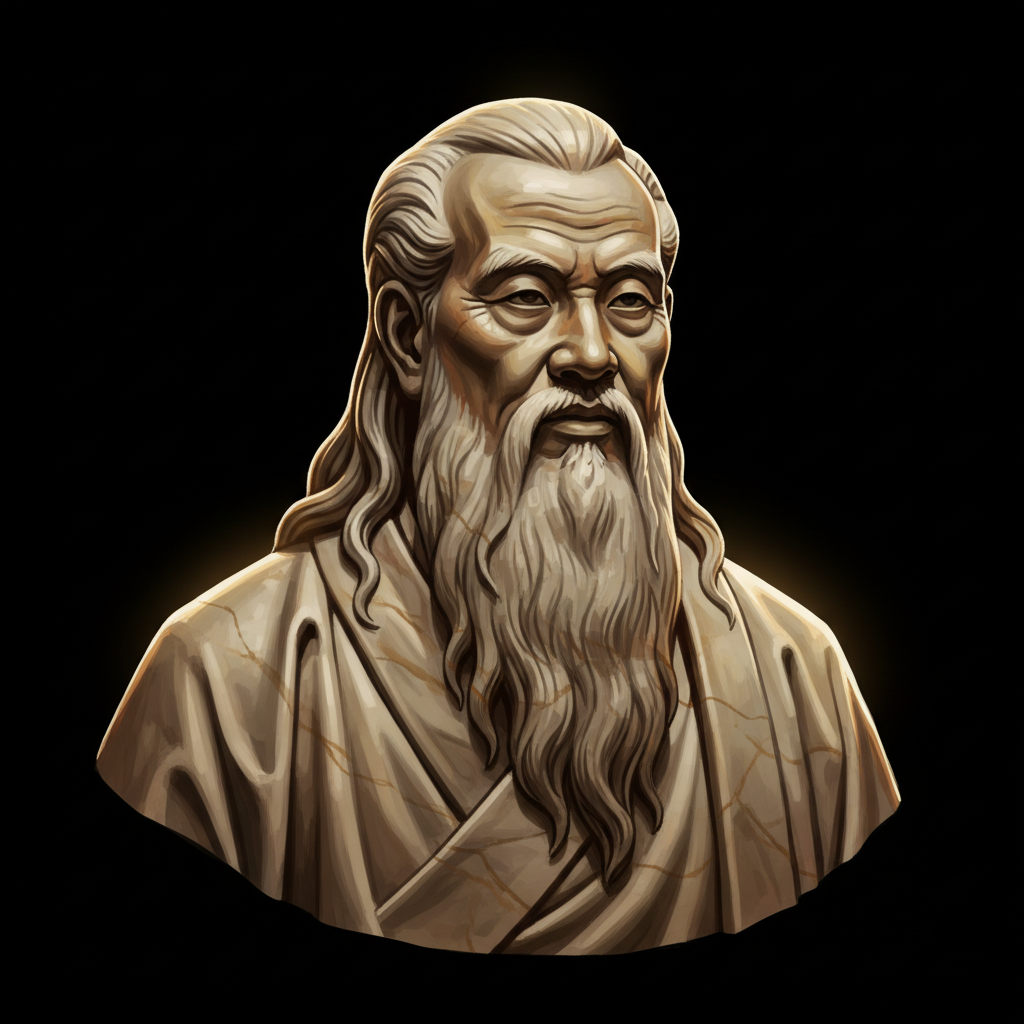
Laozi, the semi-legendary founder of Taoism and reputed author of the Tao Te Ching, worked as an archivist in the Zhou court before withdrawing from public life. Legend says he rode west through a pass and vanished, refusing further political entanglement. His core teaching of wu wei, effortless non-interference, mirrors this saying exactly: power comes from stillness and closing off ambition, not from grasping, managing, or straining against the natural flow of things.
The era
Laozi lived during the late Zhou dynasty, traditionally the 6th century BCE, as centralized authority was crumbling toward the Warring States period. Rival lords fought constantly, officials schemed, and philosophers competed to sell rulers on control-heavy systems like early Legalism and Confucian ritual. Against this backdrop of endless interference and exhausting political maneuvering, Laozi's advice to shut the doors and stop meddling offered a radical counter-program: survival and clarity through withdrawal rather than activism.
AI-generated insights based on extensive research and information for context. Factual errors? Email [email protected].