What it means
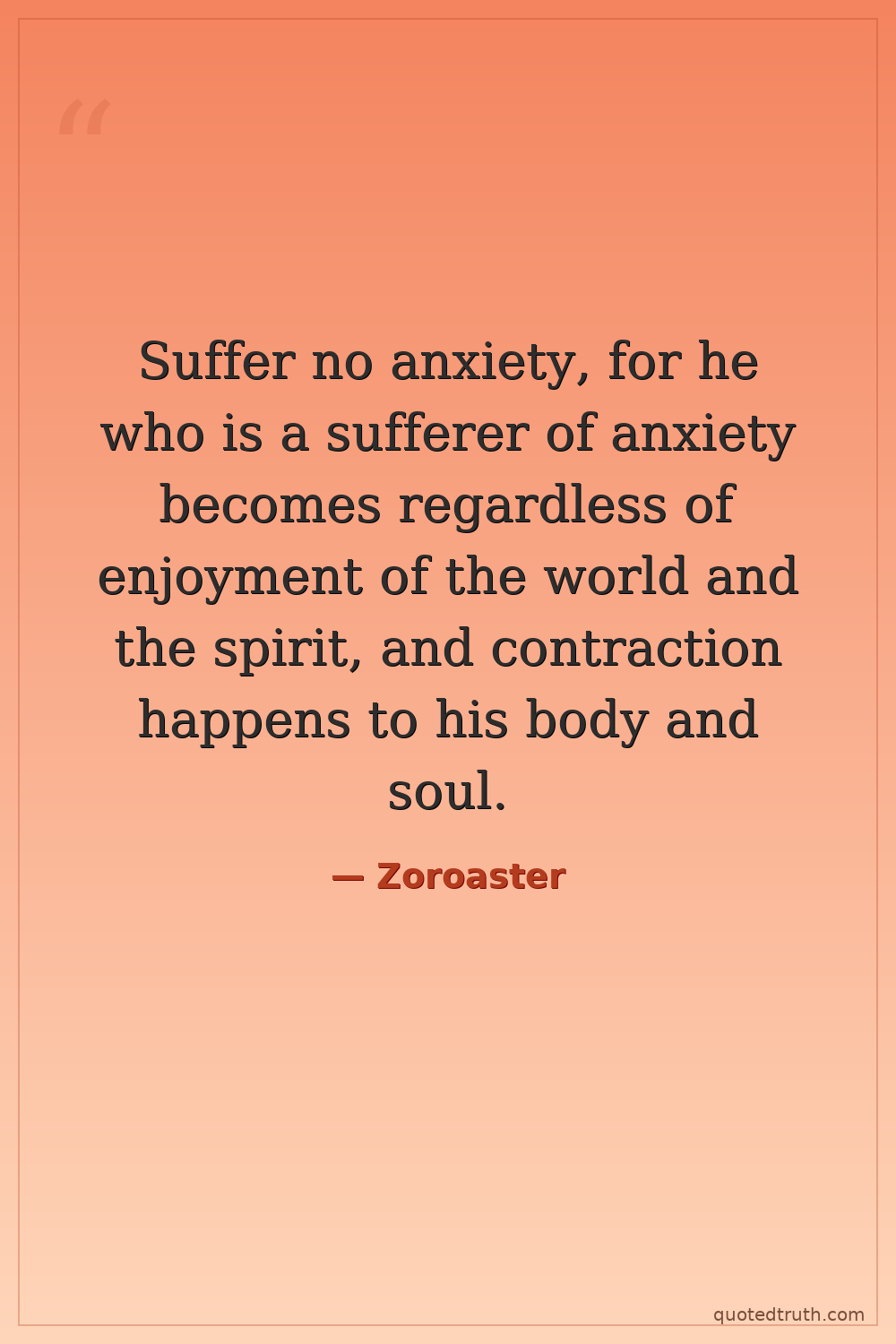
Don't let worry consume you. When anxiety takes over, you lose the ability to enjoy life's material pleasures and spiritual rewards alike. Chronic worry doesn't just affect your mind—it physically shrinks and weakens your body while simultaneously diminishing your soul. The message is practical: persistent anxiety robs you of present joy and long-term wellbeing on every level, so release it actively rather than letting it dictate your existence and erode your capacity to live fully.
Relevance to Zoroaster
Zoroaster taught that humans possess free will to choose between Asha (truth, order) and Druj (falsehood, chaos). Anxiety, in his dualistic framework, signals surrender to disorder and hostile spiritual forces. As a prophet-reformer emphasizing Good Thoughts, Good Words, Good Deeds, he saw mental clarity as essential to righteous action. A mind consumed by worry cannot actively choose good, making anxiety not merely unpleasant but a spiritual failure that aligns one with Angra Mainyu rather than Ahura Mazda.
The era
Zoroaster lived in ancient Persia (circa 1500–1000 BCE) during a turbulent Bronze Age period of tribal conflict, cattle raiding, and competing polytheistic cults. Daily life offered genuine reasons for dread: famine, warfare, and capricious gods demanding blood sacrifice. Against this backdrop of fear-based religion, Zoroaster introduced a radical ethical monotheism centered on personal responsibility and inner peace. His teaching that anxiety harms body and soul offered psychological liberation to people accustomed to appeasing volatile deities through fearful ritual.
AI-generated insights based on extensive research and information for context. Factual errors? Email [email protected].