What it means
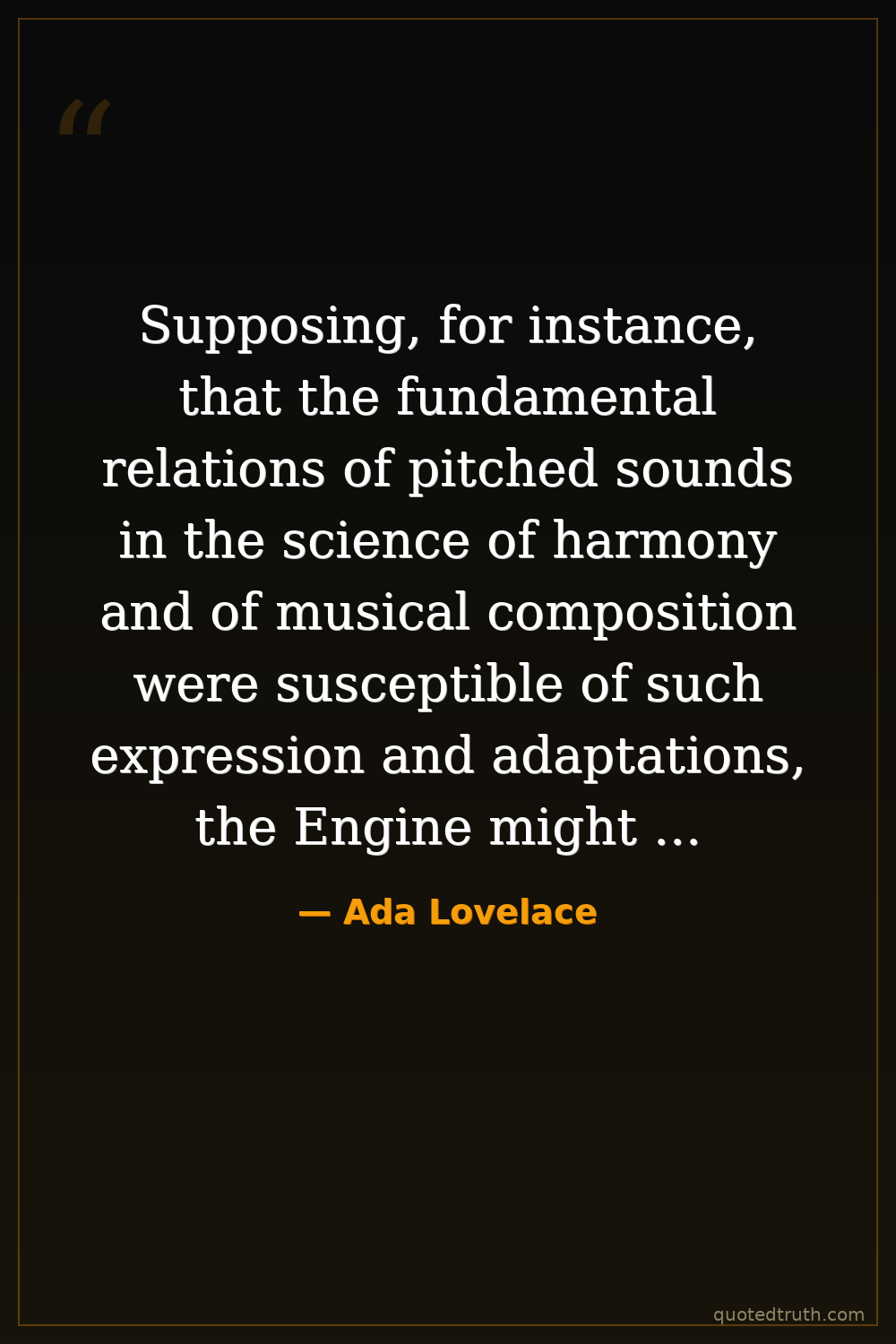
If the mathematical relationships governing harmony and musical composition could be encoded as formal expressions, a computing machine could generate elaborate musical works of any complexity. She is describing the idea that any domain reducible to rules and symbolic relationships — not just arithmetic — could be automated. This is essentially generative computing: the machine as a creative tool, not merely a calculator, anticipating modern algorithmic composition and artificial intelligence.
Relevance to Ada Lovelace
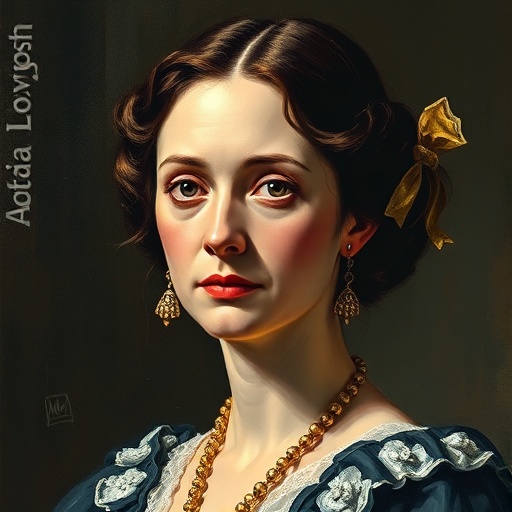
Lovelace was both a mathematician and an accomplished musician — her mother feared her intense imagination, channeling her into mathematics for discipline. Working on her 1843 notes on Babbage's Analytical Engine, she grasped what others missed: the Engine could manipulate any symbol, not just numbers. Her musical training gave her the insight to use music as the clearest example of computation's broader potential, cementing her vision of a universal symbolic processor.
The era
In 1843, the Romantic era placed music at the apex of human artistic achievement — Beethoven had recently died, Liszt and Chopin were at their peaks. Computation meant mechanical arithmetic and creativity was exclusively human. Lovelace wrote this during early industrialization, when machines replaced physical but never mental labor. Her suggestion that a machine could compose serious music was philosophically explosive, anticipating century-long debates about machine intelligence and what distinguishes humans from automata.
AI-generated insights based on extensive research and information for context. Factual errors? Email [email protected].