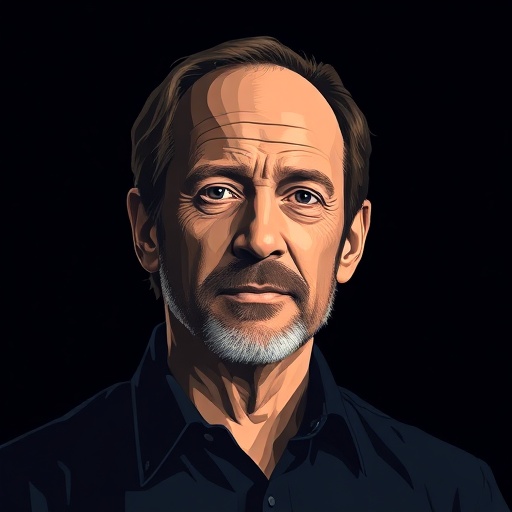
Tim Berners-Lee — "Surveillance is a threat to democracy."
Surveillance is a threat to democracy.
Surveillance is a threat to democracy.
Click any product to generate a realistic preview. Up to 3 at a time.
* Initial load can take up to 90 seconds — revising the preview in another color is nearly instant.
"The web is a platform for innovation."
"I'm optimistic that Solid can help to fix the web and make it a better place for everyone."
"The future of the web is decentralized. It's about giving control back to the users."
"I’m not happy with the way the web has developed in some ways."
"I didn’t expect the web to become so addictive."
British computer scientist who invented the World Wide Web at CERN in 1989 and founded the W3C, championing open web standards. Closely associated with Vint Cerf (TCP/IP co-creator and 'father of the internet') and Marc Andreessen (Mosaic browser creator and Netscape co-founder). For an intellectual contrast, see Mark Zuckerberg, Facebook (Meta) founder — Zuckerberg's walled-garden Facebook is the canonical contemporary opposite of Berners-Lee's open-web vision; Berners-Lee's Solid project and 'recapture the web' essays are explicitly written as a rebuttal to the platform-monopoly model Facebook pioneered.
Found in 1 providers: deepseek
1 source checked
When governments or corporations monitor citizens' communications, movements, and behaviors at scale — without consent or meaningful accountability — it erodes the freedoms democracy depends on: free speech, free association, and the right to dissent. People who know they are watched self-censor. Surveillance concentrates power in the hands of watchers and strips ordinary people of the privacy required to think, organize, and challenge authority freely.
As inventor of the Web, Berners-Lee built an open system meant to empower individuals equally. When Edward Snowden revealed NSA mass surveillance in 2013, Berners-Lee publicly condemned it and called for a global Magna Carta for the Web. His Contract for the Web initiative (2019) codified user privacy as a foundational right. He has consistently argued that the web he created must never become an instrument of government or corporate control.
Berners-Lee intensified this argument after Snowden's 2013 leaks exposed NSA and GCHQ mass surveillance programs targeting ordinary citizens worldwide. The web he invented had become infrastructure for unprecedented monitoring. Europe passed GDPR in 2018; the Cambridge Analytica scandal revealed corporate data weaponization; authoritarian governments adopted social media surveillance to suppress dissent. A free, open web was increasingly in tension with states and platforms that profited from watching users.
AI-generated insights based on extensive research and information for context. Factual errors? Email [email protected].
Your cart is empty