What it means
Rushing to test an unrefined idea wastes money and materials and usually leads nowhere. Real invention demands patient mental work — visualizing a concept so completely that you can almost feel it functioning before it physically exists. Mistakes made in the mind cost nothing; mistakes made with real resources are expensive. Think it through fully, sharply, and clearly before you ever begin building.
Relevance to Nikola Tesla
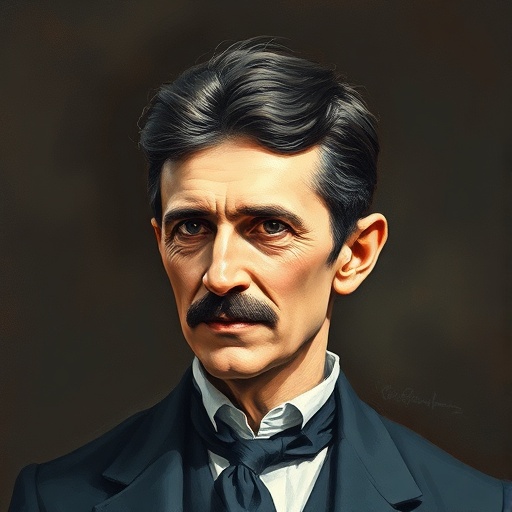
Tesla was renowned for visualizing inventions entirely in his mind before touching any materials, claiming he could mentally run machines for days to check wear. His AC induction motor was conceived this way. This wasn't abstract philosophy — it was his literal engineering process, and it directly contrasted with Edison's costly trial-and-error brute-force method, which Tesla openly criticized as inefficient and wasteful.
The era
Tesla worked during the late 19th and early 20th centuries, when industrial invention was exploding and capital was scarce. Edison's Menlo Park lab ran thousands of failed filament tests for the light bulb. Patent races were fierce, financial backers were impatient, and a misdirected prototype could bankrupt an inventor or destroy a lab's credibility. In that high-stakes environment, thinking before building was both an intellectual virtue and a survival strategy.
AI-generated insights based on extensive research and information for context. Factual errors? Email [email protected].