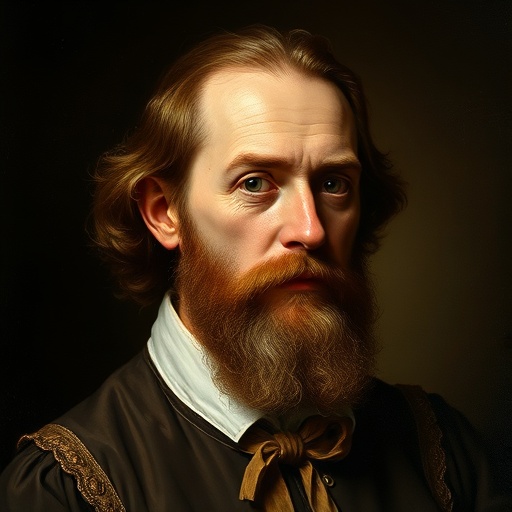
William Harvey — "The art of medicine is to prolong life, not to shorten it."
The art of medicine is to prolong life, not to shorten it.
The art of medicine is to prolong life, not to shorten it.
Click any product to generate a realistic preview. Up to 3 at a time.
* Initial load can take up to 90 seconds — revising the preview in another color is nearly instant.
"The physician's art is to imitate nature."
"Nature is nowhere accustomed to exhibit herself more openly than in her failures."
"He who studies anatomy knows more than he who studies books."
"I began to think whether there might not be a motion as it were in a circle."
"I have myself, in my dissections, seen the blood flow from the right ventricle into the pulmonary artery, and from the pulmonary vein into the left auricle."
English physician whose On the Motion of the Heart and Blood in Animals (1628) demonstrated blood circulation, overturning 1,400 years of Galenic medicine. Closely associated with Francis Bacon (his contemporary in the new English empiricism). For an intellectual contrast, see Galenic medicine, the 2nd-century Greek medical tradition (humors, blood-as-consumed-fuel) — Harvey calculated that the heart pumps more blood per hour than the body could possibly produce as fuel — a single quantitative observation that demolished the entire Galenic-Aristotelian medical worldview. The cleanest example in medical history of arithmetic disproving 14 centuries of authority.
A fundamental ethical principle of medical practice.
Date: Uncertain (attributed)
Art & CreativityFound in 1 providers: gemini
1 source checked
Medicine exists to extend human life and preserve health, not to accelerate death or cause harm. Harvey is stating the fundamental ethical obligation of physicians: every decision, treatment, and intervention should serve the patient's survival and well-being. When medicine causes more harm than good, it betrays its own purpose. This is both a moral principle and a practical standard for evaluating medical practice.
Harvey dedicated his career to understanding how the body sustains life, most famously proving blood circulates continuously through the heart and vessels. His empirical method, dissecting animals and humans to observe the beating heart, was driven by reverence for life's mechanisms. As physician to Kings James I and Charles I, he bore direct responsibility for prolonging royal lives. His science was inseparable from his conviction that medicine must first do no harm.
Harvey lived during an era when bloodletting, purging, and toxic remedies were standard treatments that often killed patients faster than their diseases. The early modern period was riven by plague, war, and the Thirty Years' War's mass casualties. Simultaneously, anatomists like Vesalius had begun challenging Galenic orthodoxy through dissection. Harvey's insistence that medicine prolong life pushed back against harmful traditions at a pivotal moment when empirical observation was just beginning to reshape practice.
AI-generated insights based on extensive research and information for context. Factual errors? Email [email protected].
Your cart is empty