Martin Luther — "The assembly of his greased and religious crew in praying was altogether like th…"
The assembly of his greased and religious crew in praying was altogether like the croaking of frogs, which edified nothing at all.
The assembly of his greased and religious crew in praying was altogether like the croaking of frogs, which edified nothing at all.
Click any product to generate a realistic preview. Up to 3 at a time.
* Initial load can take up to 90 seconds — revising the preview in another color is nearly instant.
"I am rough, boorish, stormy, and warlike. I am born to fight innately with innumerable monsters and devils."
"I am more afraid of my own heart than of the pope and all his cardinals. I have within me the great pope, Self."
"I never learned anything by being told, but only by doing."
"It was I, Martin Luther, who slew all the peasants in the insurrection, for I commanded them to be slaughtered. All their blood is upon my shoulders. But I cast it on our Lord God who commanded me to …"
"The hair on my head is a fine work of art, but it is not necessary for salvation."
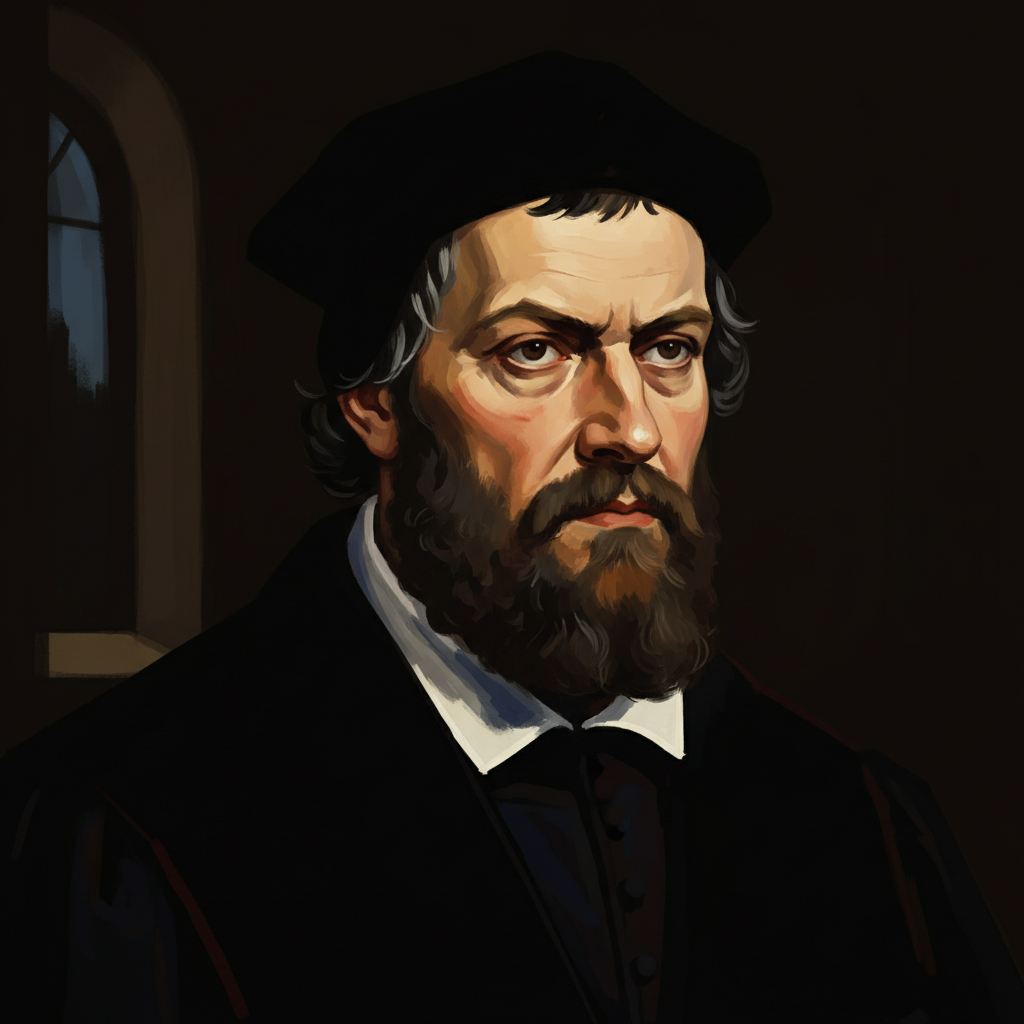
German theologian whose 95 Theses (1517) launched the Protestant Reformation and broke the Catholic Church's monopoly on Western Christianity. Closely associated with Philipp Melanchthon (Lutheran systematizer) and John Calvin (later Reformer who built on Luther's break). For an intellectual contrast, see Pope Leo X, Renaissance pope (1513-1521) — Leo X's indulgence sales triggered Luther's break and Leo excommunicated him in 1521 — Luther's entire Reformation is structured as a direct answer to the indulgence-funded Vatican Leo represented.
Found in 1 providers: gemini
1 source checked
Luther dismisses a group's prayers as empty noise, comparing their collective mumbling to frogs croaking in a pond. The insult targets performative piety: people going through religious motions together produce only irritating sound, not genuine spiritual benefit. 'Greased' suggests they are slick, self-satisfied, or hypocritically polished. Bottom line: ritual prayer without sincere faith or understanding accomplishes nothing for the soul and amounts to meaningless background noise dressed up as devotion.
Luther built the Reformation on the conviction that faith, not ritual, justifies a person before God. As an Augustinian monk turned reformer, he despised rote Latin prayers, monastic showmanship, and clerical performance he saw as spiritually hollow. His sharp, earthy insults, especially toward Catholic clergy and rival sects, are textbook Luther. Calling opponents frogs fits his famously crude, polemical voice in works like Table Talk and his attacks on the papacy, monks, and Anabaptists.
In early modern Europe, roughly 1500 to 1550, religious life revolved around Latin liturgy, monastic prayer hours, and clerical intermediaries most laypeople could not understand. Luther's 1517 Ninety-Five Theses ignited fights over indulgences, the Mass, and who could legitimately approach God. Printing presses spread blistering pamphlets across German lands, and mocking opponents as animals or hypocrites was standard polemical style. Attacking a group's prayers as noise directly challenged the Catholic claim that sacramental ritual carried automatic spiritual power.
AI-generated insights based on extensive research and information for context. Factual errors? Email [email protected].
Your cart is empty